Motmot

Advanced birding · Lesson 29 · 22 minutes

Chats, flycatchers and Ring Ouzel

Redstart, Black Redstart, Whinchat, Stonechat, Wheatear, Spotted and Pied Flycatcher and Ring Ouzel

Chats and flycatchers are birds of the spring and autumn migration. They perch in the open, on a post or a twig, and fly out for insects. Most of the birds in this lesson are long-distance migrants, going to Africa for winter, and they pass through north-west Europe in April to May and August to October. Autumn falls, when a night of east wind brings thousands to the coast, are the best days for them.

The tail is the key for many: a Redstart has a rusty tail that it quivers, a Wheatear has a white rump and a black T on the tail, a Black Redstart has a dark tail with a rusty edge. The Whinchat has white at the base of the tail and a strong eyebrow, the Stonechat has a dark head and a white neck patch. For flycatchers, look at the way they sit and fly out to catch a fly.

Males in spring are bright and easy. In autumn, males, females and young are all in a dull plumage, and the pro skill is to read what is left.

Today: 8 birds

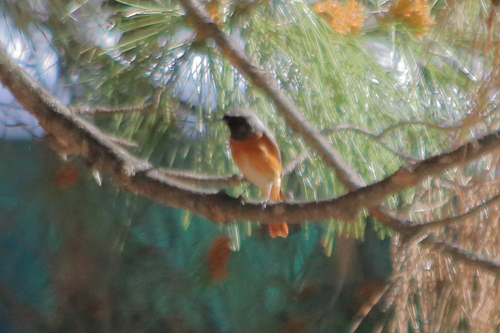
Common Redstart, adult male adult male
Photo: David Fernández Huerta · CC BY-NC

Bird 1 of 8

Common Redstart

Phoenicurus phoenicurus

How to recognise it

  • A rusty-orange breast and tail, and a grey back
  • A black face and throat, with a white forehead
  • Quivers its tail constantly, and sits in the open on a branch

Where and when

UK, NL, BE, DE, FR, DK, SE, FI, NO: uncommon to fairly common summer visitors, from mid-April to September, in woods and heath. IE: rare. Passage birds on the coast in autumn.

Sound A sweet, short song that ends in a jingle, and a call that sounds like “hweet-tic-tic”. Recording: Marc Anderson · xeno-canto

A male in spring is one of the loveliest birds of the woodland. The tail is the key: rusty, and always on the move.

Don’t confuse with: Black Redstart (this week): a darker, sooty body and a dark tail with rusty edges.

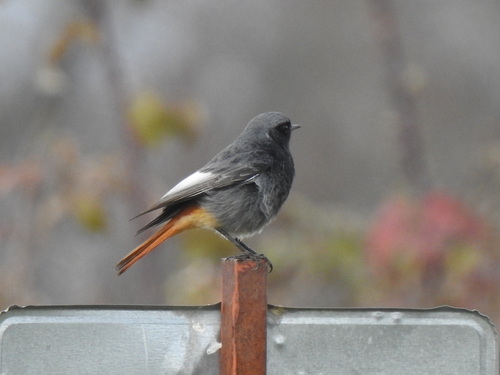
Black Redstart, adult male adult male
Photo: ARSENIO GONZALEZ NAVARRO · CC BY-NC

Bird 2 of 8

Black Redstart

Phoenicurus ochruros

How to recognise it

  • Sooty black body, with a white wing patch and a rusty-orange tail
  • Quivers its tail, and sits on a rooftop, a wall or a rock
  • A harsh, scratchy song, from a high perch

Where and when

UK, IE, NL, BE, DE, FR, DK: uncommon to common, resident in the south, and a passage bird from March to November. SE, NO, FI: rare. A bird of towns and cliffs. In winter on the south coast.

Sound A short, scratchy song with a pause and a crackle like a stone being tapped, “tsip-tsip, ti-tic-tic”. Recording: Olivier SWIFT · xeno-canto

A town bird: a male on a church roof, singing, is a Black Redstart. Females and young are brown-grey with a rusty tail.

Don’t confuse with: Common Redstart (this week): a rusty breast, grey back and a white forehead.

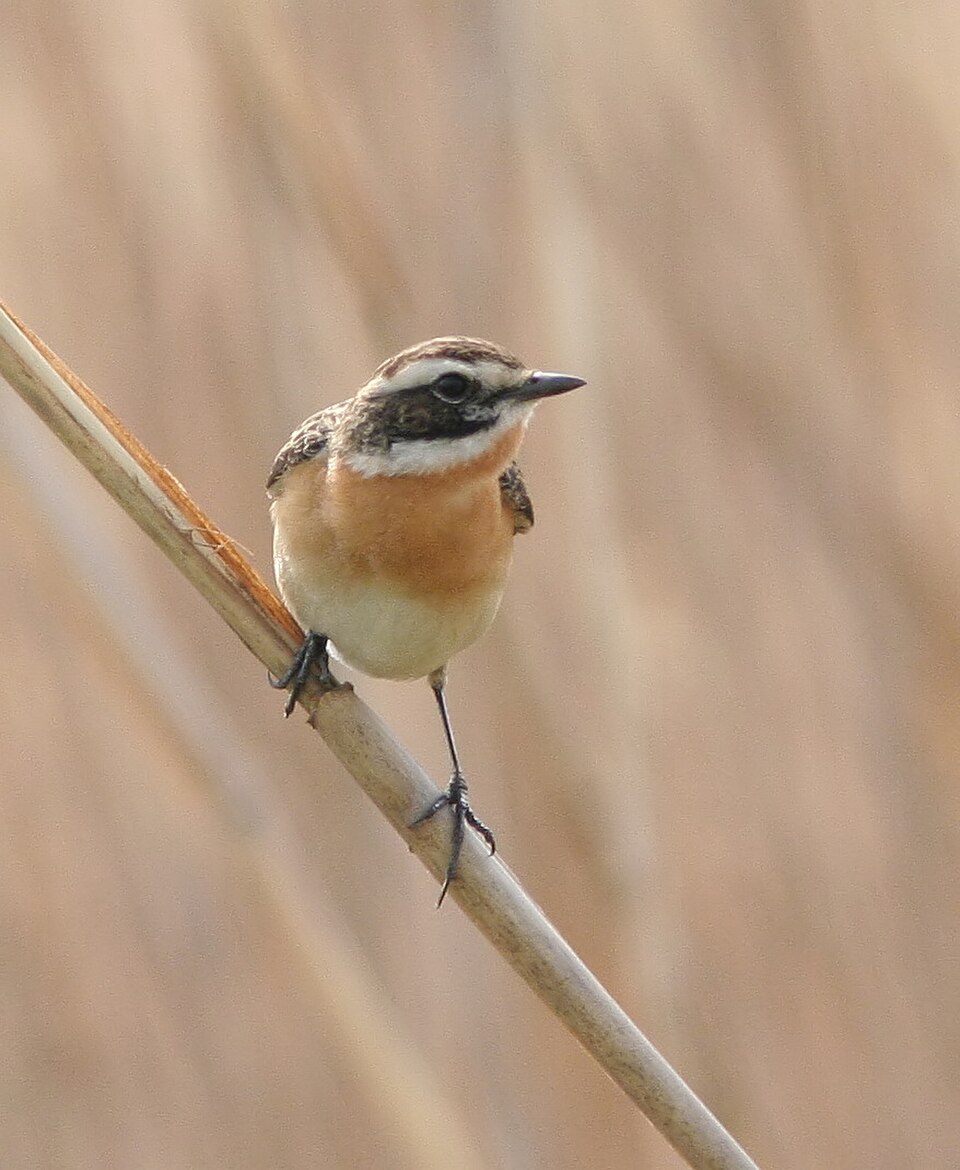
Whinchat, adult male adult male
Photo: Artur Mikołajewski · CC BY

Bird 3 of 8

Whinchat

Saxicola rubetra

How to recognise it

  • A bold, white supercilium above a dark cheek, and an orange-buff breast
  • A streaked brown back and a white patch on the wing
  • White at the base of the tail, and a short, dark tail
supercilium The pale stripe above the eye. Strong in a Whinchat and weak in a Stonechat.

Where and when

UK, IE, NL, BE, DE, FR, DK, SE, FI, NO: uncommon to scarce summer visitors, from late April, in rough grassland, with a peak on passage in May and August to September. Declining. Winters in Africa.

Sound A short, scratchy song, with a few notes borrowed from other birds, and a call of “tic-tic”. Recording: Hans Matheve · xeno-canto

A bird of meadows and rough grass that perches on a stem or a fence post. It is the one you find on a fence in September.

Don’t confuse with: European Stonechat (this week): a dark head, a white neck patch and a rusty breast.

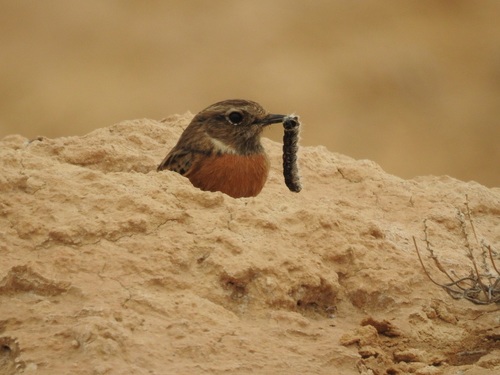
European Stonechat, adult male adult male
Photo: karimhaddad · CC BY

Bird 4 of 8

European Stonechat

Saxicola rubicola

How to recognise it

  • A black head, a white patch on the neck side and a rusty orange breast
  • A small white patch on the wing and a white patch on the rump
  • Perches on a gorse bush and makes a call like two stones being tapped
rump The lower back, just above the tail. White in Wheatear, a white patch in a Stonechat.

Where and when

UK, IE, FR, NL, BE, DE, DK: fairly common to uncommon, resident, on heaths, coasts and gorse. SE, NO, FI: very rare. Many move to the coast in winter. Numbers fall in hard winters.

Call A hard “tsak-tsak” like two stones being knocked together, and a high, scratchy song. Recording: João Tomás · xeno-canto

A heath and coast bird that sits on top of a gorse bush. The male's black head and white neck patch are distinct.

Don’t confuse with: Whinchat (this week): a strong eyebrow and no white neck patch.

Whinchat or Stonechat?

WhinchatWhinchat
European StonechatEuropean Stonechat

Look at the head. A Whinchat has a bold white eyebrow above a dark cheek and no black head. A Stonechat has a black head (male) with a white patch on the neck side and a rusty breast. A Whinchat is a summer visitor and a Stonechat is resident, so the season helps too.

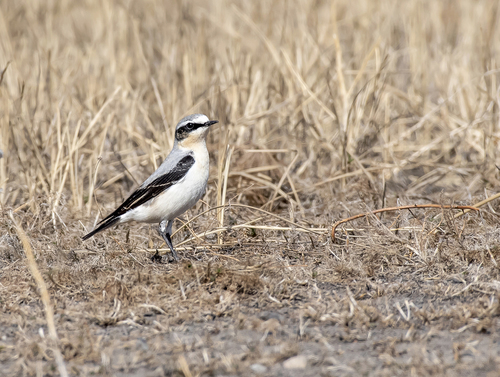
Northern Wheatear, adult male adult male
Photo: grishahasanov · CC BY

Bird 5 of 8

Northern Wheatear

Oenanthe oenanthe

How to recognise it

  • A grey back, a black mask and a white supercilium
  • A white rump and a black T on the tail, in flight
  • Runs and bobs on the ground, and flies low from rock to rock
rump The lower back, just above the tail. White in Wheatear, a white patch in a Stonechat.
supercilium The pale stripe above the eye. Strong in a Whinchat and weak in a Stonechat.

Where and when

UK, IE, NO, SE, FI, DK: fairly common on moors and coastal grassland, from March. NL, BE, DE, FR: scarce, on passage in April to May and August to October. Winters in the Sahel, with some of the longest migrations of any songbird.

Sound A short, scratchy song with a rattle, and a hard “chak-chak”. Recording: Paul Kelly · xeno-canto

One of the first spring migrants, often seen on coastal fields in late March. The white rump is the sign.

Don’t confuse with: Northern Wheatear female: a duller brown and buff, with the same rump.

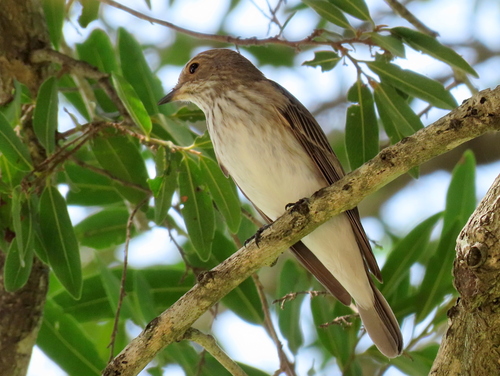
Spotted Flycatcher, adult adult
Photo: Gigi Laidler · CC BY-NC

Bird 6 of 8

Spotted Flycatcher

Muscicapa striata

How to recognise it

  • Grey-brown, with a streaked crown and a streaked breast
  • Sits upright on an open perch, and sallies out for flies
  • A plain face with a big dark eye, and a short, straight bill

Where and when

UK, IE, NL, BE, DE, FR, DK, SE, FI, NO: uncommon to fairly common summer visitors, from mid-May to September, in gardens, parks and woods. Declining. A late migrant, arriving in May.

Sound A thin, high “tzee” call, and a very short, squeaky song. Recording: Lars Edenius · xeno-canto

It sits on a perch and flies out, catches a fly and returns to the same perch. Small and quiet, and not spotted.

Don’t confuse with: European Pied Flycatcher (this week): a black-and-white male, and a dark brown female with white wing patches.

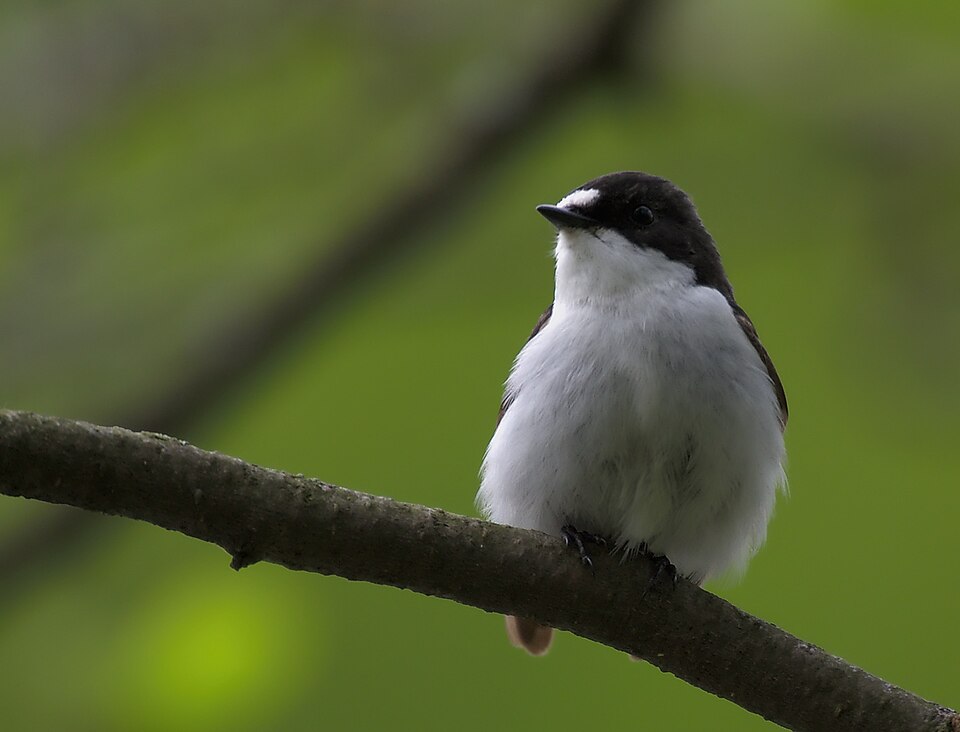
European Pied Flycatcher, adult male adult male
Photo: Stefan Berndtsson · CC BY

Bird 7 of 8

European Pied Flycatcher

Ficedula hypoleuca

How to recognise it

  • A black back and white underparts, with a white forehead patch
  • A big, white wing panel, and white outer tail feathers
  • Nests in tree holes and nest boxes in old oak woods
wing panel A pale patch on the folded wing. Pied Flycatcher males have a white one.

Where and when

UK (west and north), DE, NL, BE, FR, DK, SE, FI, NO: uncommon to common summer visitors, from mid-April. IE: rare. A migrant to West Africa. Passage in the coast in autumn.

Sound A short, sweet, repeated song with a clear, rhythmic “tsee-tsee-tsee-tsee”, and a sharp “whit” call. Recording: João Tomás · xeno-canto

A woodland bird that often nests in boxes. Males in spring are clear, but in autumn all birds are brown.

Don’t confuse with: Spotted Flycatcher (this week): grey-brown and streaky, and perching upright.

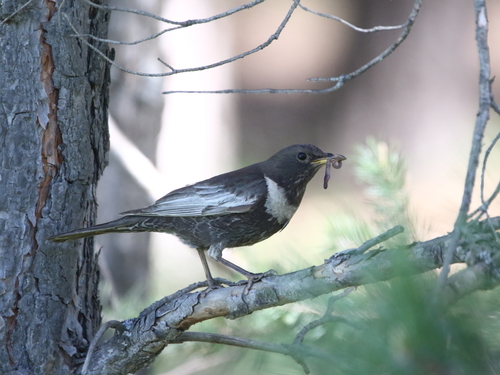
Ring Ouzel, adult male adult male
Photo: scops · CC BY

Bird 8 of 8

Ring Ouzel

Turdus torquatus

How to recognise it

  • A black thrush with a bold white gorget on the breast
  • A pale wing panel on the folded wing, and a yellow bill
  • A wary bird of uplands, rocky slopes and berry bushes
gorget A band or patch on the throat, often a different colour from the breast. A Ring Ouzel has a white one.

Where and when

UK, NO, SE: scarce, on high ground and moors in summer, from April. FR, DE, NL, BE, DK, IE: scarce on passage, in April and from September to October, often in berry bushes. FI: rare.

Sound A short, loud, piping song of two or three repeated notes, and a rattling “tac-tac-tac” call. Recording: Stanislas Wroza · xeno-canto

A mountain blackbird. On passage in autumn it stops at the coast to feed on hawthorn and rowan berries.

Don’t confuse with: Eurasian Blackbird (beginners): all black, a yellow eye ring, and no white bib.

Quiz

12 questions, with birds you have to repeat mixed in. Your answers decide when each bird comes back.

Out and about this week

Look for a Whinchat on a fence in May or September in rough grassland. In April, check a heath or a coast for a Wheatear and a Stonechat. Try to find each one by its habit: perching in the open.