

Motmot

papa-lagarta-de-asa-vermelha vs cuco-canoro

Coccyzus americanus versus Cuculus canorus

Jogue um quiz com papa-lagarta-de-asa-vermelha e cuco-canoro
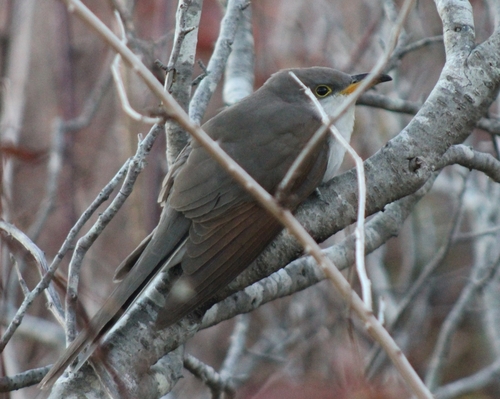
papa-lagarta-de-asa-vermelha (Coccyzus americanus) papa-lagarta-de-asa-vermelha
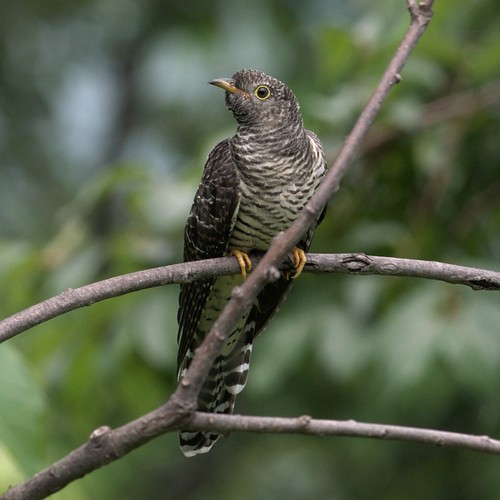
cuco-canoro (Cuculus canorus) cuco-canoro

Mídia

Carregando…

Em resumo

The most reliable separation between Yellow-billed Cuckoo and Common Cuckoo is the bill: Yellow-billed Cuckoo shows a distinctly yellow lower mandible, while Common Cuckoo’s bill is dark with only a yellow base. In flight, Yellow-billed Cuckoo flashes rich cinnamon in the wings, absent in Common Cuckoo. Juvenile Common Cuckoos show a white nape patch and strong white feather fringes, which Yellow-billed Cuckoo never shows at any age. Structurally, Common Cuckoo is larger and bulkier, with a longer tail and wings, and often perches with drooped wings and raised tail. Both can look superficially similar perched, but these field marks are reliable with good views.

Dicas de identificação

  1. Bill color: Yellow-billed Cuckoo always shows a yellow lower mandible, often obvious even at distance; Common Cuckoo’s bill is dark with only a yellow base, never fully yellow below. Works for all ages and seasons.
  2. Wing color in flight: Yellow-billed Cuckoo flashes rich cinnamon on the wings in flight (all ages); Common Cuckoo never shows cinnamon, only grey or rufous tones in some morphs.
  3. Juvenile plumage: Juvenile Common Cuckoo has a white nape patch and strong white feather fringes on upperparts and wings, plus heavy barring below; Yellow-billed Cuckoo juveniles lack these, instead showing a gray undertail and otherwise adult-like plumage.
  4. Tail pattern: Yellow-billed Cuckoo’s tail is black-and-white below (gray in juveniles), with large white spots; Common Cuckoo’s tail is longer, more graduated, and finely barred, with white tips but not large white spots.
  5. Body structure: Common Cuckoo is larger, bulkier, and longer-tailed, with a more hawk-like silhouette in flight; Yellow-billed Cuckoo is slimmer, with a proportionally shorter tail and wings.
  6. Perching posture: Common Cuckoo often perches openly with drooped wings and raised tail, sometimes wagging or pivoting; Yellow-billed Cuckoo tends to stay more hidden in foliage and perches more horizontally.
  7. Sexual dimorphism: Yellow-billed Cuckoo shows no sex differences in plumage; Common Cuckoo females may be rufous or grey, with rufous morphs showing reddish-brown upperparts and barring, but always with a barred belly.
  8. Eye ring: Both have yellow eye rings, but this is not diagnostic alone.
  9. Vocalizations: Common Cuckoo’s two-note "goo-ko" call is unmistakable; Yellow-billed Cuckoo gives a series of soft "kow" notes. If heard, these are definitive.
  10. Habitat: In North America, any cuckoo in dense woodland is likely Yellow-billed; in Eurasia, open country or woodland edge cuckoos are likely Common Cuckoo.
  11. Flight style: Common Cuckoo flies with strong, regular wingbeats and glides, resembling a sparrowhawk; Yellow-billed Cuckoo has a more bounding, less raptor-like flight.
  12. Underpart barring: Common Cuckoo always shows strong barring on the belly; Yellow-billed Cuckoo is clean white below.
  13. Upperpart color: Yellow-billed Cuckoo is brown above; Common Cuckoo is slate-grey (adults) or rufous (some females/juveniles).
  14. Seasonal context: If seen in Europe or Asia, it is almost certainly Common Cuckoo; in North America, almost certainly Yellow-billed Cuckoo.
  15. Brood parasitism: Only Common Cuckoo is an obligate brood parasite; Yellow-billed Cuckoo rarely lays eggs in other birds’ nests and builds its own.

Tamanho

Common Cuckoo is substantially larger and heavier: 32–34 cm long with a 55–60 cm wingspan and an average mass of 111.5 g. Yellow-billed Cuckoo is smaller and lighter, at 26–30 cm long, 38–43 cm wingspan, and 55–65 g. This size difference is often obvious in direct comparison or with experience, especially in flight, where Common Cuckoo’s long wings and tail give it a more hawk-like silhouette.

Plumagem

Juvenile Common Cuckoo is distinctive: look for a white nape patch and bold white fringes on the upperparts and wings, plus strong barring below and sometimes rufous tones. Juvenile Yellow-billed Cuckoo lacks these features; its undertail is gray (not black as in adults), but otherwise resembles the adult. Adult Yellow-billed Cuckoo is brown above, white below, with a long black-and-white tail and a yellow lower mandible; in flight, it shows rich cinnamon in the wings. Adult Common Cuckoo is slate-grey above with a sharply demarcated grey throat and breast, yellow eye ring, and barred underparts. Females may be rufous or grey, but always have barring below and lack cinnamon in the wings. Both species have long tails, but Common Cuckoo’s is proportionally longer and more graduated. The yellow eye ring is present in both, but only Yellow-billed Cuckoo has a yellow lower mandible.

Comportamento

Common Cuckoo often perches openly with wings drooped and tail raised, sometimes wagging or pivoting its body. Its flight is strong and direct, resembling a small raptor (sparrowhawk-like), with regular wingbeats and glides. Yellow-billed Cuckoo tends to stay more concealed, perching quietly in foliage, and is less likely to perch out in the open. In flight, it shows a more bounding, less hawk-like style, with obvious cinnamon flashes in the wings.

Habitat

Yellow-billed Cuckoo breeds in North American woodlands, often near water, and is usually found in dense deciduous forests or thickets. Common Cuckoo is a summer migrant to Europe and Asia, using a wide range of open habitats, including woodland edges, moorland, and farmland, but is less tied to dense forest. Both are long-distance migrants, but their breeding habitats rarely overlap.

Voz

Common Cuckoo’s song is the classic two-note "goo-ko" call, repeated in series, and is usually given from an open perch. Females give a loud bubbling call. Yellow-billed Cuckoo’s call is a series of soft, hollow "kow-kow-kow" notes, often heard on hot days before storms. The vocalizations are completely different and diagnostic if heard well.

Enviar uma descrição melhor

Use as mesmas seções da comparação. Seu texto é publicado na hora.

The most reliable separation between Yellow-billed Cuckoo and Common Cuckoo is the bill: Yellow-billed Cuckoo shows a distinctly yellow lower mandible, while Common Cuckoo’s bill is dark with only a yellow base. In flight, Yellow-billed Cuckoo flashes rich cinnamon in the wings, absent in Common Cuckoo. Juvenile Common Cuckoos show a white nape patch and strong white feather fringes, which Yellow-billed Cuckoo never shows at any age. Structurally, Common Cuckoo is larger and bulkier, with a longer tail and wings, and often perches with drooped wings and raised tail. Both can look superficially similar perched, but these field marks are reliable with good views.

  1. Bill color: Yellow-billed Cuckoo always shows a yellow lower mandible, often obvious even at distance; Common Cuckoo’s bill is dark with only a yellow base, never fully yellow below. Works for all ages and seasons.
  2. Wing color in flight: Yellow-billed Cuckoo flashes rich cinnamon on the wings in flight (all ages); Common Cuckoo never shows cinnamon, only grey or rufous tones in some morphs.
  3. Juvenile plumage: Juvenile Common Cuckoo has a white nape patch and strong white feather fringes on upperparts and wings, plus heavy barring below; Yellow-billed Cuckoo juveniles lack these, instead showing a gray undertail and otherwise adult-like plumage.
  4. Tail pattern: Yellow-billed Cuckoo’s tail is black-and-white below (gray in juveniles), with large white spots; Common Cuckoo’s tail is longer, more graduated, and finely barred, with white tips but not large white spots.
  5. Body structure: Common Cuckoo is larger, bulkier, and longer-tailed, with a more hawk-like silhouette in flight; Yellow-billed Cuckoo is slimmer, with a proportionally shorter tail and wings.
  6. Perching posture: Common Cuckoo often perches openly with drooped wings and raised tail, sometimes wagging or pivoting; Yellow-billed Cuckoo tends to stay more hidden in foliage and perches more horizontally.
  7. Sexual dimorphism: Yellow-billed Cuckoo shows no sex differences in plumage; Common Cuckoo females may be rufous or grey, with rufous morphs showing reddish-brown upperparts and barring, but always with a barred belly.
  8. Eye ring: Both have yellow eye rings, but this is not diagnostic alone.
  9. Vocalizations: Common Cuckoo’s two-note "goo-ko" call is unmistakable; Yellow-billed Cuckoo gives a series of soft "kow" notes. If heard, these are definitive.
  10. Habitat: In North America, any cuckoo in dense woodland is likely Yellow-billed; in Eurasia, open country or woodland edge cuckoos are likely Common Cuckoo.
  11. Flight style: Common Cuckoo flies with strong, regular wingbeats and glides, resembling a sparrowhawk; Yellow-billed Cuckoo has a more bounding, less raptor-like flight.
  12. Underpart barring: Common Cuckoo always shows strong barring on the belly; Yellow-billed Cuckoo is clean white below.
  13. Upperpart color: Yellow-billed Cuckoo is brown above; Common Cuckoo is slate-grey (adults) or rufous (some females/juveniles).
  14. Seasonal context: If seen in Europe or Asia, it is almost certainly Common Cuckoo; in North America, almost certainly Yellow-billed Cuckoo.
  15. Brood parasitism: Only Common Cuckoo is an obligate brood parasite; Yellow-billed Cuckoo rarely lays eggs in other birds’ nests and builds its own.

Common Cuckoo is substantially larger and heavier: 32–34 cm long with a 55–60 cm wingspan and an average mass of 111.5 g. Yellow-billed Cuckoo is smaller and lighter, at 26–30 cm long, 38–43 cm wingspan, and 55–65 g. This size difference is often obvious in direct comparison or with experience, especially in flight, where Common Cuckoo’s long wings and tail give it a more hawk-like silhouette.

Juvenile Common Cuckoo is distinctive: look for a white nape patch and bold white fringes on the upperparts and wings, plus strong barring below and sometimes rufous tones. Juvenile Yellow-billed Cuckoo lacks these features; its undertail is gray (not black as in adults), but otherwise resembles the adult. Adult Yellow-billed Cuckoo is brown above, white below, with a long black-and-white tail and a yellow lower mandible; in flight, it shows rich cinnamon in the wings. Adult Common Cuckoo is slate-grey above with a sharply demarcated grey throat and breast, yellow eye ring, and barred underparts. Females may be rufous or grey, but always have barring below and lack cinnamon in the wings. Both species have long tails, but Common Cuckoo’s is proportionally longer and more graduated. The yellow eye ring is present in both, but only Yellow-billed Cuckoo has a yellow lower mandible.

Common Cuckoo often perches openly with wings drooped and tail raised, sometimes wagging or pivoting its body. Its flight is strong and direct, resembling a small raptor (sparrowhawk-like), with regular wingbeats and glides. Yellow-billed Cuckoo tends to stay more concealed, perching quietly in foliage, and is less likely to perch out in the open. In flight, it shows a more bounding, less hawk-like style, with obvious cinnamon flashes in the wings.

Yellow-billed Cuckoo breeds in North American woodlands, often near water, and is usually found in dense deciduous forests or thickets. Common Cuckoo is a summer migrant to Europe and Asia, using a wide range of open habitats, including woodland edges, moorland, and farmland, but is less tied to dense forest. Both are long-distance migrants, but their breeding habitats rarely overlap.

Common Cuckoo’s song is the classic two-note "goo-ko" call, repeated in series, and is usually given from an open perch. Females give a loud bubbling call. Yellow-billed Cuckoo’s call is a series of soft, hollow "kow-kow-kow" notes, often heard on hot days before storms. The vocalizations are completely different and diagnostic if heard well.

Descartar as alterações?

Você tem edições não salvas. Se sair agora, elas serão perdidas.

papa-lagarta-de-asa-vermelha · cuco-canoro · Minhas aves difíceis