

Motmot

grazina vs gray-backed tern

Gygis alba versus Onychoprion lunatus

Jogue um quiz com grazina e gray-backed tern
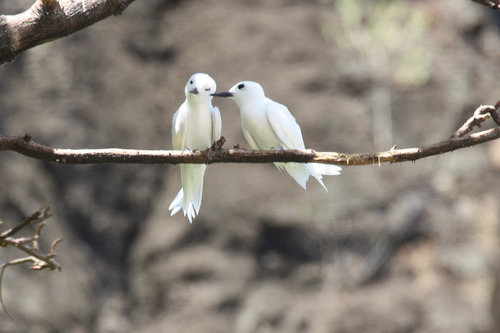
grazina (Gygis alba) grazina
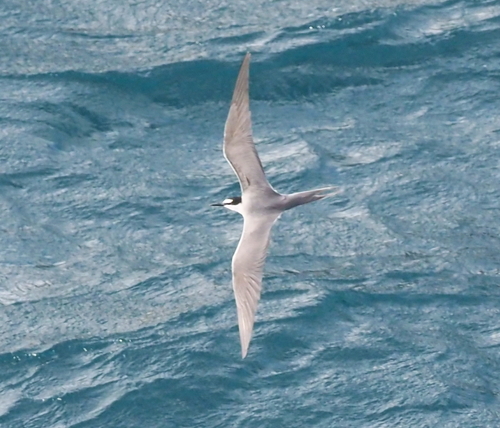
gray-backed tern (Onychoprion lunatus) gray-backed tern

Mídia

Carregando…

Em resumo

The most reliable way to separate White Tern from Grey-backed Tern is by overall coloration: White Tern is entirely white (adults), with no dark on the back or cap, while Grey-backed Tern shows a contrasting grey back and a black eye-line on a white face. Juvenile White Terns may show some grey mottling, but never the clear grey mantle and black head markings of Grey-backed Tern. In flight, White Tern appears ghostly pale and lacks any dark upperwing or back pattern, while Grey-backed Tern always shows a two-toned effect with a grey back and white underparts. Bill color and shape also differ: White Tern has a long, slender, black to bluish-black bill, while Grey-backed Tern has a shorter, dark bill. These differences are visible both perched and in flight, but are especially clear in good light.

Dicas de identificação

  1. Overall color: Adult White Tern is entirely white, with no grey or black on the back or head. Grey-backed Tern always shows a grey mantle and a black eye-line; this contrast is visible at all ages.
  2. Juvenile/immature marks: Juvenile White Terns may have grey mottling, but never a solid grey back or dark cap. Grey-backed Tern juveniles resemble adults with a grey back and black eye-line.
  3. Upperwing in flight: White Tern's upperwing is all white (except for a faint dark shaft streak on outer primaries in some subspecies), while Grey-backed Tern shows a two-toned effect with grey upperwing coverts and white underwing.
  4. Facial pattern: White Tern has a black eye with a narrow black feather ring, but no dark line or cap. Grey-backed Tern has a distinct black eye-line from bill to nape, giving a masked appearance.
  5. Bill shape and color: White Tern has a long, slender, black to bluish-black bill, often appearing slightly decurved. Grey-backed Tern's bill is shorter, straight, and dark, but less strikingly long and fine.
  6. Tail shape: White Tern's tail is shallowly forked, with the second-from-outermost feathers longest (not the outermost, as in most terns). Grey-backed Tern has a more typical tern tail, but this is subtle and not always visible.
  7. Perched behavior: White Tern often perches on thin branches, ledges, or even wires and buildings. Grey-backed Tern is rarely seen perched except at colonies, and usually on the ground.
  8. Habitat context: If seen perched in a tree or on a structure, White Tern is far more likely. Over open ocean, both species are possible, but look for the grey back and black eye-line of Grey-backed Tern.
  9. Underparts: Both species have white underparts, but only Grey-backed Tern has a contrasting grey back above.
  10. Confusion risk: In poor light, a Grey-backed Tern may appear paler, but the black eye-line and grey back should still be visible. White Tern never shows a dark cap or mask.
  11. Flight style: White Tern often appears more buoyant and ethereal in flight, but this is subjective and should not be relied on as a primary mark.
  12. Seasonal variation: There is little seasonal variation in adult White Tern; Grey-backed Tern also shows consistent adult plumage year-round.
  13. Sex differences: No significant sexual dimorphism in either species; all field marks apply to both sexes.
  14. Bill color in young: Juvenile White Tern's bill is similar to adult, but may be slightly paler at the base; Grey-backed Tern juveniles have a dark bill like adults.
  15. Colony context: If observed in a dense ground-nesting colony, Grey-backed Tern is more likely; White Tern nests singly or in loose groups, often in trees.

Tamanho

White Tern is a small seabird, with a body mass of about 138g [wikidata], and a length of 23–30 cm with a wingspan of 76–87 cm [wikipedia]. No direct mass data is available for Grey-backed Tern, but both species are small terns and broadly similar in size. In the field, size is not a reliable separator between these two; focus on plumage and structure instead.

Plumagem

Juvenile and immature White Terns are mostly white but can be mottled with grey or greyish-brown, especially on the upperparts. However, they never show a solid grey mantle or a dark cap. Adult White Terns are pure white except for a thin dark shaft streak on the outer primaries in some subspecies, and have a black eye with a narrow black feather ring. Grey-backed Tern (all ages) shows a clear contrast between the grey back and white underparts, with a black eye-line running from the bill through the eye to the back of the head, and a white face and underparts. The upperwing of Grey-backed Tern is also two-toned, with grey upperparts and white below, unlike the all-white upperwing of White Tern. Tail shape is subtly different: White Tern has a shallowly forked tail with the second-from-outermost feathers longest, while Grey-backed Tern has a more typical tern tail. In summary, White Tern is always paler overall, with no dark cap or back, and Grey-backed Tern always shows a grey back and black facial markings.

Comportamento

Both species are aerial foragers, often seen flying over open water. White Tern is noted for its habit of nesting on bare branches or rocky ledges, sometimes even on man-made structures, and is often seen perched in trees on islands. Grey-backed Tern behaves more like other terns, typically nesting on the ground in colonies. In flight, White Tern often appears buoyant and ethereal, while Grey-backed Tern has a more typical tern flight style, but this is subtle and not a primary field mark.

Habitat

White Tern is typically found on coral islands, especially in the Atlantic and Indo-Pacific, and is often seen near nesting sites on trees, rocky ledges, or even buildings. Grey-backed Tern is a pelagic species, usually seen over open ocean or nesting on remote islands. Both can occur in similar tropical island environments, but White Tern is more likely to be seen perched in trees or on structures, while Grey-backed Tern is more strictly marine and less likely to be seen perched away from the colony.

Enviar uma descrição melhor

Use as mesmas seções da comparação. Seu texto é publicado na hora.

The most reliable way to separate White Tern from Grey-backed Tern is by overall coloration: White Tern is entirely white (adults), with no dark on the back or cap, while Grey-backed Tern shows a contrasting grey back and a black eye-line on a white face. Juvenile White Terns may show some grey mottling, but never the clear grey mantle and black head markings of Grey-backed Tern. In flight, White Tern appears ghostly pale and lacks any dark upperwing or back pattern, while Grey-backed Tern always shows a two-toned effect with a grey back and white underparts. Bill color and shape also differ: White Tern has a long, slender, black to bluish-black bill, while Grey-backed Tern has a shorter, dark bill. These differences are visible both perched and in flight, but are especially clear in good light.

  1. Overall color: Adult White Tern is entirely white, with no grey or black on the back or head. Grey-backed Tern always shows a grey mantle and a black eye-line; this contrast is visible at all ages.
  2. Juvenile/immature marks: Juvenile White Terns may have grey mottling, but never a solid grey back or dark cap. Grey-backed Tern juveniles resemble adults with a grey back and black eye-line.
  3. Upperwing in flight: White Tern's upperwing is all white (except for a faint dark shaft streak on outer primaries in some subspecies), while Grey-backed Tern shows a two-toned effect with grey upperwing coverts and white underwing.
  4. Facial pattern: White Tern has a black eye with a narrow black feather ring, but no dark line or cap. Grey-backed Tern has a distinct black eye-line from bill to nape, giving a masked appearance.
  5. Bill shape and color: White Tern has a long, slender, black to bluish-black bill, often appearing slightly decurved. Grey-backed Tern's bill is shorter, straight, and dark, but less strikingly long and fine.
  6. Tail shape: White Tern's tail is shallowly forked, with the second-from-outermost feathers longest (not the outermost, as in most terns). Grey-backed Tern has a more typical tern tail, but this is subtle and not always visible.
  7. Perched behavior: White Tern often perches on thin branches, ledges, or even wires and buildings. Grey-backed Tern is rarely seen perched except at colonies, and usually on the ground.
  8. Habitat context: If seen perched in a tree or on a structure, White Tern is far more likely. Over open ocean, both species are possible, but look for the grey back and black eye-line of Grey-backed Tern.
  9. Underparts: Both species have white underparts, but only Grey-backed Tern has a contrasting grey back above.
  10. Confusion risk: In poor light, a Grey-backed Tern may appear paler, but the black eye-line and grey back should still be visible. White Tern never shows a dark cap or mask.
  11. Flight style: White Tern often appears more buoyant and ethereal in flight, but this is subjective and should not be relied on as a primary mark.
  12. Seasonal variation: There is little seasonal variation in adult White Tern; Grey-backed Tern also shows consistent adult plumage year-round.
  13. Sex differences: No significant sexual dimorphism in either species; all field marks apply to both sexes.
  14. Bill color in young: Juvenile White Tern's bill is similar to adult, but may be slightly paler at the base; Grey-backed Tern juveniles have a dark bill like adults.
  15. Colony context: If observed in a dense ground-nesting colony, Grey-backed Tern is more likely; White Tern nests singly or in loose groups, often in trees.

White Tern is a small seabird, with a body mass of about 138g [wikidata], and a length of 23–30 cm with a wingspan of 76–87 cm [wikipedia]. No direct mass data is available for Grey-backed Tern, but both species are small terns and broadly similar in size. In the field, size is not a reliable separator between these two; focus on plumage and structure instead.

Juvenile and immature White Terns are mostly white but can be mottled with grey or greyish-brown, especially on the upperparts. However, they never show a solid grey mantle or a dark cap. Adult White Terns are pure white except for a thin dark shaft streak on the outer primaries in some subspecies, and have a black eye with a narrow black feather ring. Grey-backed Tern (all ages) shows a clear contrast between the grey back and white underparts, with a black eye-line running from the bill through the eye to the back of the head, and a white face and underparts. The upperwing of Grey-backed Tern is also two-toned, with grey upperparts and white below, unlike the all-white upperwing of White Tern. Tail shape is subtly different: White Tern has a shallowly forked tail with the second-from-outermost feathers longest, while Grey-backed Tern has a more typical tern tail. In summary, White Tern is always paler overall, with no dark cap or back, and Grey-backed Tern always shows a grey back and black facial markings.

Both species are aerial foragers, often seen flying over open water. White Tern is noted for its habit of nesting on bare branches or rocky ledges, sometimes even on man-made structures, and is often seen perched in trees on islands. Grey-backed Tern behaves more like other terns, typically nesting on the ground in colonies. In flight, White Tern often appears buoyant and ethereal, while Grey-backed Tern has a more typical tern flight style, but this is subtle and not a primary field mark.

White Tern is typically found on coral islands, especially in the Atlantic and Indo-Pacific, and is often seen near nesting sites on trees, rocky ledges, or even buildings. Grey-backed Tern is a pelagic species, usually seen over open ocean or nesting on remote islands. Both can occur in similar tropical island environments, but White Tern is more likely to be seen perched in trees or on structures, while Grey-backed Tern is more strictly marine and less likely to be seen perched away from the colony.

Descartar as alterações?

Você tem edições não salvas. Se sair agora, elas serão perdidas.

grazina · gray-backed tern · Minhas aves difíceis