

beija-flor-azul-de-rabo-branco vs mexican violetear
Florisuga mellivora versus Colibri thalassinus
Jogue um quiz com beija-flor-azul-de-rabo-branco e mexican violetear
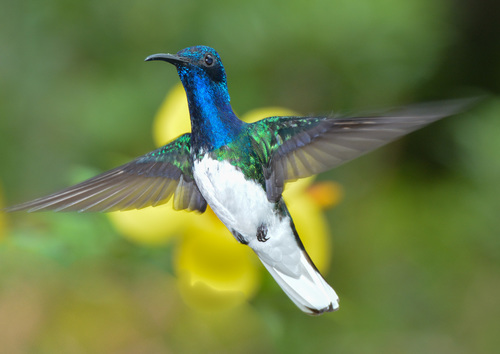 beija-flor-azul-de-rabo-branco
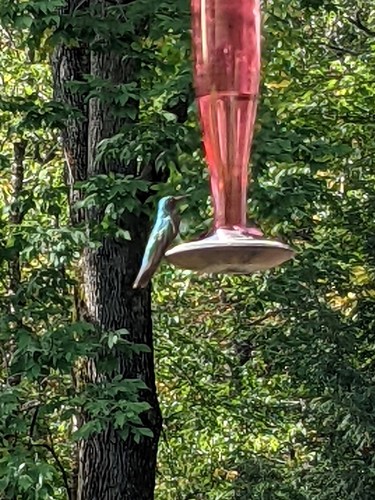 mexican violetear
Em resumo
A marca de campo mais confiável para separar o beija-flor-azul-de-rabo-branco do mexican violetear é a barriga e a cauda brancas e ousadas do jacobin (com pontas pretas), que é especialmente óbvia em machos adultos, em contraste com a plumagem verde metálica do violetear e a cauda azul-esverdeada com uma faixa subterminal preta. Jacobins imaturos podem ser variáveis, mas mesmo assim, geralmente mostram mais branco na cauda do que o violetear. O mexican violetear é predominantemente verde com uma distinta mancha violeta na orelha, sem qualquer branco na parte inferior. Ambas as espécies se sobrepõem em tamanho, mas o jacobin é mais pesado e robusto. Em voo ou empoleirado, procure os contrastes de cores nítidos do jacobin e a mancha facial verde e violeta uniforme do violetear.
Dicas de identificação
- Barriga e cauda brancas (jacobin): Machos adultos de beija-flor-azul-de-rabo-branco têm uma barriga e cauda brancas ousadas (com pontas pretas), nunca mostradas pelo violetear. Esta é a melhor marca em aves empoleiradas ou voando.
- Cabeça e peito azul escuro (jacobin macho): Apenas o macho jacobin mostra uma cabeça e peito azul escuro, em nítido contraste com a barriga branca e as costas verdes. O violetear é verde em toda a cabeça e peito.
- Faixa branca na nuca (jacobin): O macho jacobin tem uma faixa branca nítida na nuca, separando a cabeça azul das costas verdes. O violetear não tem faixa na nuca.
- Mancha violeta na orelha (violetear): O mexican violetear de todas as idades e sexos mostra uma mancha violeta brilhante nas laterais do pescoço, ausente no jacobin.
- Partes inferiores totalmente verdes (violetear): O violetear é verde metálico na parte inferior, sem barriga ou peito brancos. Qualquer branco na parte inferior indica jacobin.
- Padrão da cauda (todas as idades): O jacobin (especialmente imaturos) mostra mais branco na cauda do que o violetear, que tem uma cauda azul-esverdeada com uma faixa subterminal preta e penas centrais bronzeadas.
- Variabilidade das fêmeas jacobin: As fêmeas jacobin podem se assemelhar aos machos ou ser mais verdes na parte superior com gargantas escamosas azul-esverdeadas, mas geralmente ainda têm uma barriga branca e mais branco na cauda do que o violetear. Algumas podem parecer confusas como o violetear, mas verifique se há qualquer branco na parte inferior e no padrão da cauda.
- Garganta bronzeada do jacobin imaturo: As fêmeas jacobin imaturas têm um tom bronzeado na garganta e peito, não mostrado pelo violetear.
- Tamanho e constituição: O jacobin é mais pesado e robusto do que o violetear, mas isso é sutil e melhor usado em comparação direta.
- Formato do bico: Ambos têm bicos retos e pretos, mas o do violetear é ligeiramente mais longo e mais curvado; não é uma marca de campo forte.
- Contexto do habitat: O jacobin é mais provável de ser encontrado em áreas abertas, jardins e bordas; o violetear prefere interiores de florestas e elevações mais altas.
- Alimentação em grupo (jacobin): Jacobins frequentemente se alimentam em grupos soltos em árvores floridas, às vezes com perseguições agressivas; o violetear é menos frequentemente visto em tais agregações.
- Voz: A canção aguda do jacobin, 'tseee...', e os chamados podem ser ouvidos, mas as vocalizações do violetear não são distintas nessas notas.
- Sobreposição geográfica: Ambas as espécies ocorrem no México e na América Central, então não confie apenas na distribuição para separação.
- Cuidado com a confusão entre fêmeas/imaturos: Fêmeas e jacobins imaturos podem parecer esverdeados e menos contrastantes, mas a presença de qualquer branco na barriga ou cauda ainda é uma forte pista contra o violetear.
Tamanho
Ambas as espécies são semelhantes em comprimento (beija-flor-azul-de-rabo-branco: 11–12 cm; mexican violetear: 9.7–12 cm), mas os machos jacobin são visivelmente mais pesados (7.4–9.0 g vs. 4.8–5.6 g do violetear). O jacobin parece mais volumoso e robusto, enquanto o violetear é mais esbelto e leve. O comprimento do bico é ligeiramente maior no violetear, mas isso é sutil no campo. Os comprimentos da cauda e das asas se sobrepõem, portanto não são confiáveis para separação.
Plumagem
-
Aves juvenis/imaturas: Jacobins imaturos são altamente variáveis, mas geralmente mostram mais branco na cauda do que o violetear de qualquer idade. Fêmeas imaturas são bronzeadas na garganta e peito, e podem ter menos branco na cauda do que os machos, mas ainda mais do que o violetear. Jacobins imaturos não são descritos como tendo qualquer branco na cauda; eles são verdes metálicos em geral.
-
Machos adultos: Machos de beija-flor-azul-de-rabo-branco são impressionantes com uma cabeça e peito azul escuro, uma barriga e cauda brancas em nítido contraste (com pontas pretas), e uma faixa branca na nuca separando a cabeça azul das costas verdes. Machos de mexican violetear são verdes brilhantes na parte superior, verdes cintilantes na parte inferior, com uma proeminente mancha violeta na orelha e uma cauda azul-esverdeada com uma faixa subterminal preta, mas sem branco.
-
Fêmeas adultas: Fêmeas jacobin são variáveis, mas geralmente têm partes superiores verdes, uma garganta e peito escamosos azul-esverdeados, barriga branca e uma cauda predominantemente verde com uma ponta azul—novamente, mais branco na cauda do que o violetear. Fêmeas de violetear não são descritas em detalhes, mas são semelhantes aos machos, sem branco na parte inferior e sem faixa na nuca.
-
Padrão da cauda: O jacobin (todas as idades) mostra mais branco na cauda do que o violetear, que tem uma cauda azul-esverdeada com uma faixa preta e penas centrais bronzeadas.
Comportamento
Ambas as espécies se alimentam de néctar e capturam pequenos insetos em voo. Jacobins são agressivos em árvores de alimentação, mas não são estritamente territoriais; frequentemente se alimentam em grupos. Violetears também são encontrados em áreas florestais e podem se mover sazonalmente, mas diferenças comportamentais específicas não são bem descritas nas notas. Fêmeas jacobin usam um voo de distração flutuante perto do ninho, o que é improvável de ser observado, a menos que esteja perto de um ninho.
Habitat
O beija-flor-azul-de-rabo-branco é amplamente distribuído do México ao norte da América do Sul e Trinidad e Tobago, encontrado em uma variedade de habitats, incluindo bordas de florestas, jardins e plantações. O mexican violetear é mais restrito a áreas florestais do México à Nicarágua. Ambas podem ocorrer em regiões sobrepostas no México e na América Central, mas o violetear está mais intimamente ligado a interiores de florestas e elevações mais altas, enquanto o jacobin é mais adaptável a habitats abertos e de borda.
Voz
O beija-flor-azul-de-rabo-branco não é altamente vocal; sua canção é uma longa série de notas únicas agudas ('tseee...'), com chamados como 'tsik', 'sweet', e um 'swee-swee-swee-swee' descendente em encontros agressivos. Nenhuma vocalização distinta é descrita para o mexican violetear nessas notas, portanto a voz não é um separador confiável com base nas informações atuais.
beija-flor-azul-de-rabo-branco · mexican violetear · Minhas aves difíceis