

negrinha vs papagaio-do-mar-de-penachos
Aythya fuligula versus Fratercula cirrhata
Jogue um quiz com negrinha e papagaio-do-mar-de-penachos
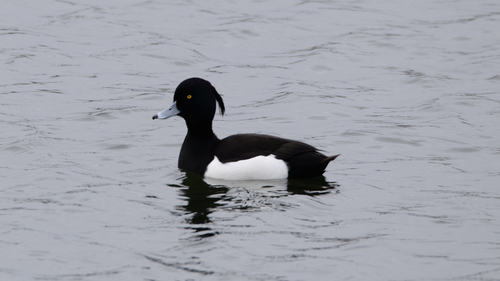 negrinha
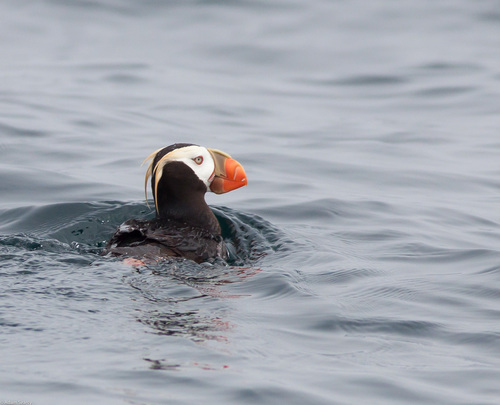 papagaio-do-mar-de-penachos
Em resumo
The most reliable way to separate Tufted Duck from Tufted Puffin is by overall structure and bill shape: Tufted Duck is a classic diving duck with a flat, broad bill and rounded head, while Tufted Puffin is a stocky seabird with a massive, bright red bill and striking yellow tufts in breeding season. In flight or at rest, the puffin’s white face and thick bill stand out against the duck’s darker, more subdued plumage. Juvenile and non-breeding puffins lose the bright tufts and bill color, but still show a contrasting pale face and different body shape from any age or sex of Tufted Duck. Even at a distance, the context—freshwater for ducks, rocky marine islands for puffins—often clinches the ID.
Dicas de identificação
- Bill shape and color: Tufted Puffin always has a huge, triangular, bright red bill (yellowish in juveniles/winter), while Tufted Duck has a flat, blue-grey duck bill. This is the single most obvious difference at any range.
- Facial pattern: Adult Tufted Puffin in breeding plumage has a stark white face and long yellow tufts; Tufted Duck never shows a white face, only a small white patch at the bill base in some females. Outside breeding, puffins retain a pale face, while ducks do not.
- Head tufts: Both species are named for their 'tufts,' but the duck’s is a thin, black, backward-pointing crest (mainly males), while the puffin’s is a pair of long, drooping yellow plumes (breeding adults only). Non-breeding puffins and all ducks lack these yellow tufts.
- Eye color: Tufted Duck has striking golden-yellow eyes in both sexes; Tufted Puffin’s eyes are dark and less conspicuous.
- Body shape: Puffins are stocky, deep-chested, and short-necked; ducks are more streamlined, with a longer neck and lower profile on water.
- Plumage color: Male Tufted Duck is black with white flanks; female is brown with paler flanks. Puffin is black with a white face (breeding) or duller, but always lacks the duck’s white flanks and golden eyes.
- Juvenile/immature confusion: Young puffins look like duller, pale-faced adults with a shallow bill; they never show the duck’s white flanks or golden eyes. Female Tufted Duck may show a small white patch at the bill base, but never a full white face.
- Flight style: Puffins have rapid, whirring wingbeats and a more labored, direct flight; ducks take off with a running start and fly in strong, direct lines.
- Habitat: Ducks are on freshwater (lakes, rivers); puffins are on rocky marine islands or at sea. Location alone often rules out one or the other.
- Feet color: Puffin’s feet are bright red in breeding season; duck’s feet are duller and less visible.
- Social context: Tufted Ducks gather in large flocks on water; puffins are seen in colonies on cliffs or singly at sea.
- Voice: Tufted Duck females give a harsh 'karr'; puffin calls are not described here, but are not duck-like.
- Seasonal changes: Puffin’s yellow tufts and bill color fade after breeding, but the pale face remains; Tufted Duck’s plumage is more stable year-round.
- Sex differences: Male Tufted Duck is more contrasting (black and white, with crest); female is browner and less crisp, but still lacks the puffin’s facial pattern.
- Pitfalls: Do not rely on 'tuft' alone—look for bill shape, face color, and habitat as primary clues.
Tamanho
Tufted Puffin is substantially heavier and bulkier than Tufted Duck, with a body mass around 774 g (per Wikidata), making it the largest puffin. Tufted Duck is a small diving duck, noticeably lighter and more compact. Puffins have a stouter, deeper-chested appearance, while Tufted Ducks are more streamlined and sit lower in the water. Even without direct comparison, the puffin’s thickset build and large head are distinctive.
Plumagem
No age-specific upperwing patterns are described for either species that would allow separation in flight based on wing panels or trailing edges. For adults, male Tufted Duck is glossy black with crisp white flanks and a thin black crest; females are brown with paler flanks and sometimes a small white patch at the bill base. Both sexes have golden-yellow eyes. Tufted Puffin in breeding plumage is black-bodied with a bright white face, thick red bill, and long yellow tufts behind the eyes. Outside breeding, the puffin’s face and bill dull, and the yellow tufts are lost, but the pale face remains, contrasting with the dark body. Juvenile puffins resemble winter adults: dark above, pale-faced, and with a shallow, duller bill, but never show the duck’s white flanks or golden eyes. Female Tufted Duck can show a small white patch at the bill base, but never the full white face of a puffin.
Comportamento
Tufted Duck is a diving duck, often seen in flocks on lakes or slow rivers, diving frequently for food and surfacing smoothly. It takes off with rapid wingbeats and flies in direct, fast lines. Tufted Puffin, by contrast, is a seabird that spends most of its life at sea, swimming with its feet and using its wings to 'fly' underwater. On land, puffins are clumsy walkers, often seen on rocky cliffs or islands during breeding. In flight, puffins have rapid, whirring wingbeats and a more labored, direct flight compared to the duck’s smoother takeoff and flight. Puffins rarely, if ever, occur inland or on freshwater.
Habitat
Tufted Duck is a freshwater species, found on lakes, ponds, and slow-moving rivers across northern Eurasia, and only rarely visits coastal waters. Tufted Puffin is strictly marine outside the breeding season, nesting on remote islands and spending the rest of the year far out at sea in the North Pacific. If you see a 'tufted' bird on an inland lake, it is almost certainly a Tufted Duck; a 'tufted' bird on a rocky Pacific island or at sea is a Tufted Puffin.
Voz
Tufted Duck females give a harsh, growling 'karr' in flight; males are mostly silent, but may give a simple 'wit-oo' whistle during courtship. Tufted Puffin vocalizations are not described in the provided notes, but are generally not a key field mark for separation from Tufted Duck, as their calls are quite different and context-dependent.
negrinha · papagaio-do-mar-de-penachos · Minhas aves difíceis