

Motmot

somali crombec vs long-billed crombec

Sylvietta isabellina versus Sylvietta rufescens

Jogue um quiz com somali crombec e long-billed crombec
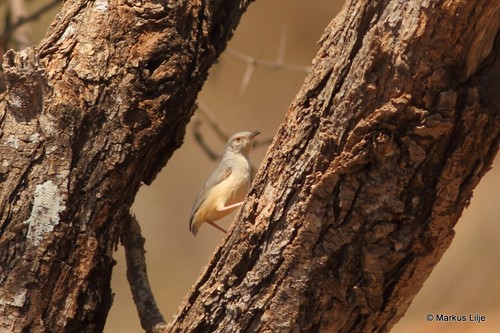
somali crombec (Sylvietta isabellina) somali crombec
long-billed crombec (Sylvietta rufescens) long-billed crombec

Mídia

Carregando…

Em resumo

The most reliable way to separate Somali Crombec from Long-billed Crombec is by range and habitat: Somali Crombec is restricted to the Horn of Africa (Ethiopia, Somalia, Kenya, Tanzania) in dry shrubland, while Long-billed Crombec is found further south, from Tanzania to South Africa, in a wider range of open habitats including fynbos, woodland, and Acacia scrub. Structurally, Long-billed Crombec is slightly larger, with a noticeably longer and more curved bill, and shows a pale supercilium with a contrasting dark eye-stripe—features not described for Somali Crombec. Both are nearly tailless and have similar overall shapes, so careful attention to bill shape and facial pattern is key when range does not suffice. Juvenile plumages are not described as distinct, so adult-like features are assumed for all ages.

Dicas de identificação

  1. Geographic range is the first check: Somali Crombec is only found in the Horn of Africa (Ethiopia, Somalia, Kenya, Tanzania), while Long-billed Crombec is found from Tanzania southwards to South Africa. If you are outside the overlap zone (northern Tanzania), this alone may clinch the ID.
  2. Habitat matters: Somali Crombec prefers dry shrubland, while Long-billed Crombec uses a wider range of open habitats, especially fynbos, woodland, and Acacia scrub. In mixed or transitional habitats, use other marks.
  3. Bill shape and length: Long-billed Crombec has a noticeably longer and more curved blackish bill, which is often obvious in profile. Somali Crombec's bill is shorter and less decurved.
  4. Facial pattern: Look for the pale grey supercilium and dark eye-stripe of Long-billed Crombec, which set off the whitish throat. Somali Crombec lacks these strong facial contrasts and appears plainer-faced.
  5. Underparts: Long-billed Crombec has a whitish breast blending into a buff belly. Somali Crombec is generally pale and sandy below, but this is subtle and may be affected by light.
  6. Tail and shape: Both species are nearly tailless and compact, so tail length is not helpful for separation.
  7. Flight and foraging behavior: Both are active in bushes and trees, but Long-billed Crombec may be seen joining mixed-species flocks and moving with a bouncy flight between trees. Somali Crombec's behavior is less well described, but is likely similar.
  8. Juvenile and immature plumage: No distinctive age-specific wing or flight marks are described for either species; juveniles resemble adults in Long-billed Crombec, and no contrary information is available for Somali Crombec.
  9. Voice: If you hear a series of trilled notes or a harsh "pttt," you are likely hearing Long-billed Crombec. Somali Crombec's vocalizations are not described, so silence or unfamiliar calls should not be used for positive ID.
  10. Size: Long-billed Crombec is slightly larger and heavier (12 cm, 16 g), but this is subtle and not always apparent in the field.
  11. Sex and season: Both species are sexually monomorphic and do not show strong seasonal changes in plumage, so these are not useful for separation.
  12. Pitfalls: In areas of potential overlap (northern Tanzania), both species could occur, so do not rely solely on range. Facial pattern and bill shape become critical here.
  13. Mixed flocks: If seen in a mixed-species flock in southern Africa, Long-billed Crombec is much more likely.
  14. Perched vs. flight views: Both species are more often seen perched or foraging than in open flight; use bill and face pattern when possible.
  15. When in doubt: If the facial pattern is not visible and habitat/range is ambiguous, treat the record with caution and note all features for later review.

Tamanho

Long-billed Crombec is described as 12 cm long and about 16 g, making it slightly larger than the typical crombec. Somali Crombec's size is not specified in the sources, but is generally considered a small, compact warbler similar to other Sylvietta. In the field, size difference is subtle and may not be reliable unless both are seen together, but Long-billed Crombec may appear a bit bulkier and longer-billed.

Plumagem

No age-specific wing or flight pattern differences are described for either species, and juveniles resemble adults in Long-billed Crombec. The main plumage difference is in the head: Long-billed Crombec shows a pale grey supercilium bordered below by a dark eye-stripe, setting off the whitish throat, while Somali Crombec lacks mention of these facial contrasts. Long-billed Crombec has brownish grey-brown upperparts, a whitish breast, and buff belly; Somali Crombec's coloration is not detailed, but is generally pale and sandy, matching its arid habitat. Both are nearly tailless and have plain, compact bodies.

Comportamento

Both species forage methodically in bushes and trees, often alone or in pairs. Long-billed Crombec is noted for joining mixed-species flocks and moving with a bouncy flight between trees. Somali Crombec's behavior is less detailed, but as a crombec, it is expected to be similarly active and arboreal. Neither species is likely to be seen on the ground for long.

Habitat

Somali Crombec is restricted to subtropical or tropical dry shrubland in the Horn of Africa (Ethiopia, Kenya, Somalia, Tanzania). Long-billed Crombec occupies a much broader range of habitats in southern Africa, including fynbos, open woodland, savannah, and dry Acacia scrub, from Tanzania southwards. Overlap is possible only in northern Tanzania, but even there, habitat preferences may differ. Habitat is often the quickest way to separate these species.

Voz

Long-billed Crombec has a variable series of trilled notes ("trreee-rriiit trreee-rriiit") and a harsh "pttt" call. No vocal description is available for Somali Crombec in the sources, so voice is not a reliable separator unless Long-billed Crombec's distinctive trills are heard.

Enviar uma descrição melhor

Use as mesmas seções da comparação. Seu texto é publicado na hora.

The most reliable way to separate Somali Crombec from Long-billed Crombec is by range and habitat: Somali Crombec is restricted to the Horn of Africa (Ethiopia, Somalia, Kenya, Tanzania) in dry shrubland, while Long-billed Crombec is found further south, from Tanzania to South Africa, in a wider range of open habitats including fynbos, woodland, and Acacia scrub. Structurally, Long-billed Crombec is slightly larger, with a noticeably longer and more curved bill, and shows a pale supercilium with a contrasting dark eye-stripe—features not described for Somali Crombec. Both are nearly tailless and have similar overall shapes, so careful attention to bill shape and facial pattern is key when range does not suffice. Juvenile plumages are not described as distinct, so adult-like features are assumed for all ages.

  1. Geographic range is the first check: Somali Crombec is only found in the Horn of Africa (Ethiopia, Somalia, Kenya, Tanzania), while Long-billed Crombec is found from Tanzania southwards to South Africa. If you are outside the overlap zone (northern Tanzania), this alone may clinch the ID.
  2. Habitat matters: Somali Crombec prefers dry shrubland, while Long-billed Crombec uses a wider range of open habitats, especially fynbos, woodland, and Acacia scrub. In mixed or transitional habitats, use other marks.
  3. Bill shape and length: Long-billed Crombec has a noticeably longer and more curved blackish bill, which is often obvious in profile. Somali Crombec's bill is shorter and less decurved.
  4. Facial pattern: Look for the pale grey supercilium and dark eye-stripe of Long-billed Crombec, which set off the whitish throat. Somali Crombec lacks these strong facial contrasts and appears plainer-faced.
  5. Underparts: Long-billed Crombec has a whitish breast blending into a buff belly. Somali Crombec is generally pale and sandy below, but this is subtle and may be affected by light.
  6. Tail and shape: Both species are nearly tailless and compact, so tail length is not helpful for separation.
  7. Flight and foraging behavior: Both are active in bushes and trees, but Long-billed Crombec may be seen joining mixed-species flocks and moving with a bouncy flight between trees. Somali Crombec's behavior is less well described, but is likely similar.
  8. Juvenile and immature plumage: No distinctive age-specific wing or flight marks are described for either species; juveniles resemble adults in Long-billed Crombec, and no contrary information is available for Somali Crombec.
  9. Voice: If you hear a series of trilled notes or a harsh "pttt," you are likely hearing Long-billed Crombec. Somali Crombec's vocalizations are not described, so silence or unfamiliar calls should not be used for positive ID.
  10. Size: Long-billed Crombec is slightly larger and heavier (12 cm, 16 g), but this is subtle and not always apparent in the field.
  11. Sex and season: Both species are sexually monomorphic and do not show strong seasonal changes in plumage, so these are not useful for separation.
  12. Pitfalls: In areas of potential overlap (northern Tanzania), both species could occur, so do not rely solely on range. Facial pattern and bill shape become critical here.
  13. Mixed flocks: If seen in a mixed-species flock in southern Africa, Long-billed Crombec is much more likely.
  14. Perched vs. flight views: Both species are more often seen perched or foraging than in open flight; use bill and face pattern when possible.
  15. When in doubt: If the facial pattern is not visible and habitat/range is ambiguous, treat the record with caution and note all features for later review.

Long-billed Crombec is described as 12 cm long and about 16 g, making it slightly larger than the typical crombec. Somali Crombec's size is not specified in the sources, but is generally considered a small, compact warbler similar to other Sylvietta. In the field, size difference is subtle and may not be reliable unless both are seen together, but Long-billed Crombec may appear a bit bulkier and longer-billed.

No age-specific wing or flight pattern differences are described for either species, and juveniles resemble adults in Long-billed Crombec. The main plumage difference is in the head: Long-billed Crombec shows a pale grey supercilium bordered below by a dark eye-stripe, setting off the whitish throat, while Somali Crombec lacks mention of these facial contrasts. Long-billed Crombec has brownish grey-brown upperparts, a whitish breast, and buff belly; Somali Crombec's coloration is not detailed, but is generally pale and sandy, matching its arid habitat. Both are nearly tailless and have plain, compact bodies.

Both species forage methodically in bushes and trees, often alone or in pairs. Long-billed Crombec is noted for joining mixed-species flocks and moving with a bouncy flight between trees. Somali Crombec's behavior is less detailed, but as a crombec, it is expected to be similarly active and arboreal. Neither species is likely to be seen on the ground for long.

Somali Crombec is restricted to subtropical or tropical dry shrubland in the Horn of Africa (Ethiopia, Kenya, Somalia, Tanzania). Long-billed Crombec occupies a much broader range of habitats in southern Africa, including fynbos, open woodland, savannah, and dry Acacia scrub, from Tanzania southwards. Overlap is possible only in northern Tanzania, but even there, habitat preferences may differ. Habitat is often the quickest way to separate these species.

Long-billed Crombec has a variable series of trilled notes ("trreee-rriiit trreee-rriiit") and a harsh "pttt" call. No vocal description is available for Somali Crombec in the sources, so voice is not a reliable separator unless Long-billed Crombec's distinctive trills are heard.

Descartar as alterações?

Você tem edições não salvas. Se sair agora, elas serão perdidas.

somali crombec · long-billed crombec · Minhas aves difíceis