

Motmot

senegal lapwing vs black-winged lapwing

Vanellus lugubris versus Vanellus melanopterus

Jogue um quiz com senegal lapwing e black-winged lapwing
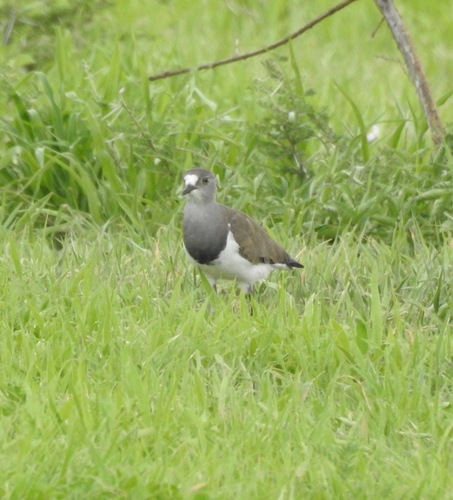
senegal lapwing (Vanellus lugubris) senegal lapwing
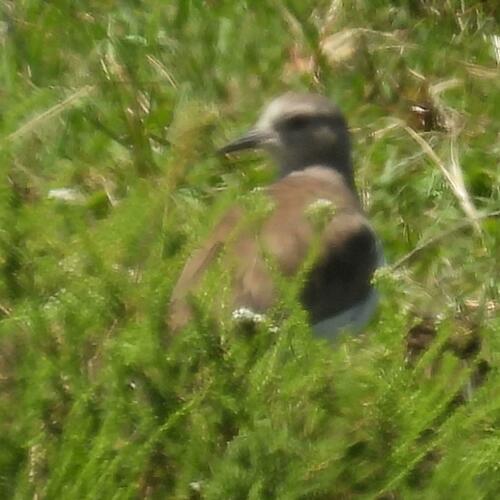
black-winged lapwing (Vanellus melanopterus) black-winged lapwing

Mídia

Carregando…

Em resumo

The most reliable field mark between Senegal Lapwing and Black-winged Lapwing is the prominent white wingbar of Black-winged Lapwing, visible in flight and bordered by black remiges—a feature lacking in Senegal Lapwing. When perched, Black-winged Lapwing shows a sharp black breast band and a white forehead patch, while Senegal Lapwing is plainer. Habitat can also help: Senegal Lapwing prefers lower, drier grasslands, while Black-winged Lapwing is found in well-watered, temperate grasslands, often at higher elevations. Both species can look similar at a distance, especially immatures, but careful attention to wing pattern and breast band is key.

Dicas de identificação

  1. White wingbar in flight: Black-winged Lapwing always shows a bold white wingbar bordered by black remiges when flying—Senegal Lapwing never does. Use this mark for all ages and seasons.
  2. Breast band: Black-winged Lapwing has a sharp, black breast band separating the grey head/neck from the white underparts. Senegal Lapwing lacks this, appearing plainer and more uniformly brownish. This is visible when perched and sometimes in flight.
  3. Forehead patch: Both can show some white on the forehead, but Black-winged Lapwing's is often more prominent and variable. Do not rely on this alone, but it supports ID when combined with other marks.
  4. Upperwing coverts: Black-winged Lapwing has brown wing coverts, but this is subtle and not usually diagnostic without the wingbar.
  5. General coloration: Senegal Lapwing is overall plainer, lacking strong contrasts and appearing more uniformly brownish above and below.
  6. Habitat context: If seen in lush, well-watered, or higher-elevation grassland, Black-winged Lapwing is more likely. In drier, lower grasslands, Senegal Lapwing is favored. Use with caution as ranges can overlap.
  7. Behavior in flocks: Black-winged Lapwing may form tight, plover-like flying flocks and can be territorial with display flights in breeding season. Senegal Lapwing is less likely to show these behaviors.
  8. Feeding behavior: Black-winged Lapwing is noted for hunting termites and defending small feeding territories. Senegal Lapwing's feeding is less specialized.
  9. Perched jizz: Black-winged Lapwing may look more upright and show a strong breast band; Senegal Lapwing is more uniformly colored and less contrasting in posture.
  10. Immature birds: No detailed descriptions, but the white wingbar of Black-winged Lapwing is present at all ages and remains the best separator in flight.
  11. Mixed flocks: If seen with Crowned Lapwing or in mixed lapwing groups, check for the white wingbar to pick out Black-winged Lapwing.
  12. Voice: Not described in the sources; do not use as a separator.
  13. Bill and leg color: Not reliably described for separation; avoid using these features.
  14. Size: Both are similar in size; do not use as a primary field mark.
  15. Pitfalls: Do not confuse the white forehead patch of Black-winged Lapwing with the less prominent pale on Senegal Lapwing; always confirm with wingbar and breast band.

Tamanho

Senegal Lapwing averages 111g in body mass [wikidata], while no direct mass is available for Black-winged Lapwing, but both are medium-sized lapwings and appear similar in size in the field. Size is not a reliable separator between these two.

Plumagem

In flight, Black-winged Lapwing of all ages shows a bold white wingbar bordered by black remiges, a key distinction from Senegal Lapwing, which lacks this feature. Black-winged Lapwing also has a sharp black breast band separating the grey head/neck from the white underparts, visible when perched and sometimes in flight. The wing coverts of Black-winged Lapwing are brown, and it has a variable but often prominent white forehead patch. Senegal Lapwing is overall plainer, lacking the strong breast band and wingbar, and appears more uniformly brownish above. Both species may show some white on the forehead, but only Black-winged Lapwing combines this with the breast band and wingbar. Juvenile and immature plumages are not described in detail for either, but the flight pattern (white wingbar vs. plain wing) is diagnostic at all ages.

Comportamento

Black-winged Lapwing may join mixed flocks with other lapwings and is territorial during breeding, defending small feeding areas and performing display flights with exaggerated wingbeats. Senegal Lapwing's behavior is less specifically described, but it is generally found in open grassy areas and does not have the same noted display flights or territorial aggression. Both species forage on the ground, but Black-winged Lapwing is noted for hunting termites and forming tight flying flocks that can resemble plovers.

Habitat

Senegal Lapwing prefers open grassy habitats at lower, drier elevations and is widespread across much of sub-Saharan Africa. Black-winged Lapwing is more of a habitat specialist, favoring short grass in well-watered, temperate grasslands, often at higher elevations or in areas with more moisture. During the breeding season, Black-winged Lapwing may move to even higher ground. Habitat overlap is possible, but if the area is especially dry and low, Senegal Lapwing is more likely; in lush, temperate grassland at elevation, Black-winged Lapwing is favored.

Enviar uma descrição melhor

Use as mesmas seções da comparação. Seu texto é publicado na hora.

The most reliable field mark between Senegal Lapwing and Black-winged Lapwing is the prominent white wingbar of Black-winged Lapwing, visible in flight and bordered by black remiges—a feature lacking in Senegal Lapwing. When perched, Black-winged Lapwing shows a sharp black breast band and a white forehead patch, while Senegal Lapwing is plainer. Habitat can also help: Senegal Lapwing prefers lower, drier grasslands, while Black-winged Lapwing is found in well-watered, temperate grasslands, often at higher elevations. Both species can look similar at a distance, especially immatures, but careful attention to wing pattern and breast band is key.

  1. White wingbar in flight: Black-winged Lapwing always shows a bold white wingbar bordered by black remiges when flying—Senegal Lapwing never does. Use this mark for all ages and seasons.
  2. Breast band: Black-winged Lapwing has a sharp, black breast band separating the grey head/neck from the white underparts. Senegal Lapwing lacks this, appearing plainer and more uniformly brownish. This is visible when perched and sometimes in flight.
  3. Forehead patch: Both can show some white on the forehead, but Black-winged Lapwing's is often more prominent and variable. Do not rely on this alone, but it supports ID when combined with other marks.
  4. Upperwing coverts: Black-winged Lapwing has brown wing coverts, but this is subtle and not usually diagnostic without the wingbar.
  5. General coloration: Senegal Lapwing is overall plainer, lacking strong contrasts and appearing more uniformly brownish above and below.
  6. Habitat context: If seen in lush, well-watered, or higher-elevation grassland, Black-winged Lapwing is more likely. In drier, lower grasslands, Senegal Lapwing is favored. Use with caution as ranges can overlap.
  7. Behavior in flocks: Black-winged Lapwing may form tight, plover-like flying flocks and can be territorial with display flights in breeding season. Senegal Lapwing is less likely to show these behaviors.
  8. Feeding behavior: Black-winged Lapwing is noted for hunting termites and defending small feeding territories. Senegal Lapwing's feeding is less specialized.
  9. Perched jizz: Black-winged Lapwing may look more upright and show a strong breast band; Senegal Lapwing is more uniformly colored and less contrasting in posture.
  10. Immature birds: No detailed descriptions, but the white wingbar of Black-winged Lapwing is present at all ages and remains the best separator in flight.
  11. Mixed flocks: If seen with Crowned Lapwing or in mixed lapwing groups, check for the white wingbar to pick out Black-winged Lapwing.
  12. Voice: Not described in the sources; do not use as a separator.
  13. Bill and leg color: Not reliably described for separation; avoid using these features.
  14. Size: Both are similar in size; do not use as a primary field mark.
  15. Pitfalls: Do not confuse the white forehead patch of Black-winged Lapwing with the less prominent pale on Senegal Lapwing; always confirm with wingbar and breast band.

Senegal Lapwing averages 111g in body mass [wikidata], while no direct mass is available for Black-winged Lapwing, but both are medium-sized lapwings and appear similar in size in the field. Size is not a reliable separator between these two.

In flight, Black-winged Lapwing of all ages shows a bold white wingbar bordered by black remiges, a key distinction from Senegal Lapwing, which lacks this feature. Black-winged Lapwing also has a sharp black breast band separating the grey head/neck from the white underparts, visible when perched and sometimes in flight. The wing coverts of Black-winged Lapwing are brown, and it has a variable but often prominent white forehead patch. Senegal Lapwing is overall plainer, lacking the strong breast band and wingbar, and appears more uniformly brownish above. Both species may show some white on the forehead, but only Black-winged Lapwing combines this with the breast band and wingbar. Juvenile and immature plumages are not described in detail for either, but the flight pattern (white wingbar vs. plain wing) is diagnostic at all ages.

Black-winged Lapwing may join mixed flocks with other lapwings and is territorial during breeding, defending small feeding areas and performing display flights with exaggerated wingbeats. Senegal Lapwing's behavior is less specifically described, but it is generally found in open grassy areas and does not have the same noted display flights or territorial aggression. Both species forage on the ground, but Black-winged Lapwing is noted for hunting termites and forming tight flying flocks that can resemble plovers.

Senegal Lapwing prefers open grassy habitats at lower, drier elevations and is widespread across much of sub-Saharan Africa. Black-winged Lapwing is more of a habitat specialist, favoring short grass in well-watered, temperate grasslands, often at higher elevations or in areas with more moisture. During the breeding season, Black-winged Lapwing may move to even higher ground. Habitat overlap is possible, but if the area is especially dry and low, Senegal Lapwing is more likely; in lush, temperate grassland at elevation, Black-winged Lapwing is favored.

Descartar as alterações?

Você tem edições não salvas. Se sair agora, elas serão perdidas.

senegal lapwing · black-winged lapwing · Minhas aves difíceis