

batuíra-de-bando vs batuíra-de-coleira
Charadrius semipalmatus versus Anarhynchus collaris
Jogue um quiz com batuíra-de-bando e batuíra-de-coleira
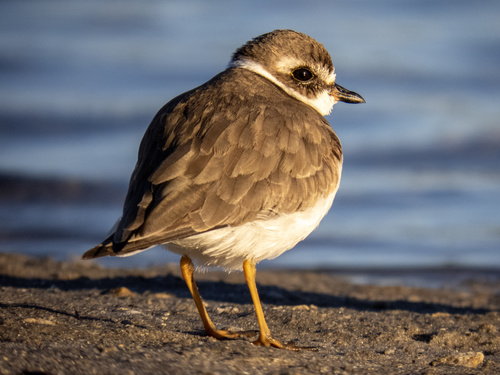 batuíra-de-bando
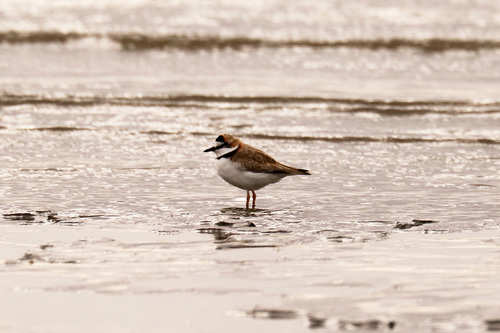 batuíra-de-coleira
Em resumo
The most reliable field mark between Semipalmated Plover and Collared Plover is the presence or absence of a pale collar: Semipalmated Plover shows a distinct pale collar behind the black neck band, while Collared Plover lacks this, giving it a cleaner, more sharply defined black breast band. In flight, Collared Plover displays a white wing bar and white tail sides, which are less pronounced or absent in Semipalmated. Structure also helps: Semipalmated is slightly larger and has a thicker, shorter bill. Immature birds are best separated by head pattern and breast band color—Collared Plover immatures lack any black on the head and have brown chest patches instead of a full band. Both species can overlap in sandy coastal habitats, but Collared Plover is more strictly associated with open sandy or riverine settings in the Neotropics.
Dicas de identificação
- Pale Collar: Semipalmated Plover shows a pale collar behind the black neck band; Collared Plover lacks this, giving a more sharply defined black band. This is the single most reliable adult field mark.
- Breast Band: Both species have a single breast band, but Collared Plover's is jet black and sharply bordered, while Semipalmated's is often less crisp and bordered by the pale collar.
- Head Pattern (Adult): Semipalmated has a brown cap, white forehead, and a black mask; Collared Plover has a white forehead with a black bar above and a black stripe below (from bill to eye), plus a chestnut crown and nape.
- Bill Structure: Semipalmated Plover has a noticeably thicker, shorter bill (orange with black tip); Collared Plover's bill is finer and all dark.
- Leg Color: Collared Plover adults have yellow legs; Semipalmated's legs are duller, often orange or yellowish but less bright.
- In Flight (Adult): Collared Plover shows a white wing bar and white sides to the tail; Semipalmated Plover's upperwing is more uniform, lacking a strong white bar, and tail pattern is less contrasting.
- Immature Plumage: Immature Collared Plovers lack black on the head and have brown chest patches instead of a full band; Semipalmated immatures retain a dark neck band and partial mask.
- Size and Structure: Semipalmated is slightly larger and bulkier, with a thicker bill; Collared Plover is daintier and more lightly built. This is subtle but can help with experience.
- Behavior: Collared Plover is typically solitary or in pairs and uses a run-and-pause foraging style; Semipalmated is more likely to be seen in loose flocks, especially on migration.
- Habitat Context: Collared Plover is more likely on inland riverbanks or open sandy savannas in the Neotropics; Semipalmated prefers tidal flats and beaches, especially in migration and winter.
- Voice: Collared Plover gives a sharp metallic 'pip' in flight; Semipalmated's call is not described here, so use with caution.
- Sex Differences: Collared Plover females may have a brownish tinge to the black areas, but this is subtle and not always visible; Semipalmated shows little sexual dimorphism in the field.
- Pitfalls: Both species can appear similar at a distance, especially when head pattern is obscured. Focus on the presence/absence of the pale collar, bill thickness, and flight pattern for best separation.
- Seasonal Variation: Collared Plover is mainly sedentary, while Semipalmated is migratory; time of year and location can help narrow down the ID.
- Flock Size: Large groups are more likely to be Semipalmated, especially outside the breeding season; Collared Plover is seldom seen in flocks.
Tamanho
Semipalmated Plover averages 17–19 cm in length and 46–47 g in weight, making it a bit larger and heavier than Collared Plover, which is about 18 cm long but only 35 g. The difference is subtle in the field, but Semipalmated appears slightly bulkier with a thicker bill, while Collared Plover is more delicate and lightly built. Bill thickness is a more useful structural cue than overall length.
Plumagem
Immature Collared Plovers lack any black on the head and show brown patches on each side of the chest instead of a full black breast band—this is a key difference from Semipalmated Plover immatures, which retain a single dark neck band and a partial black mask. Adult Semipalmated Plovers have a brown cap, white forehead, black mask, and a single black neck band bordered by a pale collar. Collared Plover adults have a white forehead, bordered above by a black bar and below by a black stripe to the eye, with a chestnut crown/nape and yellow legs. In flight, Collared Plover shows a white wing bar and white tail sides, while Semipalmated Plover's upperwing is more uniform and lacks a strong white bar. Both have brown upperparts and white underparts, but the head and neck patterning is more contrasting and crisp in Collared Plover.
Comportamento
Semipalmated Plover is more likely to be seen in flocks, especially on migration, and often forages by sight on tidal flats and beaches, sometimes probing. Collared Plover is less gregarious, typically solitary or in pairs, and uses a run-and-pause technique to catch prey. Both species perform broken-wing distraction displays near nests, but Collared Plover is notably wary and seldom forms flocks.
Habitat
Semipalmated Plover breeds in open ground on northern beaches and flats, and winters on coastal mudflats and beaches across the Americas. Collared Plover is more strictly associated with sandy coasts, estuarine mud, inland riverbanks, and open sandy savannas in the Neotropics, from Mexico to Argentina. While both may overlap on some coasts, Collared Plover is more likely inland or on riverine sandbars in tropical regions.
Voz
Collared Plover gives a sharp, metallic 'pip' in flight. No distinctive vocalization is described for Semipalmated Plover in these notes, so voice is only weakly diagnostic here.
batuíra-de-bando · batuíra-de-coleira · Minhas aves difíceis