

gaivota-de-sabine vs saunders's gull
Xema sabini versus Saundersilarus saundersi
Jogue um quiz com gaivota-de-sabine e saunders's gull
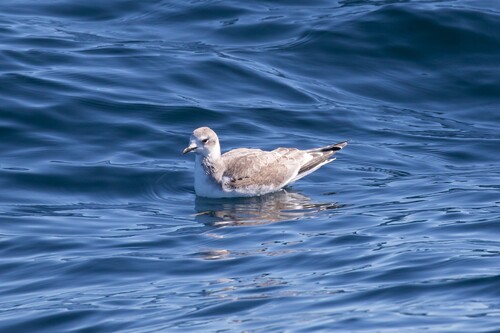 gaivota-de-sabine
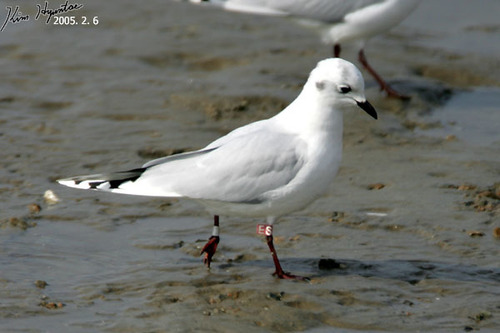 saunders's gull
Em resumo
As gaivotas-de-sabine juvenis e imaturas são melhor diferenciadas da saunders's gull pelo seu impressionante padrão tricolor das asas superiores em voo: um triângulo ousado preto, branco e cinza (ou marrom em juvenis), único entre as gaivotas. As imaturas da saunders's gull não apresentam isso, mostrando apenas algumas manchas escuras e uma faixa preta estreita na cauda. Os adultos são separados pela cauda bifurcada e asas pontudas da gaivota-de-sabine, em contraste com o corpo mais robusto e a cauda arredondada da saunders's gull. A cor e o padrão do bico também diferem, com a gaivota-de-sabine apresentando um bico preto com uma ponta amarela, enquanto a da saunders's gull é totalmente preta. Ambas são gaivotas pequenas e pálidas, mas a gaivota-de-sabine é mais esbelta e com asas mais longas, especialmente em voo.
Dicas de identificação
- Juvenil/imatura em voo: Procure pela asa superior tricolor única da gaivota-de-sabine (triângulo preto, branco, cinza/marrom) visível de cima; as imaturas da saunders's gull nunca mostram isso, apenas algumas manchas escuras e uma faixa preta estreita na cauda.
- Forma da cauda: A gaivota-de-sabine tem uma cauda branca levemente bifurcada (todas as idades, especialmente óbvia em voo); a cauda da saunders's gull é mais quadrada, com uma faixa preta nas imaturas.
- Padrão das asas dos adultos: Os adultos da gaivota-de-sabine mostram quatro primárias externas pretas com primárias e secundárias internas brancas, formando um contraste nítido; os adultos da saunders's gull têm asas cinza pálido com marcas pretas nas primárias, mas não apresentam o triângulo tricolor nítido.
- Cor e padrão do bico: A gaivota-de-sabine tem um bico preto com uma ponta amarela (todas as idades); o bico da saunders's gull é curto e totalmente preto.
- Cor das pernas: A saunders's gull tem pernas marrom-avermelhadas escuras, que podem ser visíveis de perto; a cor das pernas da gaivota-de-sabine não é distintiva nas notas.
- Padrão da cabeça (reprodução): A gaivota-de-sabine apresenta uma capuz cinza escuro com um colar preto estreito; a saunders's gull tem um capuz e nuca pretos, sem colar.
- Padrão da cabeça (não reprodução): A gaivota-de-sabine perde o capuz, tornando-se com a cabeça mais simples; a saunders's gull mostra um capuz e nuca cinza manchado.
- Forma do corpo e jizz: A gaivota-de-sabine é esbelta, com asas longas e graciosas, frequentemente comparada a uma andorinha-do-mar; a saunders's gull é robusta, compacta e com bico curto.
- Estilo de voo: A gaivota-de-sabine é flutuante e ágil, com asas pontudas e cauda bifurcada; a saunders's gull é mais direta e menos flutuante.
- Habitat: A gaivota-de-sabine é pelágica ou costeira durante a migração, raramente em pântanos salinos; a saunders's gull está quase sempre em habitats estuarinos ou pantanosos na Ásia Oriental.
- Contexto geográfico: Na Europa, América do Norte ou águas pelágicas, a saunders's gull é extremamente improvável; em pântanos salinos da Ásia Oriental, a saunders's é a gaivota pequena padrão.
- Voz: Se ouvida, a gaivota-de-sabine emite um chamado agudo e estridente; o chamado da saunders's gull não é descrito aqui.
- Tamanho: Ambas são pequenas, mas a gaivota-de-sabine é mais esbelta e com asas mais longas; a saunders's gull é mais compacta e robusta.
- Armadilhas: À distância, a gaivota-de-sabine pode ser confundida com kittiwakes imaturas, mas as imaturas da saunders's gull não têm o triângulo tricolor da asa e mostram apenas manchas sutis na asa superior.
- Mudança sazonal: As imaturas da gaivota-de-sabine mantêm a plumagem juvenil durante o outono e só trocam de penas após chegarem aos locais de invernada; as imaturas da saunders's gull mostram sua faixa preta na cauda e a asa superior manchada no primeiro ano.
Tamanho
A gaivota-de-sabine é ligeiramente mais leve e mais esbelta, com uma massa corporal em torno de 185 g [wikidata], enquanto a saunders's gull é igualmente pequena, mas descrita como robusta e compacta. Ambas as espécies alcançam cerca de 33 cm de comprimento, mas a gaivota-de-sabine tem asas mais longas, finas e pontudas (envergadura de 81–87 cm), conferindo-lhe uma aparência mais graciosa, semelhante à de uma andorinha-do-mar. A saunders's gull está entre as gaivotas menores, mas suas proporções são mais robustas, com um bico mais curto e asas menos pontudas.
Plumagem
- Plumagem juvenil/imatura em voo: A gaivota-de-sabine (todas as idades) apresenta uma asa superior tricolor diagnóstica: primárias externas pretas, primárias e secundárias internas brancas, e coberturas cinza pálido (adultos) ou marrons (juvenis). A cauda é branca com uma faixa terminal preta em juvenis. As imaturas da saunders's gull não apresentam esse padrão, mostrando em vez disso uma faixa preta estreita na cauda e algumas manchas escuras na asa superior, mas sem o ousado triângulo tricolor.
- Plumagem de reprodução dos adultos: A gaivota-de-sabine tem um capuz cinza escuro com um colar preto estreito, costas e coberturas cinza pálido, e uma cauda branca levemente bifurcada. A adulta da saunders's gull tem um capuz e nuca pretos, corpo e cauda muito pálidos, e asas cinza pálido com marcas pretas nas primárias.
- Adultos não em reprodução: A gaivota-de-sabine perde o capuz, tornando-se com a cabeça mais simples. A saunders's gull mostra um capuz e nuca cinza manchado, e asas com pontas brancas e marcas pretas nas primárias.
- Bico e pernas: A gaivota-de-sabine tem um bico preto com uma ponta amarela; o bico da saunders's gull é curto e totalmente preto, com pernas marrom-avermelhadas escuras.
- Cauda: A cauda da gaivota-de-sabine é levemente bifurcada; a cauda da saunders's gull é mais quadrada com uma faixa preta nas imaturas.
Comportamento
A gaivota-de-sabine é mais graciosa e flutuante em voo, com asas longas e pontudas e uma cauda bifurcada, frequentemente lembrando uma andorinha-do-mar. É mais pelágica, frequentemente vista migrando longe da costa ou parando em costas durante a migração. A saunders's gull é mais propensa a ser vista em habitats estuarinos ou pantanosos, com um voo mais direto e menos flutuante e uma postura robusta e compacta quando empoleirada.
Habitat
A gaivota-de-sabine se reproduz na tundra ártica e migra longas distâncias sobre o oceano aberto, frequentemente vista em alto-mar ou como um migrante raro ao longo das costas e ocasionalmente no interior. A saunders's gull é estritamente costeira, encontrada na Ásia Oriental em águas estuarinas e pântanos intertidais, raramente aventurando-se longe de pântanos salinos e planícies de maré. Se vista em um pântano salino na Ásia Oriental, a saunders's é muito mais provável; uma observação pelágica ou em latitudes altas favorece a gaivota-de-sabine.
Voz
A gaivota-de-sabine emite um chamado muito agudo e estridente, que é distintivo se ouvido. Nenhum detalhe de vocalização é fornecido para a saunders's gull nas notas.