

petinha-marítima vs petinha-fulva
Anthus petrosus versus Anthus rubescens
Jogue um quiz com petinha-marítima e petinha-fulva
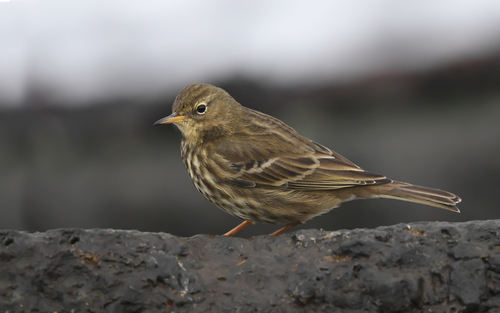 petinha-marítima
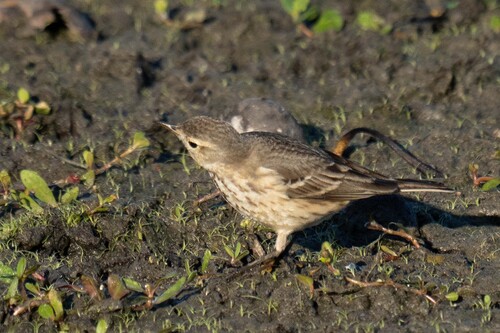 petinha-fulva
Em resumo
A marca de campo mais confiável entre a petinha-marítima e a petinha-fulva é a cor e definição das listras abaixo e o tom das partes superiores: a petinha-marítima é geralmente mais escura e com tom mais oliva acima, com listras borradas e mal definidas nas partes inferiores, enquanto a petinha-fulva é mais clara e cinza acima, com listras mais finas e distintas e uma barriga mais clara, esbranquiçada. Pássaros juvenis e imaturos de ambas as espécies podem parecer semelhantes, mas a aparência geral mais escura da petinha-marítima e suas pernas mais escuras ajudam a separá-la. Em voo, a petinha-marítima exibe penas da cauda externas escuras—não brancas—, um ponto chave se visto bem. O habitat também é uma forte pista: a petinha-marítima é quase sempre encontrada em costas rochosas da Europa, enquanto a petinha-fulva (um raro vagante na Europa) prefere solo aberto e levemente vegetado ou tundra. As vocalizações diferem sutilmente, mas não são as mais confiáveis para uma separação rápida.
Dicas de identificação
- Padrão da cauda em voo: A petinha-marítima exibe penas da cauda externas escuras (não brancas), enquanto a petinha-fulva tem penas da cauda externas mais claras ou brancas. Esta é uma marca chave se a cauda for vista bem em voo ou quando o pássaro abre a cauda.
- Cor das partes superiores: A petinha-marítima é mais escura e com tom mais oliva-marrom acima, enquanto a petinha-fulva é mais clara, cinza-marrom. Essa diferença é mais aparente em boa luz e quando os pássaros estão lado a lado.
- Listras nas partes inferiores: A petinha-marítima tem listras marrons pesadas, borradas e mal definidas nas partes inferiores cor buff; a petinha-fulva tem listras mais finas e distintas em um peito e flancos cor buff, com uma barriga mais branca.
- Cor das pernas: As pernas da petinha-marítima são marrom escuro a negras; as pernas da petinha-fulva são escuras, mas podem parecer mais claras ou com um tom avermelhado em algumas luzes. A cor das pernas é sutil, mas pode ajudar em boas vistas.
- Anel ocular: Ambas as espécies têm um anel ocular pálido, mas é menos óbvio na petinha-marítima e mais perceptível na petinha-fulva.
- Cor e forma do bico: Ambas têm bicos escuros de forma semelhante; não é um separador confiável.
- Habitat: A petinha-marítima é quase sempre encontrada em costas rochosas da Europa; a petinha-fulva é encontrada em campos abertos, tundra ou prados, e é um raro vagante na Europa. O habitat é frequentemente a pista mais rápida.
- Comportamento: A petinha-marítima é tipicamente solitária ou em pares, especialmente durante a reprodução; a petinha-fulva é mais provável de ser vista em pequenos bandos fora da temporada de reprodução.
- Voo de canto: Machos da petinha-marítima realizam um voo de canto em paraquedas durante a temporada de reprodução, subindo e descendo em um display de flutuação; o display da petinha-fulva é menos descrito nas notas.
- Confusão juvenil: Juvenis de petinha-marítima podem parecer com petinhas-dos-prados, mas são mais escuros e menos nitidamente listrados do que juvenis de petinha-fulva. Ambos são mais marrons e mais listrados do que os adultos, mas a petinha-marítima sempre parece mais escura.
- Variação sazonal: A subespécie oriental da petinha-marítima (littoralis) pode mostrar partes inferiores rosadas e um supercílio pálido no verão, assemelhando-se à petinha-ribeirinha, mas não à petinha-fulva. No inverno, a petinha-marítima é mais escura e mais uniforme do que a petinha-fulva.
- Vocalização: O 'pseep' da petinha-marítima é mais agudo do que o 'sip' chiado da petinha-fulva; use com cautela, pois os chamados são semelhantes e se sobrepõem a outros pipits.
- Tamanho: A petinha-marítima é ligeiramente maior e mais pesada, mas a sobreposição de tamanho é grande e não é uma marca de campo confiável.
- Diferenças sexuais: Ambas as espécies são sexualmente monomórficas; não use o sexo para identificação.
- Sobreposição: Se você estiver na Europa ocidental em uma costa rochosa, a petinha-marítima é esmagadoramente mais provável; a petinha-fulva é um raro vagante e deve ser suspeitada apenas com marcas de campo de apoio fortes.
Tamanho
A petinha-marítima é ligeiramente maior e mais pesada, medindo 16,5–17 cm de comprimento e pesando 18–32,5 g [wikipedia]. A petinha-fulva é semelhante em tamanho, mas medições precisas para comparação direta não são fornecidas nas notas. Ambas as espécies são pipits pequenos e esguios, e o tamanho sozinho não é uma marca de campo segura, pois há considerável sobreposição e ambas podem parecer semelhantes em campo.
Plumagem
Juvenis e imaturos de petinha-marítima são mais escuros e com tom mais oliva-marrom acima, com listras marrons pesadas e borradas abaixo, e carecem da nitidez vista na petinha-fulva. Suas pernas são marrom escuro a negras. A petinha-fulva (de todas as idades) é mais clara, cinza-marrom acima, com listras mais finas e distintas em um peito e flancos cor buff, e uma barriga esbranquiçada. As penas da cauda externas da petinha-marítima são escuras (não brancas), uma característica que é consistente em todas as idades e é especialmente útil em voo. A petinha-fulva tem pernas mais claras e uma aparência geralmente mais leve e desbotada, com menos contraste entre as partes superiores e inferiores. Ambas as espécies têm um anel ocular pálido, mas o da petinha-marítima é menos óbvio. Os sexos são semelhantes em ambas as espécies, e as diferenças relacionadas à idade são sutis, com juvenis de ambas sendo mais listrados e marrons do que os adultos, mas a petinha-marítima sempre parece mais escura e mais marcada.
Comportamento
A petinha-marítima é altamente territorial durante todo o ano onde é residente, com machos realizando voos de canto durante a temporada de reprodução, subindo 15–30 metros e descendo em um display de paraquedas flutuante. A petinha-fulva é migratória, formando bandos fora da temporada de reprodução e frequentemente vista correndo no chão em áreas abertas. Ambas as espécies se alimentam de invertebrados e são forrageadoras no solo, mas a petinha-marítima é mais provável de ser vista sozinha ou em pares em costas rochosas, enquanto a petinha-fulva pode ser encontrada em pequenos bandos em campos abertos ou tundra.
Habitat
O habitat é um forte separador: a petinha-marítima se reproduz e inverna quase exclusivamente em costas rochosas do oeste da Europa, raramente se afastando da zona intertidal. A petinha-fulva se reproduz em tundra e inverna em áreas abertas e levemente vegetadas, incluindo prados e campos, e é apenas um raro vagante na Europa. Se o pássaro estiver em uma costa rochosa, especialmente no oeste da Europa, a petinha-marítima é vastamente mais provável; um pipit em um campo aberto ou habitat semelhante à tundra, especialmente fora da Europa, é mais provável ser a petinha-fulva.
Voz
O chamado de voo da petinha-marítima é um 'pseep' agudo, intermediário entre o suave 'sip sip sip' da petinha-dos-prados e o fino 'fist' da petinha-ribeirinha. Sua canção é uma série de notas tilintantes 'cheepa', chamados 'gee' ascendentes e um breve trinado, frequentemente entregues em voo. O chamado da petinha-fulva é um 'sip' chiado, menos agudo do que o da petinha-marítima. Embora os chamados sejam sutilmente diferentes, podem ser difíceis de separar em campo, especialmente para ouvintes inexperientes.