
maçarico-de-papo-vermelho vs combatente
Calidris canutus versus Calidris pugnax
Jogue um quiz com maçarico-de-papo-vermelho e combatente
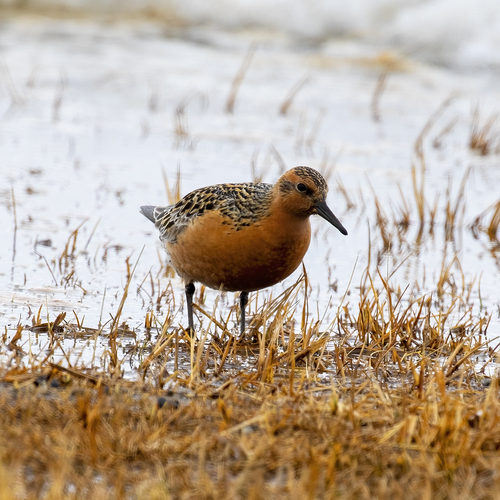 maçarico-de-papo-vermelho
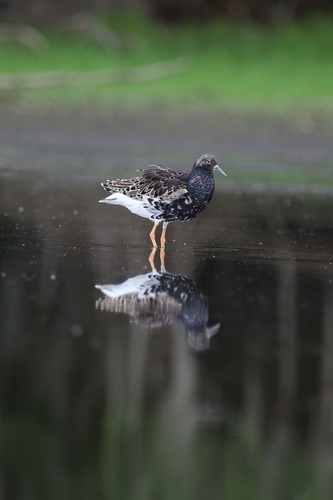 combatente
Em resumo
A marca de campo mais confiável para separar o maçarico-de-papo-vermelho do combatente é o padrão das asas e da cauda em voo: o maçarico-de-papo-vermelho apresenta uma faixa branca ousada na asa e uma rabadilha e cauda cinza sólida, enquanto o combatente tem apenas uma faixa branca fina e indistinta na asa e ovais brancos distintos nas laterais da cauda. No chão, o maçarico-de-papo-vermelho é compacto e baixo, com pernas curtas e escuras e um bico reto de comprimento médio, enquanto o combatente parece ter uma barriga saliente, pescoço mais longo e fica mais alto em pernas longas e frequentemente coloridas. As aves juvenis e de inverno de ambas as espécies podem parecer superficialmente semelhantes, mas a atenção cuidadosa à estrutura, cor das pernas e padrão de voo ajudará a identificar. As diferenças na plumagem de reprodução são dramáticas no macho adulto do combatente (com rufos e tufos ornamentais), mas as fêmeas e as aves não reprodutoras exigem uma análise mais detalhada.
Dicas de identificação
- Padrão de voo (todas as idades): O maçarico-de-papo-vermelho apresenta uma faixa branca ousada e larga na asa e uma rabadilha e cauda cinza simples em voo. O combatente tem apenas uma faixa fina e fraca na asa e ovais brancos distintos nas laterais da cauda. Esta é a marca mais confiável, especialmente para imaturos e aves não reprodutoras.
- Comprimento e cor das pernas: O maçarico-de-papo-vermelho tem pernas curtas e escuras em todas as idades. O combatente tem pernas muito mais longas, esverdeadas em juvenis e rosa a laranja (às vezes avermelhadas) em adultos, especialmente machos na época de reprodução.
- Estrutura e postura: O maçarico-de-papo-vermelho é compacto, com um pescoço curto e uma postura 'baixa'. O combatente tem barriga saliente, pescoço mais longo, cabeça pequena e fica mais ereto e alto.
- Bico: O bico do maçarico-de-papo-vermelho é de comprimento médio, reto e aproximadamente do mesmo tamanho que sua cabeça. O bico do combatente é semelhante em comprimento, mas pode parecer ligeiramente mais longo e mais fino, especialmente nas fêmeas.
- Plumagem de reprodução (adultos): O macho do combatente em plumagem de reprodução é inconfundível com seu rufos ornamentais e tufos na cabeça. A fêmea do combatente e o maçarico-de-papo-vermelho são menos distintos, mas os machos do maçarico-de-papo-vermelho têm uma cor de parte inferior canela rica, enquanto a fêmea do combatente é mais apagada com manchas pretas.
- Partes superiores juvenis: Os juvenis do maçarico-de-papo-vermelho apresentam linhas submarginais e coberturas marrons; os juvenis do combatente têm um padrão superior escamoso e arrumado com forte tonalidade amarelada abaixo.
- Cor da parte inferior (não reprodutora): Ambos são cinza pálido no inverno, mas o maçarico-de-papo-vermelho é mais uniforme, enquanto o combatente pode mostrar mais contraste e uma aparência ligeiramente escamosa.
- Comportamento alimentar: O maçarico-de-papo-vermelho se move de forma constante com uma ação de agachamento e sondagem; o combatente frequentemente fica ereto e pode ser visto em bandos maiores e mais ativos.
- Preferência de habitat: O maçarico-de-papo-vermelho é mais estritamente costeiro, especialmente durante a migração e nos locais de invernada. O combatente é mais provável de ser encontrado em áreas interiores ou em pântanos de água doce, embora ocorra sobreposição.
- Bate de asa em voo: O combatente tem um bate de asa mais profundo e lento do que o maçarico-de-papo-vermelho, que voa de forma mais direta e uniforme.
- Dimorfismo sexual: Apenas o macho do combatente apresenta plumagem de reprodução extravagante; a fêmea do combatente e o maçarico-de-papo-vermelho têm marcas mais sutis.
- Impressão de tamanho: Ambos são semelhantes em massa e comprimento, mas o combatente parece mais alto e mais alongado devido à sua estrutura.
- Voz: O maçarico-de-papo-vermelho emite um 'knutt' ou 'knuup-knuup' baixo em voo; os chamados do combatente não são distintos para separação.
- Armadilhas: A fêmea do combatente e o maçarico-de-papo-vermelho podem ser muito semelhantes em plumagem não reprodutora; confie na estrutura, cor das pernas e padrão de voo para separação.
- Contexto sazonal: Se você ver uma ave com um rufos e tufos na cabeça, é um macho do combatente em plumagem de reprodução. Caso contrário, use as marcas acima, especialmente no outono e no inverno, quando ambas as espécies são simples.
Tamanho
O maçarico-de-papo-vermelho e o combatente são quase idênticos em massa (cerca de 137 g para o maçarico-de-papo-vermelho, 136 g para o combatente [wikidata]), e seus comprimentos se sobrepõem (maçarico-de-papo-vermelho 23–26 cm, fêmea do combatente 22–26 cm [wikipedia]). No entanto, o combatente geralmente parece mais alto e mais alongado devido ao seu pescoço e pernas mais longos, enquanto o maçarico-de-papo-vermelho é mais compacto e 'baixo'. Em bandos mistos, o combatente pode se destacar por sua postura ereta e barriga saliente, especialmente quando comparado à postura mais horizontal e agachada do maçarico-de-papo-vermelho.
Plumagem
- Juvenil/Primeiro inverno: Os juvenis do maçarico-de-papo-vermelho têm linhas submarginais distintas e coberturas marrons, enquanto os juvenis do combatente apresentam um padrão superior arrumado e escamoso com centros de penas escuras e uma forte tonalidade amarelada abaixo. Em voo, o maçarico-de-papo-vermelho de todas as idades exibe uma ampla faixa branca limpa na asa e uma rabadilha e cauda cinza simples; o combatente mostra apenas uma faixa fina e fraca na asa e ovais brancos nas laterais da cauda.
- Adulto não reprodutor: Ambos são principalmente cinza pálido acima e abaixo, mas o maçarico-de-papo-vermelho é mais uniformemente cinza pálido, enquanto o combatente (especialmente as fêmeas) pode mostrar mais contraste e um efeito ligeiramente escamoso nas partes superiores.
- Adulto reprodutor: O maçarico-de-papo-vermelho é cinza manchado acima com um rosto, garganta e peito canela ricos, desvanecendo para uma barriga traseira pálida. Os machos do combatente são inconfundíveis em plumagem de reprodução completa com rufos extravagantes e tufos na cabeça (não presentes em fêmeas ou juvenis), enquanto as fêmeas mostram partes superiores cinza-marrons com penas de bordas brancas e centros escuros e manchas pretas variáveis abaixo.
- Cor das pernas: O maçarico-de-papo-vermelho sempre tem pernas curtas e escuras; as pernas do combatente são muito mais longas e variam de esverdeadas (juvenis) a rosa, laranja ou até avermelhadas (machos adultos na época de reprodução).
Comportamento
O maçarico-de-papo-vermelho geralmente forrageia em uma postura baixa e agachada, movendo-se de forma constante e sondando a lama com seu bico. Ele é menos gregário ao se alimentar, e suas pernas curtas lhe conferem uma aparência 'baixa'. O combatente é altamente gregário, especialmente fora da época de reprodução, e frequentemente forma grandes bandos. Ele fica mais ereto, se move com um andar de barriga saliente, e suas pernas e pescoço mais longos lhe conferem uma aparência mais alta e elegante. Em voo, o combatente tem um bate de asa mais profundo e lento em comparação com o voo mais direto e uniforme do maçarico-de-papo-vermelho.
Habitat
O maçarico-de-papo-vermelho se reproduz na tundra ártica e migra para mudas costeiras e estuários. O combatente se reproduz em pântanos e prados úmidos em toda a Eurásia setentrional e inverna em uma gama mais ampla de zonas úmidas, incluindo pântanos interiores e campos alagados, bem como áreas costeiras. Durante a migração e o inverno, ambos podem ocorrer juntos em mudas, mas o combatente é mais provável de ser encontrado em áreas interiores ou em habitats de água doce, enquanto o maçarico-de-papo-vermelho é mais estritamente costeiro.
Voz
O maçarico-de-papo-vermelho é geralmente silencioso ao se alimentar, mas em bandos de voo emite um 'knutt' monossilábico baixo ou um 'knuup-knuup' dissilábico. Sua canção de exibição é um 'poor-me' flautado. Os chamados e sons de exibição do combatente não estão detalhados nas notas, mas as diferenças vocais não são uma marca de campo primária para separação.
maçarico-de-papo-vermelho · combatente · Minhas aves difíceis