

palau fantail vs palau flycatcher
Rhipidura lepida versus Myiagra erythrops
Jogue um quiz com palau fantail e palau flycatcher
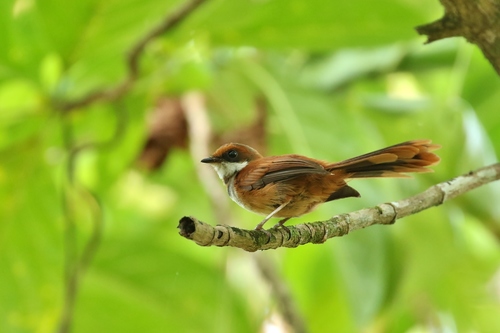 palau fantail
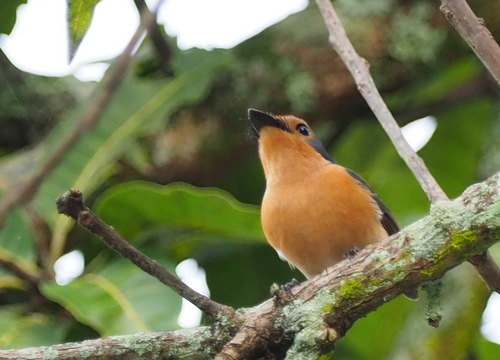 palau flycatcher
Em resumo
A maneira mais confiável de separar o palau fantail do palau flycatcher é pela sua estrutura e cauda: o fantail tem uma cauda distintamente longa e frequentemente a abre ou a agita, enquanto o flycatcher tem uma cauda mais curta e larga e uma postura mais robusta e ereta. Os palau fantails adultos apresentam uma combinação impressionante de partes superiores canela, peito preto e garganta e barriga brancas, enquanto o palau flycatcher não possui esse contraste e tem um padrão de cabeça diferente. Os juvenis de fantail têm partes superiores marrons e gargantas brancas sujas, que podem ser confundidas com outras aves sem graça, mas sua estrutura e comportamento da cauda permanecem distintos. Ambas as espécies são endêmicas de Palau e podem ocorrer em habitats semelhantes, portanto, atenção cuidadosa à forma e plumagem é essencial.
Dicas de identificação
- Forma e comportamento da cauda: O palau fantail tem uma cauda longa, frequentemente aberta ou agitada, que é uma marca de campo constante em todas as idades e plumagens. O palau flycatcher tem uma cauda mais curta e larga e não a abre ou agita da mesma forma.
- Estrutura geral: O fantail é esbelto e alongado, com um corpo curto e cauda longa, dando uma aparência delicada. O flycatcher é mais compacto e ereto, com um bico e corpo mais robustos.
- Contraste da plumagem adulta: Os adultos de fantail mostram partes superiores canela, peito preto, garganta e barriga brancas, e uma cauda com preto e rufo. O flycatcher não possui essa combinação, apresentando uma plumagem mais uniforme ou sutilmente marcada, possivelmente com um rosto rufo, mas sem o forte contraste preto e branco.
- Plumagem juvenil: Os juvenis de fantail são marrons acima com gargantas brancas sujas, sem o contraste agudo dos adultos, mas ainda mostrando a cauda longa e o comportamento ativo da cauda. A plumagem do juvenil flycatcher não é descrita, mas a estrutura e o comportamento ainda devem separá-los.
- Padrão das asas: Nenhum padrão distinto de asa superior é descrito para ambas as espécies que permitiria separação em voo com base apenas nas marcas das asas.
- Forma do bico: O fantail tem um bico fino e esbelto adequado para a coleta; o flycatcher tem um bico mais largo e plano típico de Myiagra, adaptado para captura de insetos em voo.
- Postura empoleirada: O fantail frequentemente aparece horizontal com a cauda levantada ou aberta; o flycatcher empoleira-se mais ereto, com uma postura mais estável e menos inquieta.
- Estilo de voo: O fantail é inquieto, com voos curtos frequentes e ação da cauda; o flycatcher faz voos mais diretos, saindo de um poleiro.
- Diferenças sexuais: Ambas as espécies são semelhantes em plumagem entre os sexos; as fêmeas de fantail são ligeiramente menores, mas isso não é uma marca de campo confiável.
- Sobreposição de habitat: Ambas podem ocorrer nos mesmos tipos de floresta, portanto, não confie apenas no habitat para identificação.
- Vocalizações: Nenhuma diferença diagnóstica é descrita nas notas; não confie na voz a menos que você tenha experiência local.
- Armadilhas com imaturos: Jovens fantails podem parecer sem graça e podem ser confundidos com outras pequenas aves, mas sua estrutura e comportamento da cauda permanecem distintos.
- Abundância local: O fantail é descrito como comum nas florestas de Palau; o status do flycatcher não é detalhado, mas ambos podem ser esperados em habitat adequado.
- Dicas contextuais: Se você ver uma ave ativamente abrindo a cauda e se movendo inquietamente pela vegetação rasteira, é quase certamente um fantail. Uma ave empoleirada ereta e saindo para insetos sem abrir a cauda é mais provável ser um flycatcher.
- Quando em dúvida: Concentre-se primeiro no comprimento e comportamento da cauda, depois verifique os contrastes únicos da plumagem do fantail e a forma geral.
Tamanho
O palau fantail mede em média cerca de 18 cm de comprimento e parece esbelto com uma cauda longa, dando-lhe uma aparência delicada e alongada. O palau flycatcher não é descrito em detalhes para tamanho nas notas disponíveis, mas como um flycatcher Myiagra, espera-se que tenha uma cauda mais curta e seja mais compacto, com um corpo e bico mais robustos. As fêmeas do fantail são ligeiramente menores que os machos, mas isso é sutil e não é uma marca de campo confiável.
Plumagem
Os adultos de palau fantail são canela acima (coroa, nuca, costas, cauda superior), com garganta e malar brancos, peito preto e barriga branca. As asas são pretas com bordas canela, e a cauda é preta com pontas rufas. Os juvenis são marrons acima e têm gargantas brancas sujas, sem o contraste agudo dos adultos, mas ainda mostrando a cauda longa e o comportamento ativo de abrir a cauda. O palau flycatcher não é descrito em detalhes para plumagem nas notas, mas como um Myiagra, ele carece dos tons canela do fantail e do forte contraste preto e branco do peito, apresentando em vez disso uma plumagem mais uniforme ou sutilmente marcada com um rosto rufo (como sugerido por nomes alternativos como 'flycatcher de rosto rufo'). O flycatcher não apresenta o padrão de cauda único do fantail ou a extensa coloração canela.
Comportamento
Os palau fantails são altamente ativos, frequentemente abrindo e agitando suas longas caudas, e são frequentemente vistos se movendo pela subcobertura e vegetação rasteira, coletando insetos da folhagem ou capturando-os em curtas saídas. Esse comportamento inquieto e agitado é típico dos fantails. Os palau flycatchers, em contraste, são mais propensos a empoleirar-se eretos e sair para capturar insetos, com menos movimento da cauda e uma postura mais estável, mais semelhante a um flycatcher. A ação constante da cauda do fantail é uma pista comportamental chave.
Habitat
Ambas as espécies são endêmicas de Palau e podem ser encontradas em florestas, incluindo crescimento primário e secundário, fragmentos florestais e ocasionalmente arbustos ou manguezais. O fantail é notado como comum nesses habitats e é especialmente ativo na subcobertura e vegetação rasteira. Não há evidências nas notas de forte separação de habitat entre os dois, portanto, o habitat sozinho não é diagnóstico.