

Motmot

mobelha-do-pacífico vs mobelha-de-bico-amarelo

Gavia pacifica versus Gavia adamsii

Jogue um quiz com mobelha-do-pacífico e mobelha-de-bico-amarelo
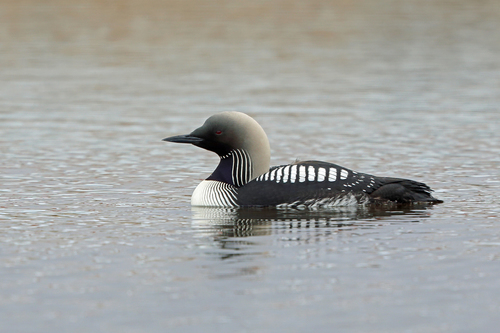
mobelha-do-pacífico (Gavia pacifica) mobelha-do-pacífico
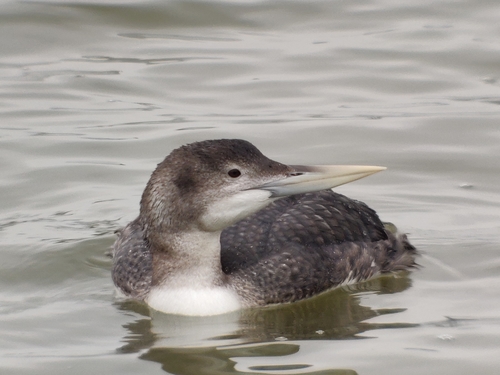
mobelha-de-bico-amarelo (Gavia adamsii) mobelha-de-bico-amarelo

Mídia

Carregando…

Em resumo

The most reliable way to separate Pacific Diver from White-billed Diver is by their dramatic size difference and bill color: White-billed Diver is much larger and has a pale, ivory-yellow bill, while Pacific Diver is medium-sized with a grey or whitish bill. Both species show similar black-and-white chequered upperparts and white underparts in breeding plumage, but White-billed Diver has a black head (not grey) and is bulkier overall. In non-breeding plumage, both have white forenecks and chins, but the White-billed Diver's bill remains pale and heavy, while Pacific Diver's is slimmer and darker. Immature and winter birds are easily confused, but size, bill color, and structure remain the most reliable field clues.

Dicas de identificação

  1. Size is the single most reliable field mark: White-billed Diver is more than twice as heavy as Pacific Diver and appears much larger and bulkier on the water. Use this especially when birds are seen together or with other waterfowl for scale.
  2. Bill color and shape: White-billed Diver has a thick, pale ivory or yellowish bill in all plumages, which stands out even at distance. Pacific Diver's bill is slimmer, more dagger-like, and grey or whitish, never truly pale yellow.
  3. Head color in breeding plumage: Pacific Diver has a grey head, while White-billed Diver's head is black. This is most useful in adults during the breeding season.
  4. Neck gloss: Both species can show a purple gloss on the head and neck in good light, but this is not a strong separator.
  5. Non-breeding/immature plumage: Both become drabber, with white chins and forenecks, but the bill remains diagnostic—White-billed Diver's is always pale, Pacific Diver's is not.
  6. Chequered mantle: Both species have a black-and-white chequered back in adult breeding plumage; this is not a separator.
  7. Flank patch: Both lack a white flank patch, so this mark is not useful for separating these two.
  8. Structure and jizz: White-billed Diver is longer-necked, deeper-bodied, and heavier overall. Pacific Diver is sleeker and more streamlined.
  9. Flight silhouette: No specific differences are described, but White-billed Diver will look larger and heavier in flight, with a thicker neck and larger bill.
  10. Behavior on water: Both ride low, but White-billed Diver can appear even lower and more ponderous due to size.
  11. Habitat context: If the bird is on a very large, deep, remote Arctic lake, White-billed Diver is more likely; Pacific Diver uses a wider range of lakes.
  12. Vocalizations: If heard, Pacific Diver's yodels and wails are more likely; White-billed Diver is less vocal and not usually identified by voice.
  13. Leg placement: Both have legs set far back, making walking on land difficult—this is not a separator.
  14. Seasonal context: Both migrate, but White-billed Diver is rarer and more localized in winter, especially away from the far north.
  15. When in doubt: If you see a loon with a pale, thick bill and massive size, it is White-billed Diver; if the bill is slimmer and the bird is much smaller, it is Pacific Diver.

Tamanho

White-billed Diver is dramatically larger than Pacific Diver. Adult White-billed Diver averages about 5056 g, with a length of 76–97 cm and a wingspan of 135–160 cm. Pacific Diver is much lighter at about 2232 g, 58–74 cm long, and with a wingspan of 110–128 cm. In the field, White-billed Diver appears bulkier, longer-necked, and heavier-bodied, often dwarfing nearby waterbirds, whereas Pacific Diver is more streamlined and compact.

Plumagem

No age-specific upperwing or flight pattern differences are described in the sources for these two species, so focus is on body plumage and bill color. In breeding plumage, Pacific Diver has a grey head, black throat with purple gloss, and a chequered black-and-white mantle, whereas White-billed Diver shows a black head and neck with a purple gloss, white underparts, and a similar chequered mantle. In non-breeding and immature plumages, both species become drabber with white chins and forenecks, but White-billed Diver retains a pale, ivory-yellow bill, while Pacific Diver's bill is grey or whitish. Both lack flank patches in all plumages, so this is not a useful mark here. The bill color and head color (grey vs black) are the main plumage differences in adults; in immatures and winter birds, bill color and overall bulk are key.

Comportamento

Both species are classic loons in behavior: they sit low in the water, dive frequently, and are awkward on land due to rear-placed legs. Both require a long water runway to take off. White-billed Diver, being larger, may appear even more cumbersome and slow to lift off. Both are territorial during breeding, but White-billed Diver is noted for especially intense territorial defense and may be seen in more open, deeper water.

Habitat

Both species breed on large northern lakes, but White-billed Diver is more restricted to very large, deep Arctic lakes and coastal areas, avoiding forested regions. Pacific Diver is more flexible, breeding on a wider range of northern lakes. In winter, both may be found along coasts, but White-billed Diver is generally rarer and more localized, often in remote or less-disturbed areas. If seen together, White-billed Diver will always be the larger, more imposing bird.

Voz

Pacific Diver is more vocal, especially in spring and summer, with a range of eerie wails, yodels, and sharp calls similar to Common Loon. White-billed Diver's calls are not detailed in the sources, but as a rule, it is less often heard, and its vocalizations are less likely to be a reliable field separation point for most observers.

Enviar uma descrição melhor

Use as mesmas seções da comparação. Seu texto é publicado na hora.

The most reliable way to separate Pacific Diver from White-billed Diver is by their dramatic size difference and bill color: White-billed Diver is much larger and has a pale, ivory-yellow bill, while Pacific Diver is medium-sized with a grey or whitish bill. Both species show similar black-and-white chequered upperparts and white underparts in breeding plumage, but White-billed Diver has a black head (not grey) and is bulkier overall. In non-breeding plumage, both have white forenecks and chins, but the White-billed Diver's bill remains pale and heavy, while Pacific Diver's is slimmer and darker. Immature and winter birds are easily confused, but size, bill color, and structure remain the most reliable field clues.

  1. Size is the single most reliable field mark: White-billed Diver is more than twice as heavy as Pacific Diver and appears much larger and bulkier on the water. Use this especially when birds are seen together or with other waterfowl for scale.
  2. Bill color and shape: White-billed Diver has a thick, pale ivory or yellowish bill in all plumages, which stands out even at distance. Pacific Diver's bill is slimmer, more dagger-like, and grey or whitish, never truly pale yellow.
  3. Head color in breeding plumage: Pacific Diver has a grey head, while White-billed Diver's head is black. This is most useful in adults during the breeding season.
  4. Neck gloss: Both species can show a purple gloss on the head and neck in good light, but this is not a strong separator.
  5. Non-breeding/immature plumage: Both become drabber, with white chins and forenecks, but the bill remains diagnostic—White-billed Diver's is always pale, Pacific Diver's is not.
  6. Chequered mantle: Both species have a black-and-white chequered back in adult breeding plumage; this is not a separator.
  7. Flank patch: Both lack a white flank patch, so this mark is not useful for separating these two.
  8. Structure and jizz: White-billed Diver is longer-necked, deeper-bodied, and heavier overall. Pacific Diver is sleeker and more streamlined.
  9. Flight silhouette: No specific differences are described, but White-billed Diver will look larger and heavier in flight, with a thicker neck and larger bill.
  10. Behavior on water: Both ride low, but White-billed Diver can appear even lower and more ponderous due to size.
  11. Habitat context: If the bird is on a very large, deep, remote Arctic lake, White-billed Diver is more likely; Pacific Diver uses a wider range of lakes.
  12. Vocalizations: If heard, Pacific Diver's yodels and wails are more likely; White-billed Diver is less vocal and not usually identified by voice.
  13. Leg placement: Both have legs set far back, making walking on land difficult—this is not a separator.
  14. Seasonal context: Both migrate, but White-billed Diver is rarer and more localized in winter, especially away from the far north.
  15. When in doubt: If you see a loon with a pale, thick bill and massive size, it is White-billed Diver; if the bill is slimmer and the bird is much smaller, it is Pacific Diver.

White-billed Diver is dramatically larger than Pacific Diver. Adult White-billed Diver averages about 5056 g, with a length of 76–97 cm and a wingspan of 135–160 cm. Pacific Diver is much lighter at about 2232 g, 58–74 cm long, and with a wingspan of 110–128 cm. In the field, White-billed Diver appears bulkier, longer-necked, and heavier-bodied, often dwarfing nearby waterbirds, whereas Pacific Diver is more streamlined and compact.

No age-specific upperwing or flight pattern differences are described in the sources for these two species, so focus is on body plumage and bill color. In breeding plumage, Pacific Diver has a grey head, black throat with purple gloss, and a chequered black-and-white mantle, whereas White-billed Diver shows a black head and neck with a purple gloss, white underparts, and a similar chequered mantle. In non-breeding and immature plumages, both species become drabber with white chins and forenecks, but White-billed Diver retains a pale, ivory-yellow bill, while Pacific Diver's bill is grey or whitish. Both lack flank patches in all plumages, so this is not a useful mark here. The bill color and head color (grey vs black) are the main plumage differences in adults; in immatures and winter birds, bill color and overall bulk are key.

Both species are classic loons in behavior: they sit low in the water, dive frequently, and are awkward on land due to rear-placed legs. Both require a long water runway to take off. White-billed Diver, being larger, may appear even more cumbersome and slow to lift off. Both are territorial during breeding, but White-billed Diver is noted for especially intense territorial defense and may be seen in more open, deeper water.

Both species breed on large northern lakes, but White-billed Diver is more restricted to very large, deep Arctic lakes and coastal areas, avoiding forested regions. Pacific Diver is more flexible, breeding on a wider range of northern lakes. In winter, both may be found along coasts, but White-billed Diver is generally rarer and more localized, often in remote or less-disturbed areas. If seen together, White-billed Diver will always be the larger, more imposing bird.

Pacific Diver is more vocal, especially in spring and summer, with a range of eerie wails, yodels, and sharp calls similar to Common Loon. White-billed Diver's calls are not detailed in the sources, but as a rule, it is less often heard, and its vocalizations are less likely to be a reliable field separation point for most observers.

Descartar as alterações?

Você tem edições não salvas. Se sair agora, elas serão perdidas.

mobelha-do-pacífico · mobelha-de-bico-amarelo · Minhas aves difíceis