

sabiazinho-de-bico-laranja vs mariquita-d'asa-amarela
Catharus aurantiirostris versus Vermivora chrysoptera
Jogue um quiz com sabiazinho-de-bico-laranja e mariquita-d'asa-amarela
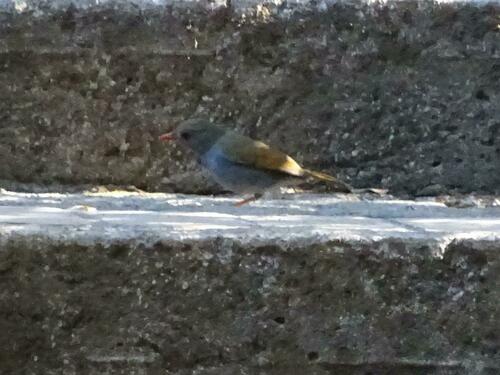 sabiazinho-de-bico-laranja
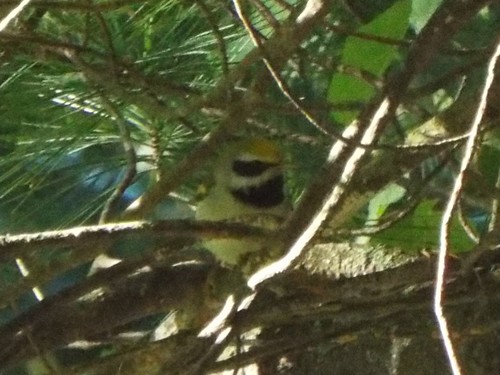 mariquita-d'asa-amarela
Em resumo
The most reliable field mark to separate Orange-billed Nightingale-Thrush from Golden-winged Warbler is the bill: the thrush has a long, strong, bright orange bill, while the warbler’s bill is slender and dark. In all plumages, the warbler shows a striking yellow wing patch and crown, plus a black or gray mask and throat (depending on sex/age), none of which are present on the thrush. Juvenile nightingale-thrushes are brown with buff mottling, while even young warblers show some facial pattern and yellow in the wings. The thrush is much larger and bulkier, with a plain, olive-brown or rufous-tinged body, contrasting with the warbler’s small, slim, gray-and-white frame and bold facial markings. If you see a small bird with a yellow crown and wing patch, it’s the warbler; if it’s larger, plain, and has an orange bill, it’s the thrush.
Dicas de identificação
- Bill color and shape: The thrush has a long, strong, orange bill; the warbler’s bill is slender and dark. This is the quickest way to separate them at any age.
- Yellow wing patch and crown: Only the warbler has a bright yellow patch on the wing and a yellow crown. The thrush never shows yellow in these areas.
- Facial pattern: Golden-winged Warbler (adult male) has a bold black mask and throat bordered with white; females and juveniles have a pale gray mask and throat. The thrush has a plain grayish-brown face with a thin orange eye-ring, never a mask.
- Underparts: The warbler’s underparts are crisp white or grayish white, sharply contrasting with the gray back; the thrush’s underparts are pale gray to whitish, blending softly with the olive-brown upperparts.
- Rufous tones: The thrush often shows rufous on the crown, nape, back, wings, and tail (strongest on wings/tail/rump), but never yellow. The warbler is always gray above (except for the yellow crown) and never rufous.
- Tail pattern: Golden-winged Warbler has extensive white in the tail, especially obvious from below in flight or when fanned. The thrush’s tail is plain and matches the rufous or olive-brown upperparts.
- Juvenile plumage: Young thrushes are brown with buff mottling and lack any mask or yellow. Juvenile warblers show a pale mask and yellow wing patch/crown, so even immature warblers have some facial and wing color contrast.
- Size and structure: The thrush is much larger and bulkier, with a rounder body and longer bill. The warbler is small, slim, and delicate, with a short tail and fine bill.
- Leg color: The thrush has brownish-orange legs and feet; the warbler’s legs are not described in detail but are not bright orange.
- Behavior: The thrush forages on the ground or in dense understory, moving slowly and deliberately. The warbler is active, foraging in shrubs/trees, often flicking wings and tail.
- Habitat: Thrushes are found in dense forest or thickets; warblers prefer open scrub, forest edge, or wetlands, especially in breeding season.
- Song: If you hear a buzzy trilled song or buzzy chip, it’s the warbler. The thrush’s song is not described here.
- Sex differences: Male warblers have a black mask/throat; females and juveniles have gray. The thrush is not sexually dimorphic—both sexes look the same.
- Hybrid confusion: Golden-winged Warbler can hybridize with Blue-winged Warbler, producing variable facial and throat patterns, but always with some yellow in the wing and crown. The thrush never shows these features.
- Pitfalls: In poor light, the warbler’s yellow crown/wing patch may be less obvious, but the facial mask and small size remain distinctive. The thrush’s orange bill is visible even in shadow. If you see a plain, brownish bird with an orange bill, it’s the thrush; if you see a small, gray-and-white bird with a yellow crown/wing patch and facial mask, it’s the warbler.
Tamanho
Orange-billed Nightingale-Thrush is nearly three times heavier (27 g vs. 9.3 g) and noticeably longer (15.5–17 cm vs. 11.6 cm) than Golden-winged Warbler. The thrush appears stocky and robust, while the warbler is petite and delicate. In the field, the thrush’s bulk and longer body are obvious, especially when both species are seen in the same region (rare, but possible during migration or vagrancy).
Plumagem
Juvenile Orange-billed Nightingale-Thrushes are mostly brown with buff flecking and mottling, lacking any facial mask or yellow in the wings. Juvenile Golden-winged Warblers already show the beginnings of the yellow crown and wing patch, and a pale gray mask and throat (like adult females), so even young warblers have some facial contrast and yellow highlights. Adult nightingale-thrushes are olive-brown with a rufous tinge (strongest on wings, tail, and rump), a grayish-brown face with a thin orange eye-ring, and a whitish to pale gray throat and underparts—always plain, never with a mask or bold pattern. Adult male Golden-winged Warblers have a yellow crown, yellow wing patch, black throat and mask bordered in white, gray back, and white underparts; females are similar but with a paler (gray) mask and throat. Both sexes have extensive white in the tail, especially visible from below. The thrush never shows yellow in the wings or crown, nor a black or gray mask.
Comportamento
Orange-billed Nightingale-Thrush forages on or near the ground, flipping leaf litter and moving through dense understory, often in a slow, deliberate manner. Golden-winged Warbler is much more active and agile, typically foraging in low shrubs and trees, gleaning insects from foliage, and sometimes hanging upside down. The warbler’s movements are quick, and it often flicks its wings and tail, while the thrush is more methodical and less acrobatic.
Habitat
Orange-billed Nightingale-Thrush is found in forest understory and dense thickets from Mexico through Central America and into northern South America, sometimes following army ant swarms. Golden-winged Warbler breeds in open scrubby areas, wetlands, and edges of mature forest in southeastern Canada and the northeastern to north-central United States. Outside the breeding season, the warbler migrates to Central and South America, but is still most often found in open, brushy or edge habitats, not deep forest. If you’re in dense, shaded forest, especially in Central America, the thrush is more likely; in open, shrubby, or edge habitats, especially in North America, the warbler is expected.
Voz
Golden-winged Warbler sings a distinctive, buzzy trilled song ("bzzzzzzz buzz buzz buzz") and gives a buzzy chip or zip call. Orange-billed Nightingale-Thrush’s vocalizations are not described in these notes, so song is not a reliable separator unless the warbler’s buzzy song is heard.
sabiazinho-de-bico-laranja · mariquita-d'asa-amarela · Minhas aves difíceis