
garajau-pequeno vs trinta-réis-real
Thalasseus bengalensis versus Thalasseus maximus
Jogue um quiz com garajau-pequeno e trinta-réis-real
 garajau-pequeno
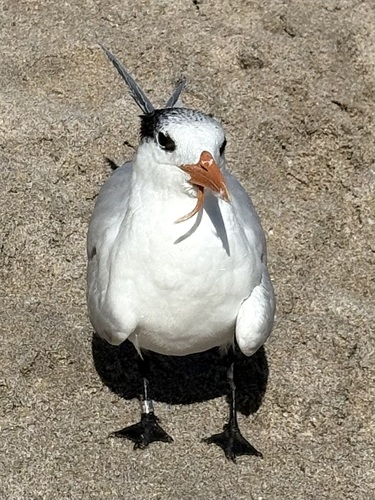 trinta-réis-real
Em resumo
A marca de campo mais confiável para separar o garajau-pequeno do trinta-réis-real é o tamanho: o trinta-réis-real é muito maior e mais robusto, com um bico laranja-avermelhado visivelmente mais grosso. Em voo, o garajau-pequeno exibe uma distinta cauda cinza (não branca), enquanto as partes superiores do trinta-réis-real são de um cinza-prateado mais claro e a cauda não é tão distintamente cinza. Os juvenis de garajau-pequeno são mais claros no geral, com crescentes escuros fracos nas penas do manto, enquanto os juvenis de trinta-réis-real mostram marcas cinzas mais escuras a negras nas asas. Ambas as espécies têm pernas pretas e uma touca preta na plumagem de reprodução, mas a cor e a estrutura do bico são fundamentais: o bico do garajau-pequeno é laranja e mais esbelto, enquanto o do trinta-réis-real é mais profundo e mais robusto.
Dicas de identificação
- Tamanho: O trinta-réis-real é muito maior e mais pesado que o garajau-pequeno. Use comparação direta em bandos mistos ou com espécies conhecidas.
- Estrutura do Bico: O trinta-réis-real tem um bico grosso, profundo e laranja-avermelhado; o bico do garajau-pequeno é longo, afiado e laranja (não tão profundo ou robusto). O formato do bico é frequentemente visível mesmo à distância.
- Cor da Cauda em Voo: O garajau-pequeno mostra uma cauda cinza (diagnóstica em voo), enquanto a cauda do trinta-réis-real não é distintamente cinza e se mistura com as partes superiores mais claras.
- Plumagem Juvenil: Os juvenis de garajau-pequeno são mais claros com crescentes escuros fracos no manto e um bico amarelo-laranja. Os juvenis de trinta-réis-real têm marcas cinzas mais escuras a negras nas asas e um bico mais amarelo. Procure por essas diferenças no final do verão e no outono.
- Padrão da Asa Superior: Embora não descrito em detalhes para nenhuma das espécies, os juvenis de trinta-réis-real têm mais escuro nas asas do que os juvenis de garajau-pequeno.
- Touca na Plumagem de Reprodução: Ambas têm uma touca preta na época de reprodução, mas a do trinta-réis-real é mais desgrenhada e mais proeminente, especialmente na nuca.
- Testa em Não-Reprodução: Ambas as espécies desenvolvem testas brancas na plumagem de não-reprodução, mas o trinta-réis-real muda mais cedo e o branco é mais extenso, com o preto restrito à nuca.
- Cor das Pernas: Ambas as espécies têm pernas pretas; não é útil para separação.
- Voz: O garajau-pequeno emite um chamado alto e áspero; o chamado do trinta-réis-real é mais claro e mais melodioso. Ouça essas diferenças em colônias mistas.
- Habitat/Distribuição: O garajau-pequeno é do Velho Mundo; o trinta-réis-real é do Novo Mundo (Américas), mas vagantes podem ocorrer na Europa. Use o contexto, mas não confie apenas na distribuição.
- Jizz em Bando: O trinta-réis-real se destaca mais, parece mais robusto e tem um estilo de voo mais pesado do que o garajau-pequeno, que é mais esbelto e ágil.
- Armadilhas de Cor do Bico: Ambas têm bicos laranja, mas o do trinta-réis-real é mais profundo e mais avermelhado; o do garajau-pequeno é laranja mais claro e mais esbelto. Em luz fraca, a cor do bico pode ser enganosa.
- Formato da Crista: A crista do trinta-réis-real é mais desgrenhada, especialmente na primavera; a crista do garajau-pequeno é menos pronunciada.
- Cor do Manto: O garajau-pequeno é ligeiramente mais escuro acima do que o trinta-réis-real, que é de um cinza-prateado mais claro. Isso é sutil e melhor usado em comparação direta.
- Comportamento de Cortejo: Apenas o garajau-pequeno é notado pelo macho oferecendo peixe à fêmea como parte do cortejo; não é geralmente uma marca de campo, mas pode ser observado em colônias.
Tamanho
O trinta-réis-real é significativamente maior que o garajau-pequeno. O garajau-pequeno pesa cerca de 209 g [wikidata], com um comprimento de 35–43 cm e uma envergadura de 88–105 cm [wikipedia]. O trinta-réis-real é muito mais pesado (350–500 g), mais longo (45–50 cm) e tem uma envergadura mais ampla (125–135 cm) [wikipedia]. No campo, o trinta-réis-real parece mais robusto e com asas mais longas, frequentemente se destacando entre bandos mistos de trinta-réis.
Plumagem
Aves juvenis e imaturas são frequentemente confundidas: os juvenis de garajau-pequeno são pálidos no geral, com apenas crescentes escuros fracos nas penas do manto e um bico amarelo-laranja. Em contraste, os juvenis de trinta-réis-real se assemelham a adultos não reprodutores, mas têm marcas cinzas mais escuras a negras nas asas e um bico mais amarelo. Nos adultos, o garajau-pequeno na plumagem de reprodução tem uma touca preta, asas superiores cinzas, cauda cinza e partes inferiores brancas, com um bico longo e afiado laranja. Os adultos de trinta-réis-real têm uma touca preta com uma crista desgrenhada na primavera, partes superiores cinza-prateado, partes inferiores brancas e um bico laranja-avermelhado robusto. Em voo, a cauda cinza do garajau-pequeno é uma marca chave, enquanto a cauda do trinta-réis-real não é tão distintamente colorida. Na plumagem de não-reprodução, ambas as espécies desenvolvem testas brancas, mas a muda do trinta-réis-real é mais cedo e mais extensa, com o preto restrito à nuca.
Comportamento
Ambas as espécies se alimentam mergulhando para pegar peixes, mas o garajau-pequeno geralmente mergulha diretamente, enquanto o comportamento de forrageamento do trinta-réis-real não é descrito como distintivo aqui. O garajau-pequeno se reproduz em colônias densas e frequentemente faz ninhos após as gaivotas predadoras terem deixado a área. O cortejo no garajau-pequeno inclui o macho oferecendo peixe à fêmea. Ambas as espécies são sociais e frequentemente encontradas em bandos, mas o tamanho maior e a estrutura mais robusta do trinta-réis-real podem afetar seu estilo de voo e postura em grupos mistos.
Habitat
O garajau-pequeno é encontrado no Velho Mundo, reproduzindo-se em costas e ilhas, geralmente em ambientes salinos. O trinta-réis-real é endêmico das Américas, mas pode ocorrer como um vagante na Europa. Ambas as espécies preferem habitats costeiros e raramente são encontradas longe do interior. A sobreposição de habitat é possível apenas em áreas onde o trinta-réis-real é um vagante; caso contrário, o contexto pode ser uma pista útil.
Voz
O garajau-pequeno emite um chamado alto e áspero semelhante ao trinta-réis-de-bando. Os chamados do trinta-réis-real são gritos curtos e claros ("kree" ou "tsirr") e um assobio mais longo, rolante e melodioso. Em bandos mistos, o chamado do trinta-réis-real é menos áspero do que o do garajau-pequeno.