

trinta-réis-grande vs trinta-réis-de-bico-preto
Phaetusa simplex versus Gelochelidon nilotica
Jogue um quiz com trinta-réis-grande e trinta-réis-de-bico-preto
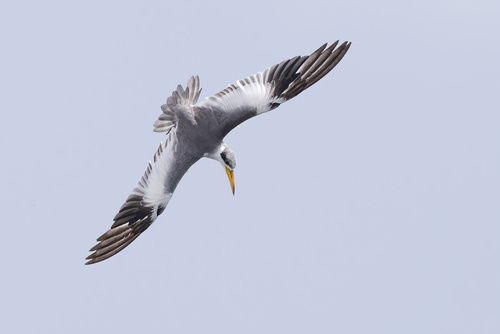 trinta-réis-grande
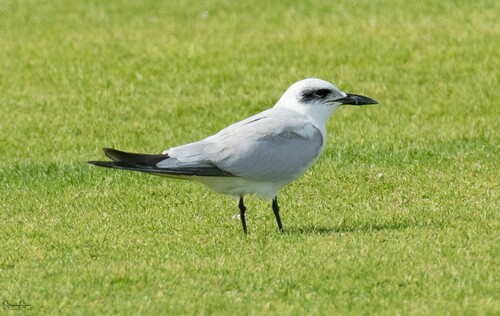 trinta-réis-de-bico-preto
Em resumo
A marca de campo mais confiável entre o trinta-réis-grande e o trinta-réis-de-bico-preto é o bico: o trinta-réis-grande tem um bico muito grande e amarelo brilhante, enquanto o bico do trinta-réis-de-bico-preto é mais curto, mais grosso e preto. Ambos são trinta-réis robustos e de cauda curta com estrutura geral semelhante, mas o trinta-réis-grande é ligeiramente maior e tem pernas e pés amarelos, em comparação com as pernas pretas do trinta-réis-de-bico-preto. As diferenças de plumagem são sutis em adultos, mas aves não reprodutoras e juvenis podem ser separadas pelo padrão da coroa e facial. O habitat pode ajudar: o trinta-réis-grande é quase sempre encontrado ao longo de rios e lagos da América do Sul, enquanto o trinta-réis-de-bico-preto é mais cosmopolita e frequentemente costeiro.
Dicas de identificação
- Cor e forma do bico: O trinta-réis-grande tem um bico muito grande e amarelo brilhante que é mais longo e mais esguio do que o bico curto, grosso e preto do trinta-réis-de-bico-preto. Esta é a marca de campo mais confiável em todas as idades e estações.
- Cor das pernas e pés: O trinta-réis-grande tem pernas e pés amarelos, enquanto o trinta-réis-de-bico-preto tem pernas e pés pretos. Isso é visível quando as aves estão empoleiradas ou em pé.
- Padrão da coroa e facial (reprodução): Na plumagem de reprodução, o trinta-réis-grande apresenta uma coroa preta completa e coberturas auriculares, enquanto o trinta-réis-de-bico-preto tem uma touca preta, mas não possui a extensa mancha de cobertura auricular.
- Padrão da coroa e facial (não reprodução/juvenil): O trinta-réis-grande não reprodutor tem uma coroa e testa mais claras, mas retém uma mancha de cobertura auricular preta; o trinta-réis-de-bico-preto perde completamente a touca preta, mostrando em vez disso uma faixa ou máscara ocular escura.
- Partes superiores e inferiores: Ambas as espécies têm partes superiores cinzas e partes inferiores brancas, portanto, isso não é um separador útil.
- Estrutura da cauda e asas: Ambas são de cauda curta e robustas, mas o trinta-réis-de-bico-preto pode parecer ter asas mais largas e um perfil mais semelhante ao de uma gaivota em voo. A forma da cauda não é fortemente diagnóstica.
- Tamanho: O trinta-réis-grande é ligeiramente maior e mais pesado em média, mas a sobreposição é considerável; use apenas como evidência de apoio.
- Habitat: O trinta-réis-grande é quase sempre encontrado ao longo de rios e lagos tropicais da América do Sul; o trinta-réis-de-bico-preto é mais provável de ser encontrado em áreas costeiras, pântanos salinos ou até mesmo em campos úmidos interiores, especialmente fora da América do Sul.
- Comportamento alimentar: O trinta-réis-de-bico-preto frequentemente caça insetos sobre a terra e campos, enquanto o trinta-réis-grande é mais estritamente piscívoro e ligado a águas abertas.
- Voz: O chamado 'ker-wik' do trinta-réis-de-bico-preto é distintivo; o chamado do trinta-réis-grande não é descrito nas fontes.
- Confusão juvenil: O juvenil do trinta-réis-de-bico-preto tem uma máscara fraca, mas de outra forma se assemelha a adultos de inverno; os juvenis do trinta-réis-grande não são descritos em detalhes, mas o bico amarelo deve estar presente desde uma idade precoce.
- Contexto geográfico: Se visto na América do Sul longe da costa, o trinta-réis-grande é muito mais provável; em ambientes costeiros ou não sul-americanos, o trinta-réis-de-bico-preto é esperado.
- Empoleirado vs. voando: A cor do bico e das pernas é mais fácil de ver quando empoleiradas; em voo, o tamanho e a cor do bico ainda podem ser visíveis com boa luz.
- Mudanças sazonais: Ambas as espécies perdem a touca preta completa na plumagem não reprodutora, mas o padrão facial e a cor do bico/pernas permanecem confiáveis.
- Possíveis armadilhas: Não confie no padrão da asa superior ou da cauda, pois nenhuma das espécies apresenta marcas de voo específicas de idade de acordo com as fontes disponíveis.
Tamanho
O trinta-réis-grande tem uma média de cerca de 38 cm de comprimento e 235 g de massa [wikidata], tornando-se ligeiramente maior e mais pesado do que a maioria dos trinta-réis-de-bico-preto, que variam de 33 a 42 cm de comprimento e 150 a 292 g de massa [wikipedia]. Ambos são trinta-réis robustos, mas o trinta-réis-grande está tipicamente na extremidade superior da faixa de tamanho. No campo, o tamanho sozinho raramente é diagnóstico, a menos que as aves estejam lado a lado, pois existe sobreposição.
Plumagem
As plumagens juvenis e não reprodutoras são as mais úteis para separação. Os trinta-réis-de-bico-preto juvenis têm uma máscara escura fraca ao redor do olho, mas de outra forma se assemelham a adultos de inverno, com uma touca clara e pouco contraste facial. Os adultos não reprodutores do trinta-réis-grande mostram uma coroa e testa mais claras, mas retêm uma distinta mancha de cobertura auricular preta e bico amarelo. Em adultos, ambas as espécies têm partes superiores cinzas e partes inferiores brancas, mas a coroa preta do trinta-réis-grande é mais extensa na plumagem de reprodução. A touca preta do trinta-réis-de-bico-preto é perdida no inverno, substituída por uma faixa ocular escura. As pernas e pés são amarelos no trinta-réis-grande, pretos no trinta-réis-de-bico-preto. Nenhuma marca de padrão de asa superior ou de voo específica de idade é notada para nenhuma das espécies nas fontes.
Comportamento
O trinta-réis-grande é tipicamente visto ao longo de rios e lagos largos, frequentemente empoleirado em bancos de areia ou voando baixo sobre a água. O trinta-réis-de-bico-preto é mais versátil na alimentação, frequentemente caçando insetos sobre campos e até mesmo longe da água, e está menos ligado a habitats aquáticos. Em voo, ambas as espécies parecem robustas e de cauda curta, mas o trinta-réis-de-bico-preto pode mostrar asas mais largas e um perfil mais semelhante ao de uma gaivota, enquanto o voo do trinta-réis-grande é direto e intencional sobre a água.
Habitat
O trinta-réis-grande é encontrado quase exclusivamente ao longo de rios e lagos de água doce na América do Sul tropical, raramente se afastando muito desses habitats. O trinta-réis-de-bico-preto é muito mais cosmopolita, reproduzindo-se em localidades dispersas na Europa, Ásia, África e Américas, e frequentemente encontrado em áreas costeiras, pântanos salinos e até mesmo em campos úmidos. Na América do Norte, o trinta-réis-de-bico-preto é em grande parte costeiro, enquanto o trinta-réis-grande está ausente fora da América do Sul, exceto como um raro vagante.
Voz
O trinta-réis-de-bico-preto emite um chamado característico 'ker-wik', que é bastante distintivo. Nenhuma vocalização específica é descrita para o trinta-réis-grande nas fontes, portanto, a voz não é uma marca de campo primária para separação.
trinta-réis-grande · trinta-réis-de-bico-preto · Minhas aves difíceis