

Motmot

gray flycatcher vs chestnut-backed chickadee

Empidonax wrightii versus Poecile rufescens

Jogue um quiz com gray flycatcher e chestnut-backed chickadee
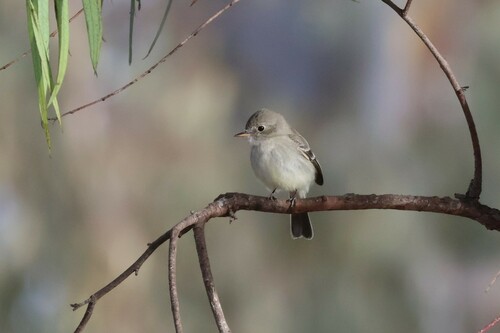
gray flycatcher (Empidonax wrightii) gray flycatcher
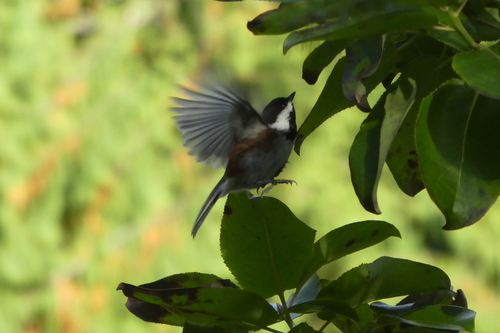
chestnut-backed chickadee (Poecile rufescens) chestnut-backed chickadee

Mídia

Carregando…

Em resumo

The most reliable way to separate Grey Flycatcher from Chestnut-backed Chickadee is by overall plumage: the flycatcher is a slim, pale gray bird with faint wingbars and a long, narrow bill, while the chickadee is boldly patterned with a dark head, white cheeks, and rich chestnut or rufous-brown back and flanks. Juvenile Grey Flycatchers can show more olive and yellow tones, but never approach the chickadee’s contrasting head and chestnut coloration. Structure is also a strong clue: flycatchers are longer-tailed and more slender, while chickadees are compact and short-tailed. Habitat context helps—Grey Flycatcher favors arid, open woodlands and shrublands, while Chestnut-backed Chickadee is tied to humid coniferous forests. Vocalizations are very different, with the flycatcher giving dry 'pit' or 'wit' calls and the chickadee giving its familiar 'chick-a-dee' call.

Dicas de identificação

  1. Head pattern: Chestnut-backed Chickadee always shows a dark cap and bib with bright white cheeks—no Empidonax flycatcher, including Grey, ever shows this contrast. Even in poor light, the chickadee’s bold face stands out.
  2. Back and flanks color: Look for rich chestnut or rufous on the chickadee’s back and flanks, especially in northern birds. Grey Flycatcher is always plain gray or olive-gray above, never rufous.
  3. Bill shape and color: Grey Flycatcher has a long, narrow bill with a pale lower mandible, especially obvious when seen from below. Chickadee’s bill is short, stubby, and all dark.
  4. Tail length and shape: Flycatcher’s tail is long and straight, often flicked downward. Chickadee’s tail is shorter and more rounded, not flicked in the same way.
  5. Wingbars: Both species show pale wingbars, but on the chickadee they are less distinct, blending into the gray wings. On the flycatcher, wingbars are white (buffy in juveniles) and stand out against the darker wings.
  6. Juvenile plumage: Young Grey Flycatchers are more olive/yellowish with buffy wingbars and brownish breasts, but still lack any strong head pattern or chestnut tones. Chickadee juveniles look like adults but may be duller; they always have the distinctive head and flank pattern.
  7. Perched posture: Flycatchers perch upright and still, often on exposed twigs. Chickadees are restless, often hanging or creeping along branches.
  8. Flight style: Flycatchers make short sallies from perches, returning to the same or nearby spot. Chickadees have bounding, undulating flight and rarely sally for insects in the open.
  9. Habitat: If you’re in open sagebrush, pinyon-juniper, or dry pine woodland, expect Grey Flycatcher. In dense, humid coniferous forest, especially near the Pacific coast, expect Chestnut-backed Chickadee.
  10. Voice: Listen for the dry 'pit' or 'wit' of the flycatcher versus the complex 'chick-a-dee' call of the chickadee. The flycatcher’s song is a sharp two-syllable note, not repeated or scolding like the chickadee.
  11. Group size: Chickadees are often in small, noisy flocks, especially outside breeding season. Flycatchers are usually solitary or in pairs.
  12. Underpart color: Flycatcher is whitish below, sometimes with a faint yellow wash in fresh plumage. Chickadee is white to pale grayish below, but with rufous or gray flanks.
  13. Eye ring: Flycatcher has a faint, inconspicuous white eye ring; chickadee lacks an eye ring, but the white cheek patch is much more prominent.
  14. Supraloral band: Flycatcher has a pale area above the bill (supraloral), subtle but visible in good light; chickadee does not.
  15. Seasonal variation: Grey Flycatcher may look slightly more olive after fall molt, but never approaches the chickadee’s rich chestnut. Chickadee’s chestnut is richer in the north, paler in the south, but the pattern is always present.

Tamanho

Grey Flycatcher is slightly larger and longer overall (15 cm length, 12.5 g mass) compared to Chestnut-backed Chickadee (11.5–12.5 cm length, 8.5–12.6 g mass). The flycatcher appears more elongated with a longer tail and bill, while the chickadee is noticeably more compact and rounded, with a shorter tail and stubbier bill. In the field, this difference in 'jizz' is often apparent even before plumage details are seen.

Plumagem

Juvenile Grey Flycatchers are pale gray above with olive and yellowish tones, buffy wingbars, and brownish breasts, but never show the strong head pattern or chestnut tones of the chickadee. Adults are pale gray above with faint olive, whitish underparts, two white wingbars, and a subtle white eye ring—overall very plain. Chestnut-backed Chickadee of all ages has a striking dark brown-black cap and bib, bright white cheeks, rich rufous or chestnut back and flanks (more intense in the north, paler in the south), and pale underparts. The chickadee’s wing feathers are dark gray with paler edges, but never show the pale, plain look of the flycatcher’s wings. No age or season of chickadee resembles the flycatcher’s overall gray and white pattern.

Comportamento

Grey Flycatcher typically perches upright on exposed branches, sallying out to catch insects and often flicking its tail downward. It is solitary or in pairs during breeding. Chestnut-backed Chickadee is active and acrobatic, often hanging upside down, moving quickly through foliage, and frequently joining mixed-species flocks. Chickadees are more likely to be seen in groups and are rarely as still or upright as a flycatcher.

Habitat

Grey Flycatcher is found in arid, open habitats—sagebrush steppe, pinyon-juniper woodland, and open pine forests, especially in the Great Basin and western interior. During migration, it may use riparian areas but still favors open, shrubby settings. Chestnut-backed Chickadee is restricted to humid coniferous forests along the Pacific coast and nearby mountains, often in dense Douglas-fir or mixed forests. It is rarely found in the open, dry habitats preferred by the flycatcher.

Voz

Grey Flycatcher gives a dry 'pit' or 'wit' call, and the male sings a strong two-syllable 'chuwip' or 'wilip' song, sometimes with a high 'teeap' or 'seep' note. Chestnut-backed Chickadee gives the classic 'chick-a-dee' call, with several 'dee' notes, and may hiss at the nest. The two species’ calls are entirely different in tone and pattern, with the chickadee’s call being much more familiar and complex.

Enviar uma descrição melhor

Use as mesmas seções da comparação. Seu texto é publicado na hora.

The most reliable way to separate Grey Flycatcher from Chestnut-backed Chickadee is by overall plumage: the flycatcher is a slim, pale gray bird with faint wingbars and a long, narrow bill, while the chickadee is boldly patterned with a dark head, white cheeks, and rich chestnut or rufous-brown back and flanks. Juvenile Grey Flycatchers can show more olive and yellow tones, but never approach the chickadee’s contrasting head and chestnut coloration. Structure is also a strong clue: flycatchers are longer-tailed and more slender, while chickadees are compact and short-tailed. Habitat context helps—Grey Flycatcher favors arid, open woodlands and shrublands, while Chestnut-backed Chickadee is tied to humid coniferous forests. Vocalizations are very different, with the flycatcher giving dry 'pit' or 'wit' calls and the chickadee giving its familiar 'chick-a-dee' call.

  1. Head pattern: Chestnut-backed Chickadee always shows a dark cap and bib with bright white cheeks—no Empidonax flycatcher, including Grey, ever shows this contrast. Even in poor light, the chickadee’s bold face stands out.
  2. Back and flanks color: Look for rich chestnut or rufous on the chickadee’s back and flanks, especially in northern birds. Grey Flycatcher is always plain gray or olive-gray above, never rufous.
  3. Bill shape and color: Grey Flycatcher has a long, narrow bill with a pale lower mandible, especially obvious when seen from below. Chickadee’s bill is short, stubby, and all dark.
  4. Tail length and shape: Flycatcher’s tail is long and straight, often flicked downward. Chickadee’s tail is shorter and more rounded, not flicked in the same way.
  5. Wingbars: Both species show pale wingbars, but on the chickadee they are less distinct, blending into the gray wings. On the flycatcher, wingbars are white (buffy in juveniles) and stand out against the darker wings.
  6. Juvenile plumage: Young Grey Flycatchers are more olive/yellowish with buffy wingbars and brownish breasts, but still lack any strong head pattern or chestnut tones. Chickadee juveniles look like adults but may be duller; they always have the distinctive head and flank pattern.
  7. Perched posture: Flycatchers perch upright and still, often on exposed twigs. Chickadees are restless, often hanging or creeping along branches.
  8. Flight style: Flycatchers make short sallies from perches, returning to the same or nearby spot. Chickadees have bounding, undulating flight and rarely sally for insects in the open.
  9. Habitat: If you’re in open sagebrush, pinyon-juniper, or dry pine woodland, expect Grey Flycatcher. In dense, humid coniferous forest, especially near the Pacific coast, expect Chestnut-backed Chickadee.
  10. Voice: Listen for the dry 'pit' or 'wit' of the flycatcher versus the complex 'chick-a-dee' call of the chickadee. The flycatcher’s song is a sharp two-syllable note, not repeated or scolding like the chickadee.
  11. Group size: Chickadees are often in small, noisy flocks, especially outside breeding season. Flycatchers are usually solitary or in pairs.
  12. Underpart color: Flycatcher is whitish below, sometimes with a faint yellow wash in fresh plumage. Chickadee is white to pale grayish below, but with rufous or gray flanks.
  13. Eye ring: Flycatcher has a faint, inconspicuous white eye ring; chickadee lacks an eye ring, but the white cheek patch is much more prominent.
  14. Supraloral band: Flycatcher has a pale area above the bill (supraloral), subtle but visible in good light; chickadee does not.
  15. Seasonal variation: Grey Flycatcher may look slightly more olive after fall molt, but never approaches the chickadee’s rich chestnut. Chickadee’s chestnut is richer in the north, paler in the south, but the pattern is always present.

Grey Flycatcher is slightly larger and longer overall (15 cm length, 12.5 g mass) compared to Chestnut-backed Chickadee (11.5–12.5 cm length, 8.5–12.6 g mass). The flycatcher appears more elongated with a longer tail and bill, while the chickadee is noticeably more compact and rounded, with a shorter tail and stubbier bill. In the field, this difference in 'jizz' is often apparent even before plumage details are seen.

Juvenile Grey Flycatchers are pale gray above with olive and yellowish tones, buffy wingbars, and brownish breasts, but never show the strong head pattern or chestnut tones of the chickadee. Adults are pale gray above with faint olive, whitish underparts, two white wingbars, and a subtle white eye ring—overall very plain. Chestnut-backed Chickadee of all ages has a striking dark brown-black cap and bib, bright white cheeks, rich rufous or chestnut back and flanks (more intense in the north, paler in the south), and pale underparts. The chickadee’s wing feathers are dark gray with paler edges, but never show the pale, plain look of the flycatcher’s wings. No age or season of chickadee resembles the flycatcher’s overall gray and white pattern.

Grey Flycatcher typically perches upright on exposed branches, sallying out to catch insects and often flicking its tail downward. It is solitary or in pairs during breeding. Chestnut-backed Chickadee is active and acrobatic, often hanging upside down, moving quickly through foliage, and frequently joining mixed-species flocks. Chickadees are more likely to be seen in groups and are rarely as still or upright as a flycatcher.

Grey Flycatcher is found in arid, open habitats—sagebrush steppe, pinyon-juniper woodland, and open pine forests, especially in the Great Basin and western interior. During migration, it may use riparian areas but still favors open, shrubby settings. Chestnut-backed Chickadee is restricted to humid coniferous forests along the Pacific coast and nearby mountains, often in dense Douglas-fir or mixed forests. It is rarely found in the open, dry habitats preferred by the flycatcher.

Grey Flycatcher gives a dry 'pit' or 'wit' call, and the male sings a strong two-syllable 'chuwip' or 'wilip' song, sometimes with a high 'teeap' or 'seep' note. Chestnut-backed Chickadee gives the classic 'chick-a-dee' call, with several 'dee' notes, and may hiss at the nest. The two species’ calls are entirely different in tone and pattern, with the chickadee’s call being much more familiar and complex.

Descartar as alterações?

Você tem edições não salvas. Se sair agora, elas serão perdidas.

gray flycatcher · chestnut-backed chickadee · Minhas aves difíceis