

gray-backed tern vs garajau-de-bico-amarelo
Onychoprion lunatus versus Thalasseus bergii
Jogue um quiz com gray-backed tern e garajau-de-bico-amarelo
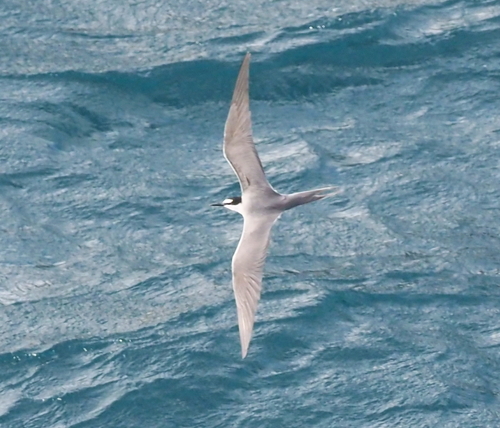 gray-backed tern
 garajau-de-bico-amarelo
Em resumo
Os garajaus-de-bico-amarelo juvenis e imaturos apresentam um padrão de asa superior distintivo e fortemente variegado com barras escuras, especialmente visíveis em voo—os imaturos do gray-backed tern não possuem essa característica e são muito mais simples na parte superior. Para os adultos, a marca de campo mais confiável é o bico: o garajau-de-bico-amarelo tem um bico longo, grosso e amarelo-esverdeado, enquanto o bico do gray-backed tern é mais fino e escuro. O garajau-de-bico-amarelo também é muito maior e mais robusto, com uma crista negra mais desgrenhada e um dorso cinza-batalha mais claro em comparação com o manto cinza limpo do gray-backed tern. Ambas as espécies têm partes inferiores brancas, mas o padrão e a estrutura facial são fundamentais em qualquer estação.
Dicas de identificação
- Padrão de asa superior juvenil/imaturo: Em voo, procure por uma asa superior fortemente variegada com barras escuras e uma barra escura nas penas de voo internas nos imaturos do garajau-de-bico-amarelo—os imaturos do gray-backed tern são simples na parte superior. Esta é a melhor marca para aves jovens.
- Cor e forma do bico: O garajau-de-bico-amarelo tem um bico longo, grosso e amarelo a amarelo-esverdeado (nunca laranja ou preto), visível em qualquer idade. O bico do gray-backed tern é mais fino e escuro. A cor do bico é confiável mesmo à distância com boa luz.
- Tamanho e estrutura: O garajau-de-bico-amarelo é muito maior, com um bico mais longo, cabeça mais pesada e corpo mais robusto. O gray-backed tern é pequeno, esbelto e compacto. Use isso quando ambas as espécies estiverem presentes, mas cuidado com ilusões de escala quando estiver sozinho.
- Forma da crista e da cabeça: O garajau-de-bico-amarelo apresenta uma crista negra desgrenhada e brilhante que se estende bem atrás da cabeça, especialmente na plumagem de reprodução. O gray-backed tern não possui uma crista desgrenhada e tem um perfil de cabeça limpo e suave.
- Cor do dorso: O garajau-de-bico-amarelo tem um dorso cinza-batalha (mais escuro e sombrio), enquanto o dorso do gray-backed tern é um cinza mais limpo e claro. Isso é sutil, mas pode ajudar em boa luz.
- Padrão facial: O gray-backed tern tem uma linha ocular preta distinta do bico até a nuca, dando uma aparência 'espectacular'. O garajau-de-bico-amarelo tem uma testa branca e uma touca ou crista preta, mas não possui a linha através do olho.
- Partes inferiores: Ambas são brancas embaixo; isso não é um separador útil.
- Padrão de asa em adultos: Ambas têm asas superiores cinzas, mas as do garajau-de-bico-amarelo são mais escuras e mais largas; as do gray-backed tern são mais estreitas e mais claras.
- Postura empoleirada: O longo bico e a crista do garajau-de-bico-amarelo se destacam quando empoleirados, enquanto o gray-backed tern parece mais delicado e com a cabeça mais limpa.
- Vocalizações: Chamadas altas e ásperas 'kerrak' e 'korrkorrkorr' apontam para o garajau-de-bico-amarelo, especialmente em colônias. O gray-backed tern é mais silencioso e menos estridente.
- Contexto de colônia: Colônias grandes, barulhentas e densas em bancos de areia abertos ou praias são mais propensas a ser garajau-de-bico-amarelo. O gray-backed tern é menos provável de estar em tais ambientes.
- Padrão de cabeça sazonal: No inverno, a coroa do garajau-de-bico-amarelo torna-se branca com uma crista preta salpicada; o gray-backed tern mantém a linha ocular preta.
- Associação com outros garajaus: O garajau-de-bico-amarelo frequentemente se associa a outros garajaus grandes (por exemplo, o garajau-de-bico-pequeno, o real) e se destaca pelo tamanho e bico. O gray-backed tern é menos provável de estar em tais grupos mistos.
- Estilo de voo: O garajau-de-bico-amarelo voa com batidas de asa fortes e profundas e um jeito mais pesado; o gray-backed tern é mais ágil e leve.
- Quando em dúvida: Foque na cor e espessura do bico, crista da cabeça e—se a ave for jovem—a presença ou ausência de barras na asa superior.
Tamanho
O garajau-de-bico-amarelo é substancialmente maior: os adultos medem 46–49 cm de comprimento com uma envergadura de 125–130 cm e pesam 325–397 gramas [wikipedia]. O gray-backed tern é muito menor e mais leve, com uma construção mais delicada. Essa diferença de tamanho é marcante em bandos mistos ou quando vistos lado a lado, mas pode ser mais difícil de julgar à distância ou sozinho.
Plumagem
- Plumagem juvenil/imatura: Os juvenis e primeiros-invernos do garajau-de-bico-amarelo têm uma asa superior com padrão ousado e barras escuras e uma aparência variegada, incluindo uma barra escura nas penas de voo internas. Esse padrão persiste nas plumagens imaturas iniciais. Os imaturos do gray-backed tern são muito mais simples, sem barras ou variegados fortes na asa superior, e apresentam um dorso cinza mais uniforme.
- Plumagem de reprodução adulta: Os adultos do garajau-de-bico-amarelo têm uma testa branca, crista negra desgrenhada e dorso cinza-batalha e asas internas. Os adultos do gray-backed tern têm um dorso cinza liso, uma linha ocular preta do bico até a nuca e não possuem a crista desgrenhada; seu padrão de cabeça é 'espectacular' com uma linha preta através do olho.
- Plumagem não reprodutiva/invernal: A coroa do garajau-de-bico-amarelo torna-se branca com uma crista e máscara pretas salpicadas, enquanto o gray-backed tern mantém a linha ocular preta e o dorso cinza. Ambas as espécies têm partes inferiores brancas durante todo o ano.
Comportamento
Ambas as espécies são garajaus típicos em voo, mas o garajau-de-bico-amarelo parece mais pesado, com um bico mais longo e grosso e uma cabeça mais robusta. Seu voo é forte e direto, muitas vezes com batidas de asa profundas. O gray-backed tern é mais ágil e leve, refletindo seu tamanho menor e construção mais leve. Empoleirado, o longo bico e a crista mais desgrenhada do garajau-de-bico-amarelo são óbvios, enquanto o gray-backed tern parece mais arrumado e compacto.
Habitat
Ambas são garajaus costeiros e que nidificam em ilhas, mas o garajau-de-bico-amarelo é mais provável de ser visto em grandes colônias densas ao longo de costas abertas, bancos de areia e ilhas offshore, muitas vezes com outros garajaus grandes. O gray-backed tern é menos comum e mais localizado, frequentemente encontrado em ilhas remotas e menos provável de estar em grandes bandos mistos. O contexto pode ajudar, mas não é sempre diagnóstico.
Voz
O garajau-de-bico-amarelo é altamente vocal, especialmente em colônias, emitindo um 'kerrak' alto e áspero, um 'korrkorrkorr' no ninho e um 'wep wep' forte em voo. A voz do gray-backed tern é menos bem descrita nas fontes, mas não é notada por chamadas tão altas e ásperas. Se você ouvir as chamadas características do garajau-de-bico-amarelo, é uma forte pista.
gray-backed tern · garajau-de-bico-amarelo · Minhas aves difíceis