

green hermit vs long-billed hermit
Phaethornis guy versus Phaethornis longirostris
Jogue um quiz com green hermit e long-billed hermit
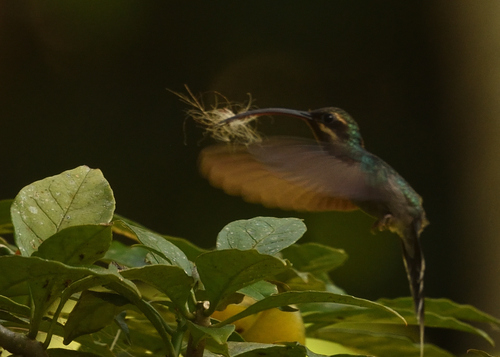 green hermit
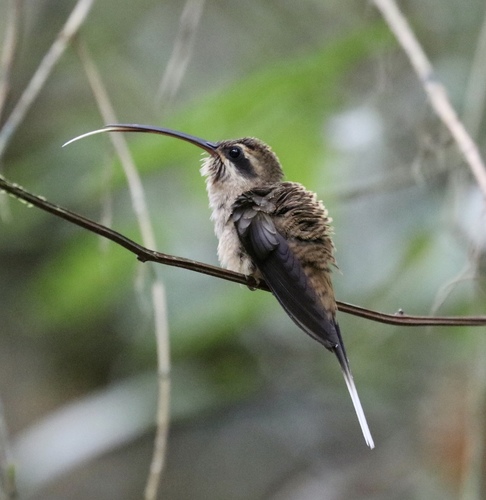 long-billed hermit
Em resumo
A marca de campo mais confiável para separar o green hermit do long-billed hermit é a combinação do tom geral da plumagem e da estrutura da cauda: os machos de green hermit são principalmente verdes escuros com um rabo azul-esverdeado e têm penas centrais da cauda relativamente curtas, com pontas brancas, enquanto o long-billed hermit é mais marrom-esverdeado por cima e marrons a acinzentados por baixo, com penas centrais da cauda muito mais longas e com pontas brancas. As fêmeas também diferem: as fêmeas de green hermit são cinzas sujas por baixo, com uma cauda e um bico mais longos, enquanto as fêmeas de long-billed hermit são mais marrons e têm um bico mais curto e mais fortemente curvado. Ambas as espécies têm bicos longos e curvados, mas o bico do green hermit é avermelhado e o do long-billed hermit é mais escuro. Na exibição, ambas as espécies movem suas caudas, mas o comprimento e o contraste da cauda são mais pronunciados no long-billed hermit. A sobreposição de habitat é possível, mas o green hermit está mais ligado à floresta tropical primária e ao terreno montanhoso, enquanto o long-billed hermit utiliza uma gama mais ampla de tipos de floresta e elevações.
Dicas de identificação
- Comprimento e estrutura da cauda: O long-billed hermit tem penas centrais da cauda extremamente longas e com pontas brancas que se estendem bem além do resto da cauda, especialmente nos machos; as penas centrais da cauda do green hermit são mais curtas e menos proeminentes, embora ainda tenham pontas brancas. Esta é muitas vezes a melhor marca de campo, especialmente quando os pássaros estão se exibindo ou empoleirados com a cauda espalhada.
- Coloração geral: Os machos de green hermit são verdes escuros com um rabo azul-esverdeado, enquanto o long-billed hermit é marrom-esverdeado por cima e marrons a acinzentados por baixo. As fêmeas de green hermit são cinzas sujas por baixo, não marrons.
- Padrão facial: Ambos têm uma máscara escura ao redor do olho, mas o green hermit apresenta listras buff fortes acima e abaixo da máscara e ao longo do centro da garganta, fazendo o rosto parecer mais contrastante. O rosto do long-billed hermit é menos marcante.
- Cor e forma do bico: O green hermit tem um bico longo, avermelhado e curvado; o bico do long-billed hermit também é longo e curvado, mas mais escuro. A fêmea do long-billed hermit tem um bico mais curto, mas mais fortemente curvado do que o macho, enquanto a fêmea do green hermit tem um bico ainda mais longo do que o macho.
- Cor da parte inferior: A fêmea do green hermit é cinza suja por baixo, contrastando com as partes inferiores marrons ou acinzentadas do long-billed hermit. Os machos de ambas as espécies são mais escuros por baixo, mas o green hermit é mais uniforme e esverdeado.
- Coberturas da cauda superior: O long-billed hermit apresenta faixas escuras e ocre nas coberturas da cauda superior, que podem ser visíveis em boa luz; o green hermit não possui essa bandagem.
- Exibição da cauda em leks: Ambas as espécies movem suas caudas durante a exibição, mas as penas centrais da cauda muito mais longas do long-billed hermit são mais conspícuas.
- Contexto de habitat: Se visto em floresta tropical madura e montanhosa ou em floresta úmida montanhosas, especialmente perto da água, é mais provável que seja um green hermit; em uma gama mais ampla de tipos de floresta, incluindo habitats secundários e de borda, o long-billed hermit é mais provável.
- Vocalizações: Ouça o alto 'zurk' ou 'swark' do green hermit em leks em comparação com a série contínua de notas 'sweeup' ou 'tchee' e os chamados agudos 'week!' do long-billed hermit.
- Variação de subespécies: Esteja ciente de que algumas subespécies de long-billed hermit (por exemplo, baroni) são de um verde mais apagado por cima e mais brancas por baixo, mas as longas penas centrais da cauda e a estrutura geral permanecem diagnósticas.
- Diferenças sexuais: A fêmea do green hermit tem uma cauda e um bico mais longos do que o macho, e é cinza suja por baixo; a fêmea do long-billed hermit tem um bico mais curto e mais curvado e é mais marrom por baixo.
- Impressão de voo: O long-billed hermit pode parecer mais alongado em voo devido à sua cauda longa; o green hermit parece mais compacto.
- Sem padrões de asa imaturos distintivos: Nenhuma das espécies é conhecida por padrões de asa superiores específicos de idade que ajudem na separação em voo.
- Tamanho: Ambas são grandes para hermits, mas a sobreposição de tamanho é significativa e não é confiável sozinha.
- Erros comuns: Não confie apenas no tamanho ou no comprimento do bico, pois ambos são variáveis e se sobrepõem; concentre-se no comprimento da cauda, no tom da plumagem e no padrão facial para a separação mais consistente.
Tamanho
Ambas as espécies são grandes para beija-flores hermits e se sobrepõem em comprimento (green hermit ~13,5 cm, long-billed hermit 13–16 cm). A massa é semelhante, com o green hermit pesando em média cerca de 4,9 g (AVONET), e os machos e fêmeas do long-billed hermit variando de 4 a 7,5 g. No campo, o tamanho sozinho não é um separador confiável, pois ambos podem parecer semelhantes, embora o long-billed hermit possa parecer ligeiramente mais robusto devido à sua cauda mais longa.
Plumagem
O macho adulto de green hermit é principalmente verde escuro com um rabo azul-esverdeado, uma máscara escura ao redor do olho e listras buff acima e abaixo da máscara e ao longo do centro da garganta. Suas penas centrais da cauda são relativamente curtas para um grande hermit e têm pontas brancas. A fêmea adulta de green hermit é cinza suja por baixo (não verde), com um bico ainda mais longo e uma cauda muito mais longa do que o macho. O long-billed hermit de ambos os sexos é marrom-esverdeado por cima e marrons a acinzentados por baixo, sem o forte brilho verde do green hermit e o rabo azul-esverdeado. Suas coberturas da cauda superior têm faixas escuras e ocre, e as penas centrais da cauda são muito longas com pontas brancas proeminentes—muito mais longas e óbvias do que no green hermit. Existe variação de subespécies no long-billed hermit, mas o padrão geral se mantém. Nenhum padrão de asa superior juvenil ou imaturo distintivo é descrito para qualquer uma das espécies nas fontes, portanto, marcas de voo específicas de idade não são um separador primário aqui.
Comportamento
Ambas as espécies se exibem em leks comunitários, onde os machos movem suas caudas e cantam. Os machos de long-billed hermit podem ser mais agressivos em leks, usando seus bicos longos e em forma de adaga nas interações. Ambas as espécies são alimentadoras de linha de armadilha, visitando um circuito de flores em busca de néctar, e ambas podem ser vistas pairando ou empoleiradas baixas no sub-bosque. Em voo, o long-billed hermit pode parecer mais alongado devido à sua cauda mais longa.
Habitat
O green hermit é mais frequentemente encontrado em florestas tropicais primárias e florestas úmidas premontanas, tipicamente em áreas montanhosas ou montanhosas e geralmente perto da água. Ele evita florestas secundárias quando há habitat melhor disponível. O long-billed hermit é mais flexível, utilizando uma variedade de tipos de floresta, incluindo floresta tropical, floresta secundária alta, floresta semi-decídua úmida, floresta de nuvens e floresta de galeria, do nível do mar até 2.500 m, dependendo da região. A sobreposição pode ocorrer em algumas áreas, mas o green hermit é mais especializado para florestas densas e maduras.
Voz
O green hermit emite um alto chamado 'zurk' e uma canção repetida 'swark' em leks. O long-billed hermit produz uma série contínua de notas 'sweeup' agudas ou semelhantes a pardais 'tchee..tchee..tchee..', dependendo da subespécie, e seu chamado é um 'week!' agudo e explosivo ou um 'seep' fino frequentemente emitido em voo. As vocalizações são bastante diferentes, com o green hermit sendo mais áspero e abrupto, e o long-billed hermit mais musical ou picoteador.