

grace's warbler vs townsend's warbler
Setophaga graciae versus Setophaga townsendi
Jogue um quiz com grace's warbler e townsend's warbler
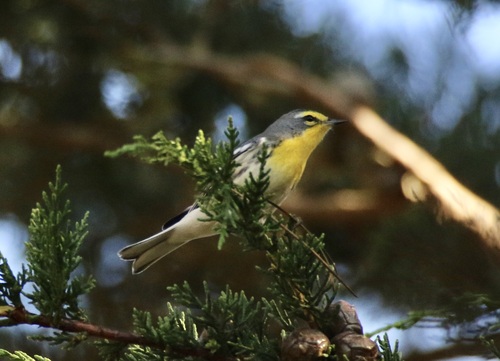 grace's warbler
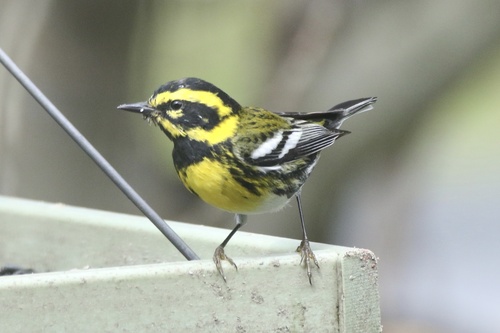 townsend's warbler
Em resumo
A marca de campo mais confiável entre o grace's warbler e o townsend's warbler é o padrão facial: o grace's mostra uma longa sobrancelha amarela e uma garganta amarela com um rosto inferior limpo e pálido, enquanto o townsend's tem uma ousada mancha preta na bochecha e (em machos adultos) uma garganta preta. Ambas as espécies têm duas barras brancas nas asas, mas apenas o townsend's mostra uma forte mancha preta na orelha e um boné. Os imaturos do townsend's podem ser confusos, mas ainda mostram uma bochecha e um boné escuros. O grace's warbler é mais limitado a florestas de pinheiros, enquanto o townsend's utiliza uma gama mais ampla de habitats coníferos. O tamanho é semelhante, mas o grace's é ligeiramente mais leve.
Dicas de identificação
- O padrão facial é a chave: O grace's warbler sempre mostra uma longa sobrancelha amarela (supercilium) que começa no bico e desbota para branco atrás do olho, com uma garganta amarela e um rosto inferior pálido e sem manchas. O townsend's warbler (todas as idades/sexos) mostra uma ousada mancha escura ou preta na bochecha (mancha da orelha) e um boné que é preto em machos adultos e escuro em fêmeas/imaturos.
- Cor e padrão da garganta: O grace's warbler tem uma garganta e um peito amarelos brilhantes que se misturam em partes inferiores brancas, sem borda escura. Machos adultos do townsend's warbler têm uma garganta preta; fêmeas e imaturos têm uma garganta amarela, mas sempre com uma mancha escura ou escura adjacente.
- Supercilium vs. mancha da bochecha: A sobrancelha amarela do grace's é única—o townsend's nunca mostra um longo supercilium amarelo, apenas um rosto amarelo com uma bochecha escura contrastante.
- Listras nas costas e flancos: Ambas as espécies têm listras pretas nas costas e flancos, mas isso não é um separador confiável.
- Barras nas asas: Ambas mostram duas barras brancas nas asas; não é uma marca distintiva.
- Partes inferiores: O grace's warbler tem partes inferiores brancas abaixo do peito amarelo, enquanto o townsend's tem uma barriga branca, mas um amarelo mais extenso no peito inferior, especialmente em machos.
- Cor do boné: Machos adultos do townsend's warbler têm um boné preto sólido; fêmeas e imaturos têm um boné escuro esverdeado ou escuro. O grace's warbler tem um boné cinza sem cor preta ou coroa escura.
- Anel ocular: O grace's warbler mostra um anel ocular amarelo sob o olho; o townsend's não tem um anel ocular distinto.
- Formato do bico: Ambos têm bicos finos e pontudos típicos de warblers; não é um separador.
- Contexto do habitat: Em florestas puras de pinheiros, especialmente no sudoeste, espere o grace's; em florestas de coníferas costeiras ou mistas, especialmente no noroeste, espere o townsend's.
- Comportamento: O grace's frequentemente paira em pinhas e forrageia nas pontas dos galhos; o townsend's é mais propenso a se juntar a bandos mistos no inverno e pode ser visto em uma gama mais ampla de habitats coníferos.
- Visões de voo: Nenhuma diferença distintiva nos padrões de asas superiores ou cauda é notada; confie no padrão facial e no habitat.
- Armadilhas de sexo e idade: O imaturo do townsend's pode parecer opaco, mas sempre mostra uma bochecha e um boné escuros; os imaturos do grace's mantêm a sobrancelha amarela e o rosto pálido.
- Estação: Ambas as espécies migram, mas suas distribuições se sobrepõem pouco; verifique a abundância local no eBird se não tiver certeza.
- Tamanho: Ambas são warblers pequenas; o tamanho não é uma marca de campo confiável.
Tamanho
O grace's warbler tem uma média de cerca de 8,0 gramas em massa corporal [wikidata], tornando-o um warbler pequeno. O townsend's warbler é semelhante em tamanho, embora nenhuma massa direta seja fornecida aqui, e ambos estão dentro da faixa típica para warblers do gênero Setophaga. No campo, nenhuma das espécies é visivelmente maior ou mais robusta do que a outra, portanto, o tamanho não é um separador confiável.
Plumagem
-
Pássaros juvenis/imaturos: Ambas as espécies têm duas barras brancas nas asas e costas listradas, mas os imaturos do townsend's warbler mostram um boné e bochechas esverdeados escuros, nunca a nítida sobrancelha amarela do grace's. Os imaturos e adultos do grace's warbler compartilham o distinto supercilium amarelo (sobrancelha) e a garganta amarela, com um rosto inferior pálido e sem manchas.
-
Adultos: Machos adultos do townsend's warbler têm um impressionante boné preto, mancha preta na bochecha e garganta preta, com um rosto e peito amarelos. Fêmeas têm um boné e bochecha escuros (não pretos), e uma garganta amarela, mas sempre mostram uma mancha escura na bochecha. Os adultos do grace's warbler são principalmente cinzas acima com listras pretas, duas barras brancas nas asas, uma longa sobrancelha amarela que desbota para branco, uma garganta e peito amarelos, e uma barriga branca. O rosto inferior é pálido com um anel ocular amarelo, sem qualquer mancha escura na bochecha.
-
Em voo: Ambas mostram barras brancas nas asas e partes superiores listradas, mas o padrão facial é visível em boa luz. Não há painéis superiores ou diferenças na borda traseira distintivas notadas para nenhuma das espécies.
Comportamento
Ambas as espécies forrageiam ativamente em coníferas, muitas vezes altas na copa. O grace's warbler é mais especializado, forrageando quase exclusivamente em pinheiros, frequentemente pairando nas pontas dos galhos e pinhas. O townsend's warbler também forrageia alto e ativamente, às vezes se juntando a bandos de espécies mistas no inverno. Ambas podem pairar ou atacar insetos, mas o grace's é mais propenso a ser visto inspecionando pinhas de perto.
Habitat
O grace's warbler está fortemente ligado a florestas de pinheiros, mesmo durante a migração, e raramente é encontrado longe dos pinheiros, exceto na borda norte de sua distribuição, onde pode usar abetos. Prefere florestas de pinheiros abertas, semelhantes a parques, às vezes com um sub-bosque de carvalho. O townsend's warbler se reproduz em florestas coníferas com grandes árvores ao longo da costa noroeste e inverna em uma gama mais ampla de habitats florestais, incluindo florestas mistas. Se você estiver em florestas puras de pinheiros no sudoeste, o grace's é muito mais provável; em florestas de coníferas costeiras ou mistas, especialmente no noroeste, o townsend's é esperado.
Voz
O townsend's warbler tem uma canção distinta, um zumbido "zee-zee-zee-bzz-zee" ou "weazy weazy weazy twea," e um chamado agudo "tup". Nenhum detalhe vocal é fornecido para o grace's warbler aqui, então a voz não é um separador confiável com base nas notas fornecidas.