

Motmot

fuinha-elegante vs felosa-pálida-oriental

Prinia gracilis versus Iduna pallida

Jogue um quiz com fuinha-elegante e felosa-pálida-oriental
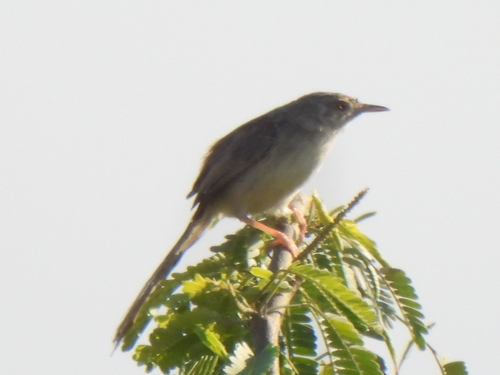
fuinha-elegante (Prinia gracilis) fuinha-elegante
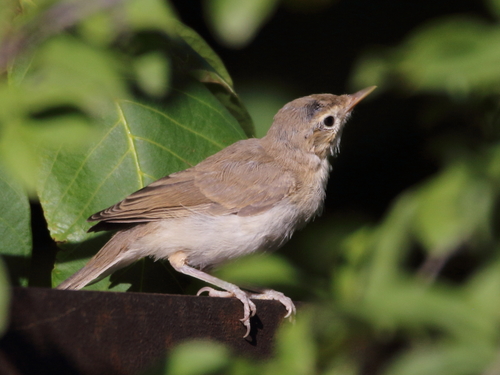
felosa-pálida-oriental (Iduna pallida) felosa-pálida-oriental

Mídia

Carregando…

Em resumo

The most reliable field mark to separate Graceful Prinia from Eastern Olivaceous Warbler is the combination of tail shape and behavior: Graceful Prinia has a long, narrow, strongly graduated tail often cocked upward, with each feather tipped black and white, while Eastern Olivaceous Warbler shows a shorter, more even tail that is characteristically flicked downward. In addition, Graceful Prinia is smaller and rounder with a short, stubby bill, whereas Eastern Olivaceous Warbler is noticeably larger, with a longer, pointed bill and a more slender, elongated profile. In flight or when perched, note the strong streaking above and buffy flanks of Graceful Prinia (especially in breeding plumage), versus the plain, pale brown upperparts and clean whitish underparts of Eastern Olivaceous Warbler. Habitat can help: Graceful Prinia prefers dense undergrowth and tall grass, while Eastern Olivaceous Warbler is more often in open scrub or woodland edges. Calls and songs differ, but structure and tail behavior are the fastest field clues.

Dicas de identificação

  1. Tail shape and pattern: Graceful Prinia has a long, narrow, strongly graduated tail with each feather tipped black and white—visible in all ages and seasons. Eastern Olivaceous Warbler has a shorter, more even tail with no pattern.
  2. Tail behavior: Graceful Prinia often cocks its tail upward and fans it, while Eastern Olivaceous Warbler habitually flicks its tail downward. This behavioral difference is often the quickest clue in the field.
  3. Body size and shape: Graceful Prinia is smaller, rounder, and more compact, with a short, stubby bill. Eastern Olivaceous Warbler is larger, more elongated, with a longer, pointed bill and a slender profile.
  4. Upperpart markings: Graceful Prinia is streaked above (especially in breeding plumage), while Eastern Olivaceous Warbler is always plain above—no streaking at any age.
  5. Underparts color: Graceful Prinia has whitish underparts with buff flanks (more pronounced in winter), while Eastern Olivaceous Warbler has clean whitish underparts, with juveniles showing a slight buff wash on the belly.
  6. Bill structure: Graceful Prinia's bill is short and black in breeding plumage, paler in winter. Eastern Olivaceous Warbler's bill is longer, stronger, and pointed, always pale-based.
  7. Leg color: Eastern Olivaceous Warbler has grey legs, while Graceful Prinia's leg color is not specified but is not a standout feature.
  8. Flight style: Graceful Prinia's flight is weak and fluttery, rarely sustained. Eastern Olivaceous Warbler flies more directly and strongly.
  9. Perched posture: Graceful Prinia is often low in cover, with a cocked tail. Eastern Olivaceous Warbler perches more upright and in the open, with a downward-flicked tail.
  10. Habitat preference: Graceful Prinia sticks to dense grass or bushy cover; Eastern Olivaceous Warbler is in more open scrub or woodland edge. Use context but beware of overlap.
  11. Vocalizations: Graceful Prinia's trilled 'breep' and 'zerlip' song are quite different from the fast, nasal babbling of Eastern Olivaceous Warbler. Use with caution unless familiar.
  12. Sex and age: Both species are sexually monomorphic; age differences are subtle and not strongly diagnostic except for the buffier belly in juvenile Eastern Olivaceous Warbler.
  13. Seasonal changes: Graceful Prinia is brighter and less streaked in winter, but still shows tail pattern and structure. Eastern Olivaceous Warbler remains plain throughout the year.
  14. Common pitfalls: Do not rely on overall brownish tones, as both can appear drab. Focus on tail pattern, shape, and behavior first, then bill and streaking.
  15. When in doubt: If you see a streaked, long-tailed, cocked bird in dense grass, it's almost certainly Graceful Prinia. If the bird is plain, long-billed, and flicks its tail down in open scrub, it's Eastern Olivaceous Warbler.

Tamanho

Graceful Prinia is a distinctly smaller bird (10–11 cm) with a compact, rounded body and short wings. Eastern Olivaceous Warbler is medium-sized for a warbler, with a longer, more slender body and proportionally longer wings and bill. The difference is usually apparent in direct comparison or with experience: Graceful Prinia looks petite and delicate, while Eastern Olivaceous Warbler appears more elongated and 'warbler-like.'

Plumagem

Juvenile and immature plumages are not described in detail for either species, but adult breeding Graceful Prinia is grey-brown above with strong dark streaking, whitish underparts, and buff flanks. Its long tail is distinctly graduated, with each feather tipped black and white—this tail pattern is visible in all ages and seasons. In winter, Graceful Prinia becomes brighter sandy brown above with weaker streaking and more buff on the sides. Eastern Olivaceous Warbler, by contrast, is always plain above—pale brown to olive-brown, sometimes with a greenish tinge—and has clean whitish underparts, with juveniles showing a bit more buff on the belly. It lacks any streaking above or tail pattern. The bill of Eastern Olivaceous Warbler is longer and more pointed, and the legs are grey. Both sexes are similar in each species. In summary: streaked and patterned (Graceful Prinia) versus plain and unmarked (Eastern Olivaceous Warbler), with the tail pattern and shape a key difference at all ages.

Comportamento

Graceful Prinia is highly active, often seen flitting low in dense vegetation, with its long tail cocked up and fanned or flicked. Its flight is weak and fluttery, rarely covering long distances. Eastern Olivaceous Warbler is more deliberate, often perching upright in open scrub or low trees, and habitually flicks its tail downward. Its flight is stronger and more direct. The two species' jizz is quite different: Graceful Prinia is mouse-like and restless, while Eastern Olivaceous Warbler is more typical of medium-sized warblers, moving with measured hops and pauses.

Habitat

Graceful Prinia is tied to dense, low vegetation—tall grass, thick undergrowth, tamarisks, or similar cover—where it can remain hidden and forage close to the ground. Eastern Olivaceous Warbler prefers more open habitats: scrub, woodland edges, and sometimes reedbeds, but usually where there is less dense ground cover and more open perches. Overlap can occur, but Graceful Prinia is rarely found in the open, and Eastern Olivaceous Warbler is less likely in dense grass or bush.

Voz

Graceful Prinia gives a rolling, trilled 'breep' call and a hard, rolling, repetitive 'zerlip' song. Eastern Olivaceous Warbler's song is a fast, nasal babbling, quite different in rhythm and tone. While both can be vocal, the songs and calls are distinct to experienced listeners, but may not be diagnostic at a distance or for beginners.

Enviar uma descrição melhor

Use as mesmas seções da comparação. Seu texto é publicado na hora.

The most reliable field mark to separate Graceful Prinia from Eastern Olivaceous Warbler is the combination of tail shape and behavior: Graceful Prinia has a long, narrow, strongly graduated tail often cocked upward, with each feather tipped black and white, while Eastern Olivaceous Warbler shows a shorter, more even tail that is characteristically flicked downward. In addition, Graceful Prinia is smaller and rounder with a short, stubby bill, whereas Eastern Olivaceous Warbler is noticeably larger, with a longer, pointed bill and a more slender, elongated profile. In flight or when perched, note the strong streaking above and buffy flanks of Graceful Prinia (especially in breeding plumage), versus the plain, pale brown upperparts and clean whitish underparts of Eastern Olivaceous Warbler. Habitat can help: Graceful Prinia prefers dense undergrowth and tall grass, while Eastern Olivaceous Warbler is more often in open scrub or woodland edges. Calls and songs differ, but structure and tail behavior are the fastest field clues.

  1. Tail shape and pattern: Graceful Prinia has a long, narrow, strongly graduated tail with each feather tipped black and white—visible in all ages and seasons. Eastern Olivaceous Warbler has a shorter, more even tail with no pattern.
  2. Tail behavior: Graceful Prinia often cocks its tail upward and fans it, while Eastern Olivaceous Warbler habitually flicks its tail downward. This behavioral difference is often the quickest clue in the field.
  3. Body size and shape: Graceful Prinia is smaller, rounder, and more compact, with a short, stubby bill. Eastern Olivaceous Warbler is larger, more elongated, with a longer, pointed bill and a slender profile.
  4. Upperpart markings: Graceful Prinia is streaked above (especially in breeding plumage), while Eastern Olivaceous Warbler is always plain above—no streaking at any age.
  5. Underparts color: Graceful Prinia has whitish underparts with buff flanks (more pronounced in winter), while Eastern Olivaceous Warbler has clean whitish underparts, with juveniles showing a slight buff wash on the belly.
  6. Bill structure: Graceful Prinia's bill is short and black in breeding plumage, paler in winter. Eastern Olivaceous Warbler's bill is longer, stronger, and pointed, always pale-based.
  7. Leg color: Eastern Olivaceous Warbler has grey legs, while Graceful Prinia's leg color is not specified but is not a standout feature.
  8. Flight style: Graceful Prinia's flight is weak and fluttery, rarely sustained. Eastern Olivaceous Warbler flies more directly and strongly.
  9. Perched posture: Graceful Prinia is often low in cover, with a cocked tail. Eastern Olivaceous Warbler perches more upright and in the open, with a downward-flicked tail.
  10. Habitat preference: Graceful Prinia sticks to dense grass or bushy cover; Eastern Olivaceous Warbler is in more open scrub or woodland edge. Use context but beware of overlap.
  11. Vocalizations: Graceful Prinia's trilled 'breep' and 'zerlip' song are quite different from the fast, nasal babbling of Eastern Olivaceous Warbler. Use with caution unless familiar.
  12. Sex and age: Both species are sexually monomorphic; age differences are subtle and not strongly diagnostic except for the buffier belly in juvenile Eastern Olivaceous Warbler.
  13. Seasonal changes: Graceful Prinia is brighter and less streaked in winter, but still shows tail pattern and structure. Eastern Olivaceous Warbler remains plain throughout the year.
  14. Common pitfalls: Do not rely on overall brownish tones, as both can appear drab. Focus on tail pattern, shape, and behavior first, then bill and streaking.
  15. When in doubt: If you see a streaked, long-tailed, cocked bird in dense grass, it's almost certainly Graceful Prinia. If the bird is plain, long-billed, and flicks its tail down in open scrub, it's Eastern Olivaceous Warbler.

Graceful Prinia is a distinctly smaller bird (10–11 cm) with a compact, rounded body and short wings. Eastern Olivaceous Warbler is medium-sized for a warbler, with a longer, more slender body and proportionally longer wings and bill. The difference is usually apparent in direct comparison or with experience: Graceful Prinia looks petite and delicate, while Eastern Olivaceous Warbler appears more elongated and 'warbler-like.'

Juvenile and immature plumages are not described in detail for either species, but adult breeding Graceful Prinia is grey-brown above with strong dark streaking, whitish underparts, and buff flanks. Its long tail is distinctly graduated, with each feather tipped black and white—this tail pattern is visible in all ages and seasons. In winter, Graceful Prinia becomes brighter sandy brown above with weaker streaking and more buff on the sides. Eastern Olivaceous Warbler, by contrast, is always plain above—pale brown to olive-brown, sometimes with a greenish tinge—and has clean whitish underparts, with juveniles showing a bit more buff on the belly. It lacks any streaking above or tail pattern. The bill of Eastern Olivaceous Warbler is longer and more pointed, and the legs are grey. Both sexes are similar in each species. In summary: streaked and patterned (Graceful Prinia) versus plain and unmarked (Eastern Olivaceous Warbler), with the tail pattern and shape a key difference at all ages.

Graceful Prinia is highly active, often seen flitting low in dense vegetation, with its long tail cocked up and fanned or flicked. Its flight is weak and fluttery, rarely covering long distances. Eastern Olivaceous Warbler is more deliberate, often perching upright in open scrub or low trees, and habitually flicks its tail downward. Its flight is stronger and more direct. The two species' jizz is quite different: Graceful Prinia is mouse-like and restless, while Eastern Olivaceous Warbler is more typical of medium-sized warblers, moving with measured hops and pauses.

Graceful Prinia is tied to dense, low vegetation—tall grass, thick undergrowth, tamarisks, or similar cover—where it can remain hidden and forage close to the ground. Eastern Olivaceous Warbler prefers more open habitats: scrub, woodland edges, and sometimes reedbeds, but usually where there is less dense ground cover and more open perches. Overlap can occur, but Graceful Prinia is rarely found in the open, and Eastern Olivaceous Warbler is less likely in dense grass or bush.

Graceful Prinia gives a rolling, trilled 'breep' call and a hard, rolling, repetitive 'zerlip' song. Eastern Olivaceous Warbler's song is a fast, nasal babbling, quite different in rhythm and tone. While both can be vocal, the songs and calls are distinct to experienced listeners, but may not be diagnostic at a distance or for beginners.

Descartar as alterações?

Você tem edições não salvas. Se sair agora, elas serão perdidas.

fuinha-elegante · felosa-pálida-oriental · Minhas aves difíceis