

frisada vs zarro
Mareca strepera versus Aythya ferina
Jogue um quiz com frisada e zarro
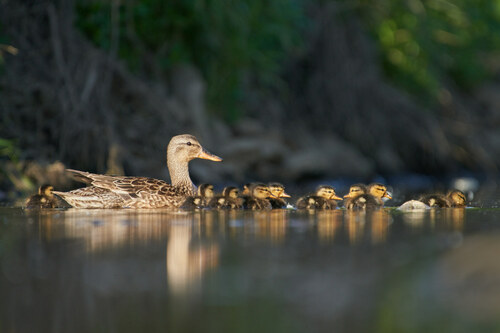 frisada
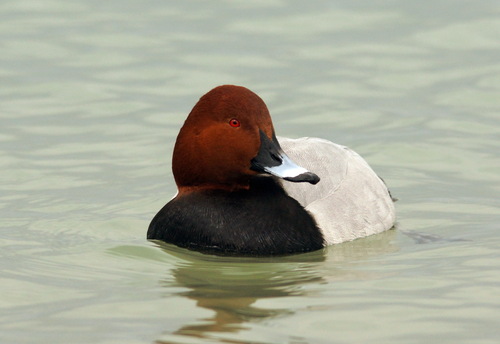 zarro
Em resumo
The most reliable field mark to separate Gadwall from Common Pochard in any plumage is the presence of a bold white wing speculum on Gadwall, visible both at rest and in flight, versus the lack of a white speculum on Common Pochard. In flight, Gadwall shows a striking white wing patch, while Pochard’s wings are plain and lack this contrast. Structurally, Gadwall is a slightly larger, longer duck with a more horizontal stance, while Pochard is stockier with a sloping forehead and shorter tail. Male plumage is very different: Gadwall males are finely patterned gray-brown with a black rear, while Pochard males have a rich chestnut head and pale gray body. Females of both are brownish, but Gadwall females have a white belly and orange-edged bill, which Pochard females lack. Both species are widespread, but their preferred habitats and feeding behaviors differ, aiding separation in the field.
Dicas de identificação
- White wing speculum (Gadwall): In all ages and sexes, Gadwall shows a bold white speculum on the wing, visible in flight and often at rest. Pochard never shows a white speculum—this is the single most reliable field mark.
- Flight views: Gadwall in flight shows a white wing patch and white belly; Pochard’s wings are plain grayish with no white, and the belly is not contrastingly white.
- Male head color: Adult male Gadwall has a gray-brown head, while male Pochard has a rich chestnut-red head that stands out at distance.
- Female bill pattern: Female Gadwall has a dark bill with orange edges, especially at the sides; Pochard females have a plain dark bill with a blue-grey band in males, but not orange-edged.
- Body shape and posture: Gadwall is longer, more horizontal, and less compact; Pochard is stockier, short-tailed, and has a sloping forehead with a long bill.
- Belly color: Gadwall (especially females and eclipse males) shows a white belly, which Pochard lacks (female and juvenile Pochard are brownish below).
- Male body pattern: Gadwall males are finely vermiculated gray with a black rear; Pochard males have a pale gray body, black breast and tail, and no fine patterning.
- Iris color: Pochard males have a yellow-orange to red iris (brighter in breeding season); Gadwall’s iris is dark and not distinctive.
- Feeding behavior: Gadwall usually dabbles or grazes, rarely diving; Pochard is almost always seen diving, often repeatedly.
- Habitat preference: Gadwall is found in marshes and vegetated shallows; Pochard prefers deeper open water.
- Flock size: Gadwall tends to be in small groups; Pochard often forms large, dense flocks, especially in winter.
- Voice: Gadwall females give a high-pitched quack, males a soft mep or whistle, mostly during courtship; Pochard is generally silent and not easily separated by voice.
- Seasonal confusion: In eclipse or juvenile plumage, Gadwall males look like females but retain the white speculum and are usually grayer above; Pochard juveniles are similar to females but with a duller iris.
- Pitfalls: Female Gadwall can be confused with female Mallard, but not with Pochard if the white speculum and orange-edged bill are seen. Female Pochard is plainer, lacks orange on the bill and white in the wing.
- When in doubt: Always try to see the upperwing in flight or at rest—Gadwall’s white speculum is diagnostic. If only head and body are visible, focus on head color (chestnut in Pochard male), bill pattern (orange edges in Gadwall female), and belly color (white in Gadwall, brownish in Pochard).
Tamanho
Gadwall is slightly larger overall, measuring 47–58 cm in length with a 78–85 cm wingspan, and males averaging about 990 g. Common Pochard is a bit smaller and more compact, at 42–49 cm long with a 72–82 cm wingspan, and variable weight (467–1240 g, but usually lighter than Gadwall). Gadwall appears longer and more elongated, while Pochard is stockier and short-tailed. These differences are subtle and best used in combination with plumage and structure.
Plumagem
The key age-independent mark is the white wing speculum of Gadwall, visible in all ages and both sexes, especially obvious in flight but also at rest. Pochard never shows a white speculum; its wings are uniformly grayish with no bold pattern. Adult male Gadwall is intricately patterned gray-brown with a black rear and chestnut wing coverts, while Pochard males have a rich chestnut head, black breast and tail, and a pale gray body. Female Gadwall is mottled brown with a white belly and orange-edged bill; female Pochard is plainer brown overall, lacks a white belly, and has a plain dark bill. Juvenile and eclipse Gadwall males resemble females but retain the white speculum and are usually grayer above. Pochard juveniles are similar to females but with a duller iris. In all ages, Gadwall’s white belly and wing patch are unique among dabbling and diving ducks.
Comportamento
Gadwall is a dabbling duck, feeding mostly by tipping up or grazing, but can also dive for food more proficiently than most dabblers. It is less gregarious outside the breeding season, forming small flocks. Pochard is a classic diving duck, spending much time underwater foraging for plant material and invertebrates, and is often seen in larger, dense flocks, especially in winter. Gadwall tends to be quieter and less conspicuous in behavior, while Pochard is more likely to be seen diving repeatedly.
Habitat
Gadwall prefers open wetlands, marshes, and lakes with dense fringing vegetation, often feeding in shallow water or wet grassland. It is more likely to be found in areas with emergent plants and less likely to be in deep open water. Pochard favors deeper lakes, reservoirs, and larger bodies of water, especially those with open water and less emergent vegetation. In mixed flocks, Gadwall typically stays closer to shore or vegetated margins, while Pochard is often farther out on open water.
Voz
Gadwall is generally quiet, but females give a high-pitched quack (gag-ag-ag-ag) and males a grunt (mep) or whistle, especially during courtship. Pochard vocalizations are not described in detail in the notes, but are generally less conspicuous and not a primary field mark for separation between these two species.