

freckled nightjar vs slender-tailed nightjar
Caprimulgus tristigma versus Caprimulgus clarus
Jogue um quiz com freckled nightjar e slender-tailed nightjar
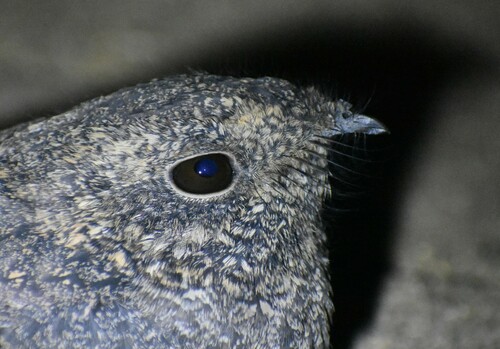 freckled nightjar
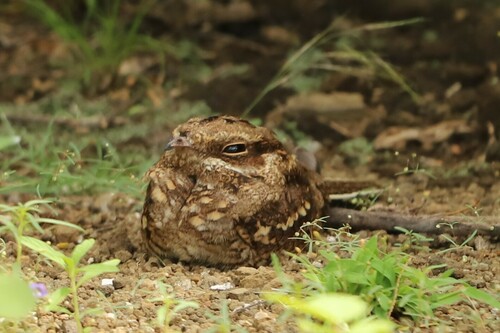 slender-tailed nightjar
Em resumo
A marca de campo mais confiável para separar o freckled nightjar do slender-tailed nightjar é a combinação de tamanho, estrutura e padrão de asa/cauda em voo. O freckled nightjar é muito maior e mais robusto, com uma aparência escura e fortemente pintalgada e, nos machos, manchas brancas distintas nas primárias externas e pontas brancas nas penas da cauda externa (não presentes nas fêmeas ou no slender-tailed nightjar). O slender-tailed nightjar é mais esguio, com uma cauda notavelmente longa e afilada (penas centrais projetadas) e não possui marcas brancas fortes nas asas ou na cauda. Ambas as espécies estão bem camufladas quando empoleiradas, mas o freckled nightjar se mistura com as rochas, enquanto o slender-tailed nightjar combina com a litter de folhas ou solo seco. Use a estrutura e o padrão de voo como seu primeiro verificador, depois procure por brancos específicos de sexo nas asas e na cauda do freckled nightjar.
Dicas de identificação
- Tamanho e estrutura: O freckled nightjar é muito maior e mais robusto, com um peito largo e asas longas, mas uma cauda relativamente curta. O slender-tailed nightjar é mais esguio, de tamanho médio, e tem uma cauda longa e pontuda com penas centrais projetadas além do resto.
- Forma da cauda: Em voo ou quando empoleirado com a cauda visível, a cauda do slender-tailed nightjar é longa e esguia, com as penas centrais se estendendo de forma notável. A cauda do freckled nightjar é mais curta e mais quadrada, sem a projeção pronunciada da pena central.
- Padrão de asa e cauda em voo (machos adultos): O macho freckled nightjar apresenta pequenas manchas brancas nas quatro primárias externas e pontas brancas nas duas penas externas da cauda. Essas marcas estão ausentes no slender-tailed nightjar e na fêmea do freckled nightjar (as fêmeas podem mostrar 3–4 pequenas manchas brancas nas primárias externas, mas sem branco na cauda).
- Padrão de asa e cauda em voo (fêmeas): A fêmea do freckled nightjar pode mostrar 3–4 pequenas manchas brancas nas primárias externas, mas sem branco na cauda. O slender-tailed nightjar de ambos os sexos não possui essas manchas brancas e pontas de cauda.
- Aparência empoleirada: O freckled nightjar parece cinza escuro a quase preto à distância, com finas pintas brancas, canela e buff de perto. O slender-tailed nightjar é cripticamente marrom, cinza e preto, misturando-se com litter de folhas ou solo seco, e não possui as pintas pesadas e tons escuros.
- Partes inferiores: O freckled nightjar tem partes inferiores marrons escuras com listras esbranquiçadas e canela; as partes inferiores do slender-tailed nightjar são menos distintamente marcadas e mais uniformemente cripticas.
- Dimorfismo sexual: O freckled nightjar é dimórfico sexualmente em marcas de asas e cauda (veja acima); os sexos do slender-tailed nightjar são semelhantes, com apenas manchas pálidas levemente mais proeminentes nas asas nos machos.
- Contexto de habitat: Se visto em ou perto de rochas ou pedras, especialmente em afloramentos rochosos, suspeite do freckled nightjar. Em áreas abertas secas com litter de folhas, grama ou vegetação arbustiva, o slender-tailed nightjar é mais provável.
- Jizz em voo: O freckled nightjar parece poderoso e pesado, com asas largas e uma cauda curta. O slender-tailed nightjar é mais leve, mais ágil e mostra uma cauda longa e pontuda.
- Camuflagem: A plumagem do freckled nightjar é adaptada para superfícies rochosas; a do slender-tailed nightjar é para solo seco e litter de folhas. Isso pode ajudar quando os pássaros estão empoleirados.
- Sem manchas brancas fortes: Se você ver um nightjar sem branco nas asas ou na cauda e com uma cauda longa e pontuda, é provável que seja um slender-tailed nightjar. Se você ver manchas brancas nas asas ou na cauda (especialmente em voo), considere o freckled nightjar, mas verifique o sexo.
- Bico e abertura: Ambas as espécies têm uma ampla abertura, mas a do freckled nightjar é especialmente grande para engolir grandes insetos. Isso geralmente não é visível em campo, a menos que o pássaro esteja chamando ou se alimentando.
- Pássaros juvenis/imaturos: Nenhuma marca juvenil específica é descrita para qualquer uma das espécies; confie em tamanho, estrutura e habitat.
- Vocalizações: Não descritas como diagnósticas nas notas disponíveis; não confie na voz para separação.
- Armadilhas: Cuidado com pássaros distantes ou mal vistos, pois ambas as espécies são cripticas e podem parecer semelhantes quando empoleiradas. Use uma combinação de tamanho, forma da cauda e (se visíveis) marcas de asas/cauda para a melhor chance de identificação correta.
Tamanho
O freckled nightjar é significativamente mais pesado (79 g vs 42 g) e parece maior e mais robusto do que o slender-tailed nightjar. No campo, o freckled nightjar mostra um perfil robusto e de peito largo com asas longas, mas uma cauda relativamente curta. O slender-tailed nightjar é de tamanho médio, mais esguio e mais alongado, com uma cauda particularmente longa, esguia e afilada — as penas centrais da cauda se estendem notavelmente além do resto, dando uma aparência pontuda. Essa diferença de tamanho e estrutura é frequentemente aparente mesmo à distância ou em pouca luz.
Plumagem
- Adultos em voo: O macho freckled nightjar mostra pequenas manchas brancas nas quatro primárias externas e pontas brancas nas duas penas externas da cauda; as fêmeas têm 3–4 manchas brancas menores nas primárias externas, mas não têm branco na cauda. Essas marcas brancas não estão presentes no slender-tailed nightjar de nenhum sexo. Em ambos os sexos do freckled nightjar, as manchas brancas estão geralmente ocultas quando empoleiradas.
- Slender-tailed nightjar tem plumagem cripticamente marrom, cinza e preta, sem branco forte nas asas ou na cauda, e ambos os sexos parecem semelhantes. Os machos podem mostrar manchas pálidas levemente mais proeminentes nas asas, mas estas são sutis e não tão ousadas ou padronizadas quanto no freckled nightjar. A cauda é longa e pontuda, com as penas centrais projetadas, mas não possui pontas brancas.
- Pássaros empoleirados: O freckled nightjar parece cinza escuro a quase preto à distância, com finas pintas brancas, canela e buff visíveis de perto. As partes inferiores são marrons escuras com listras esbranquiçadas e canela. O slender-tailed nightjar é mais uniformemente criptico, misturando-se com solo seco ou litter de folhas, e não possui as pintas pesadas e tons escuros do freckled nightjar.
- Plumagem juvenil/imatura: Nenhuma marca diagnóstica específica é descrita para imaturos de qualquer uma das espécies, então confie na estrutura e no padrão semelhante ao adulto.
Comportamento
Ambas as espécies são noturnas e forrageiam por insetos voadores ao crepúsculo e à noite, frequentemente saindo do chão ou de poleiros baixos. O freckled nightjar tipicamente forrageia sobre paisagens rochosas, terrenos quebrados e pastagens, retornando a poleiros rochosos proeminentes. O slender-tailed nightjar é mais frequentemente associado a áreas abertas secas, incluindo savana, vegetação arbustiva e matagal, e pode empoleirar-se no chão ou em ramos baixos. O tamanho maior e o voo mais poderoso do freckled nightjar podem ser aparentes quando assustados, enquanto o slender-tailed nightjar parece mais leve e ágil, com uma cauda mais longa e pontuda em voo.
Habitat
O freckled nightjar prefere afloramentos rochosos, pedras e terrenos quebrados, frequentemente empoleirando-se em rochas expostas onde sua plumagem escura e pintalgada fornece camuflagem. O slender-tailed nightjar é encontrado em habitats mais secos e abertos, como savana, floresta seca, vegetação arbustiva, matagal aberto e pastagens esparsamente vegetadas, frequentemente perto da água, mas mais associado a litter de folhas e solo seco do que a rochas. Se você assustar um nightjar de uma encosta rochosa, o freckled é mais provável; de grama seca ou solo arbustivo, o slender-tailed é mais provável.
freckled nightjar · slender-tailed nightjar · Minhas aves difíceis