

verdelhão vs escrevedeira
Chloris chloris versus Emberiza cirlus
Jogue um quiz com verdelhão e escrevedeira
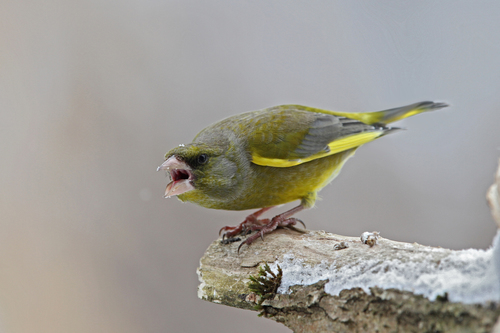 verdelhão
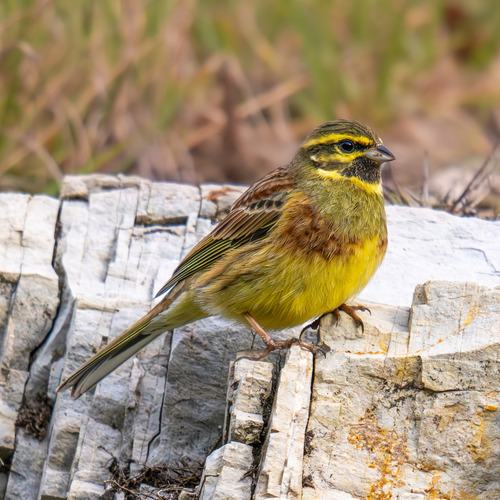 escrevedeira
Em resumo
The most reliable field mark to separate European Greenfinch from Cirl Bunting is overall coloration: Greenfinch is mainly greenish with bold yellow flashes in the wings and tail, while Cirl Bunting males show a strikingly patterned yellow and black head with a greenish breast band and streaked brown back. Females and young of both species are duller, but Greenfinch still shows a thicker, conical bill and yellow in the wings, while Cirl Bunting (especially females/immatures) are more brown and streaked, resembling a small Yellowhammer. In flight, Greenfinch shows obvious yellow on the primaries and tail, while Cirl Bunting lacks these yellow panels and instead has a more streaked, bunting-like appearance. Structure also helps: Greenfinch is chunkier and sparrow-like, Cirl Bunting slimmer and longer-tailed. Voice and habitat can be clues, but plumage and structure are the most reliable in the field.
Dicas de identificação
- Yellow in Wing and Tail (All Ages): Greenfinch of any age shows obvious yellow panels in the primaries and outer tail, especially visible in flight or when perched with wings closed. Cirl Bunting never shows yellow in the wings or tail.
- Overall Coloration: Greenfinch is greenish overall (even dull females/immatures), while Cirl Bunting is brown and streaked above, with yellow restricted to the head and underparts in males.
- Head Pattern (Adult Males): Male Cirl Bunting has a striking yellow face with black crown, eyestripe, and throat, plus a greenish breast band. Greenfinch lacks any facial pattern, just plain green.
- Bill Shape: Greenfinch has a thick, robust, conical bill, noticeably deeper than Cirl Bunting's, which is still thick but more slender and pointed.
- Back and Rump: Cirl Bunting (especially females/immatures) has a streaked grey-brown rump and chestnut shoulders; Greenfinch is plain-backed with no chestnut.
- Breast and Underparts: Greenfinch is greenish-yellow below, with no breast band. Cirl Bunting males have a greenish breast band and yellow belly; females are streaked below.
- Flight Style: Greenfinch has an undulating, bouncy flight, often with display 'butterfly' flights in spring. Cirl Bunting's flight is more direct and less undulating.
- Habitat: Greenfinch is common in gardens, parks, and urban areas; Cirl Bunting is almost always in farmland with hedges and rough grass, rarely in gardens.
- Song: Greenfinch's song is a varied mix of trills and wheezes; Cirl Bunting's is a simple rattling trill. If you hear a monotonous rattle, suspect Cirl Bunting.
- Flock Size: Greenfinch often forms flocks, especially outside breeding season. Cirl Bunting is more solitary or in small family groups.
- Tail Shape: Greenfinch's tail is shorter and more squared; Cirl Bunting's is longer and more pointed, especially obvious in flight.
- Female/Immature Pitfall: Female and young Greenfinch can look dull and brownish, but still show yellow in wing/tail and a thick bill. Female/immature Cirl Bunting is more streaked and lacks yellow flashes.
- Display Flight: Only Greenfinch does the slow, butterfly-like display flight in spring.
- Urban vs Rural: If seen in a city park or garden, Greenfinch is much more likely; Cirl Bunting is a rural specialist.
- Confusion with Yellowhammer: Female/immature Cirl Bunting is easily confused with Yellowhammer, not Greenfinch, due to similar streaked brown plumage.
Tamanho
European Greenfinch is 15 cm long with a wingspan of 24.5–27.5 cm, making it similar in size to a House Sparrow and slightly more robust than Cirl Bunting. Cirl Bunting is about 15.5 cm long with a wingspan of 22–25.5 cm, so it is marginally longer but slimmer and with a slightly shorter average wingspan. In the field, Greenfinch often appears bulkier and more thickset, while Cirl Bunting is more slender and elongated, especially in the tail.
Plumagem
- Juveniles and Females: Young and female Greenfinches are duller than males but still show a greenish cast and yellow flashes in the wings and tail, with a thick, pale bill. Juvenile/female Cirl Buntings are brown and heavily streaked above, with a streaked grey-brown rump and chestnut shoulders, lacking any green or yellow wing panels. Their bill is also thick but less conical than Greenfinch.
- Adult Males: Male Greenfinch is bright green with yellow in the wings and tail, plain face. Male Cirl Bunting is unmistakable with a bright yellow face, black crown and throat, greenish breast band, and streaked brown back. The yellow is restricted to the head and underparts, not the wings.
- In Flight: Greenfinch shows bold yellow on the primaries and tail sides, visible even in dull birds. Cirl Bunting in flight lacks these yellow panels and appears more brown and streaked, with no obvious wing or tail flashes.
- Bill: Both have thick seed-eater bills, but Greenfinch's is more robust and conical.
Comportamento
Greenfinch is often seen in flocks, especially outside the breeding season, and feeds both in trees and on the ground, often at feeders or in gardens. Its flight is undulating and can include display flights with slow, butterfly-like wingbeats. Cirl Bunting is more likely to be seen singly or in pairs, foraging on the ground or low in vegetation, especially in farmland with hedges and rough grass. Its flight is less undulating and more direct, and it is less likely to visit garden feeders.
Habitat
Greenfinch is widespread across Europe in woodland edges, farmland hedges, and gardens with thick vegetation, and is often found in urban and suburban areas. Cirl Bunting is much more restricted, breeding in southern Europe and favoring farmland with hedgerows, rough grass, and stubble fields. It is rarely found in urban gardens and prefers open countryside with a mix of crops and grassy margins.
Voz
Greenfinch's song is a mix of trills, twittering, and wheezing notes, often given from a perch or during display flights. The call is a distinctive nasal 'dzwee'. Cirl Bunting's song is a monotonous rattling trill, reminiscent of an Arctic Warbler or the end of a Lesser Whitethroat's song, and is less varied than Greenfinch's. Calls are less distinctive in the field unless the song is heard well.