

erect-crested penguin vs pinguim-macaroni
Eudyptes sclateri versus Eudyptes chrysolophus
Jogue um quiz com erect-crested penguin e pinguim-macaroni
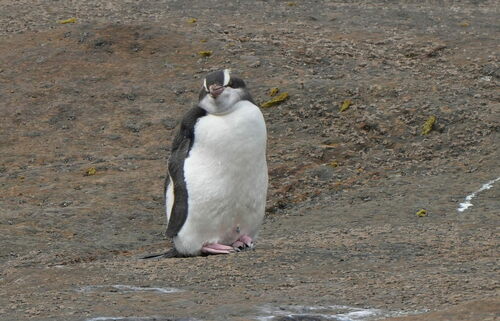 erect-crested penguin
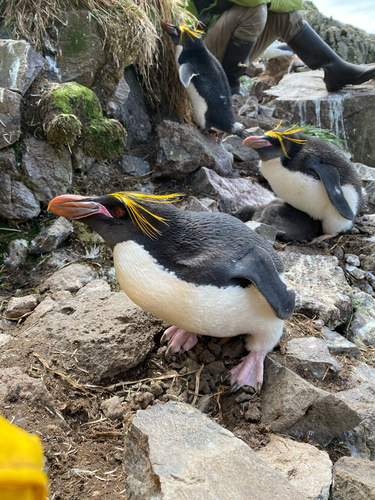 pinguim-macaroni
Em resumo
A marca de campo mais confiável entre o pinguim-erecto e o pinguim-macaroni é a forma e a posição da crista amarela: o pinguim-erecto apresenta uma crista curta e ereta que se eleva abruptamente acima do olho, enquanto a crista do pinguim-macaroni começa na testa e se estende horizontalmente para trás. Ambos são pinguins grandes e robustos com partes superiores pretas e partes inferiores brancas, mas diferenças sutis no tamanho do bico, pele facial e estrutura da crista ajudam a separá-los. As aves imaturas são mais complicadas, pois ambas carecem de cristas completas, mas as imaturas do pinguim-macaroni apresentam um bico mais opaco e penas subdesenvolvidas. No campo, o contexto e a localização da colônia também podem ajudar, mas concentre-se no padrão da cabeça e na forma da crista para a melhor separação.
Dicas de identificação
- Forma e posição da crista (adultos): A crista amarela do pinguim-erecto é curta, grossa e se ergue acima do olho, dando uma aparência espessa e ereta. A crista do pinguim-macaroni começa na testa e se estende horizontalmente para trás, nunca se erguendo acima do olho. Esta é a marca mais confiável em vistas próximas.
- Origem da crista: No pinguim-erecto, a faixa amarela começa acima do olho; no pinguim-macaroni, começa no centro da testa e se estende para trás.
- Tamanho e estrutura do bico: Ambos têm bicos grandes e grossos, mas os machos do pinguim-erecto são especialmente robustos. O bico do pinguim-macaroni é marrom-alaranjado e bulboso, com uma mancha de pele nua rosada na base que se estende até o olho, que é mais proeminente do que no pinguim-erecto.
- Pele facial: O pinguim-macaroni apresenta uma mancha distinta de pele nua rosa do base do bico até o olho, frequentemente visível de perto. Isso é menos evidente ou ausente no pinguim-erecto.
- Cor da íris: O pinguim-macaroni tem uma íris vermelha, que pode ser vista em boa luz. A cor da íris do pinguim-erecto não é descrita como distinta.
- Aves imaturas: As imaturas do pinguim-macaroni têm um bico menor e mais opaco, queixo e garganta cinza-escuros, e carecem de uma crista completa (apenas penas amarelas espalhadas). As imaturas do pinguim-erecto não são bem descritas, mas provavelmente também carecem de uma crista completa; a separação nesta idade é difícil e pode não ser possível sem exame próximo.
- Padrão da asa superior: Nenhuma diferença distintiva no padrão da asa superior ou no padrão de voo é descrita para qualquer uma das espécies em qualquer idade; não confie nisso em vistas de voo.
- Brilho da plumagem: As partes superiores pretas de ambas as espécies apresentam um brilho azulado quando frescas e podem parecer mais marrons quando desgastadas; isso não é uma marca útil para separação.
- Dimorfismo sexual: Ambas as espécies apresentam pequenas diferenças de tamanho e bico entre os sexos, mas essas são sutis e não confiáveis para identificação em campo.
- Contexto da colônia: Se vistas se reproduzindo nas Ilhas Bounty ou Antipodes, espera-se o pinguim-erecto. Em outros lugares no Subantártico ou Antártico, o pinguim-macaroni é mais provável. No entanto, a vagância é possível, então sempre verifique a forma da crista.
- Comportamento: Ambas as espécies apresentam comportamentos sociais e agonísticos semelhantes; não use o comportamento sozinho para separação.
- Tamanho: O pinguim-erecto é, em média, mais pesado, mas a sobreposição é extensa; não use o tamanho a menos que as aves estejam juntas.
- Cor das pernas e pés: O pinguim-macaroni tem pernas e pés rosas, mas isso não é descrito para o pinguim-erecto e pode não ser diagnóstico.
- Vocalizações: Nenhuma diferença vocal distintiva é descrita; não confie na voz para separação.
- Variação sazonal: Ambas as espécies passam por mudanças de peso com a reprodução e a muda, mas isso não ajuda na identificação.
Tamanho
Ambas as espécies estão entre os maiores pinguins crestados, com considerável sobreposição em comprimento e massa. O pinguim-erecto é ligeiramente mais pesado em média (machos até 6,38 kg, fêmeas 5,4 kg [wikipedia]), tornando-o o maior pinguim crestado, enquanto o pinguim-macaroni tem uma média de cerca de 5 kg (4,985 kg [wikidata]), com machos alcançando até 6,4 kg antes da muda. Ambos alcançam comprimentos semelhantes (até 70 cm), então o tamanho sozinho não é uma marca confiável em campo, a menos que as aves estejam lado a lado.
Plumagem
- Juvenis/Imaturas: Ambas as espécies carecem de cristas totalmente desenvolvidas quando jovens, mas as imaturas do pinguim-macaroni têm um bico mais opaco e marrom, queixo e garganta cinza-escuros, e apenas penas amarelas espalhadas na cabeça. As imaturas do pinguim-erecto são mal descritas, mas provavelmente também têm crista reduzida, tornando a separação desafiadora nesta idade. Nenhuma diferença distintiva no padrão da asa superior ou no padrão de voo é descrita para qualquer uma das espécies em qualquer idade.
- Adultos: O pinguim-erecto tem uma faixa larga e brilhante de sobrancelha amarela que se estende sobre o olho e forma uma crista curta e ereta, destacando-se proeminentemente. A crista amarela do pinguim-macaroni começa no centro da testa e se estende horizontalmente até a nuca, não se erguendo acima do olho. O pinguim-macaroni também apresenta uma mancha de pele nua rosada da base do bico até o olho e uma íris vermelha, enquanto a pele facial do pinguim-erecto é menos descrita. Ambos têm partes superiores pretas com um brilho azulado (quando frescas) e partes inferiores brancas nitidamente demarcadas.
Comportamento
Ambas as espécies se reproduzem em colônias densas e apresentam comportamentos sociais típicos de pinguins crestados, incluindo duelo de bicos e exibições mútuas. Os pinguins-macaroni são conhecidos por suas exibições visuais e vocais elaboradas, especialmente durante a temporada de reprodução, incluindo a 'exibição extática' com bramidos altos e movimentos de cabeça. O comportamento do pinguim-erecto é menos bem documentado, mas provavelmente é semelhante, dada sua estreita relação. Nenhuma diferença comportamental significativa é notada que ajude na separação em campo.
Habitat
O pinguim-erecto se reproduz apenas nas remotas Ilhas Bounty e Antipodes da Nova Zelândia, ocasionalmente como um vagante em outras costas do Hemisfério Sul. O pinguim-macaroni tem uma faixa de reprodução muito mais ampla, desde as ilhas Subantárticas até a Península Antártica. Se vistas se reproduzindo nas Ilhas Bounty ou Antipodes, espera-se o pinguim-erecto; em outros lugares no Subantártico ou Antártico, o pinguim-macaroni é mais provável. Ambas as espécies nidificam em grandes colônias rochosas, às vezes com outras aves marinhas.
erect-crested penguin · pinguim-macaroni · Minhas aves difíceis