

eastern phoebe vs black-crested titmouse
Sayornis phoebe versus Baeolophus atricristatus
Jogue um quiz com eastern phoebe e black-crested titmouse
 eastern phoebe
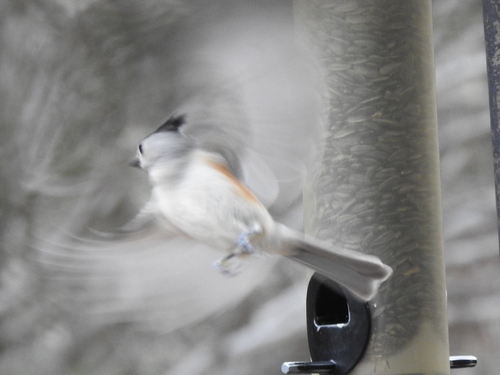 black-crested titmouse
Em resumo
The most reliable field mark to separate Eastern Phoebe from Black-crested Titmouse is the presence of a distinct crest: Black-crested Titmouse always shows a prominent black (male) or dark gray (female) crest, while Eastern Phoebe has only a slight, sometimes puffy, but never pointed crest. In addition, Eastern Phoebe lacks any eye-ring or facial markings and shows a plain, all-dark bill, while Black-crested Titmouse features a white eye-ring, a black spot above the eye, and a bicolored face. Juvenile plumages are not easily confused: young titmice have a shorter, gray crest and a buffy eye-ring, while young phoebes resemble adults but are plainer. In flight or perched, Eastern Phoebe habitually bobs its tail, a behavior titmice never show. Habitat and behavior also help: phoebes are flycatchers often seen sallying from low perches, while titmice are active, acrobatic foragers in trees.
Dicas de identificação
- Crest shape and color: Black-crested Titmouse always shows a prominent crest (black in males, dark gray in females; gray and shorter in juveniles). Eastern Phoebe has only a slight, rounded crest that is never pointed or prominent. This is the most immediate field mark.
- Facial pattern: Titmouse has a white eye-ring, a black spot above the eye, and a pale face with white lores, giving a bicolored look. Phoebe's face is plain, lacking any eye-ring or facial markings.
- Bill: Phoebe has an all-dark, slender bill typical of flycatchers. Titmouse has a short, stout, black bill more typical of chickadees and tits.
- Underparts: Phoebe shows a white throat, dirty gray breast, and buffish underparts (whiter in breeding season). Titmouse is white below with rich cinnamon-rufous flanks, a much more colorful and contrasting look.
- Upperparts: Phoebe is plain gray-brown above. Titmouse is deep plumbeous gray with a greenish cast on the mantle and rump, and greenish edges to the wings and tail.
- Wingbars: Both species have weak or indistinct wingbars, but titmouse's are pale gray and phoebe's are faint buff; neither is a strong mark for separation.
- Juvenile marks: Young titmice have a short, gray crest and buffy eye-ring; young phoebes look like dull adults and lack these features.
- Tail behavior: Phoebe habitually bobs its tail when perched; titmouse never does this.
- Foraging behavior: Phoebe perches in the open and sallies for insects; titmouse is acrobatic, foraging in trees and shrubs, often in small groups.
- Habitat: Phoebe is often near water, woodland edges, or human structures; titmouse is in wooded areas, especially oaks/mesquite, rarely in open or riparian zones.
- Vocalizations: Phoebe's 'fee-bee' song and sharp 'chip' call are distinctive; titmouse gives whistled and buzzy calls, never a 'fee-bee.'
- Seasonal context: Phoebe is migratory and among the first to return in spring; titmouse is resident year-round in its range.
- Size and jizz: Phoebe appears slim, big-headed, with a longer tail; titmouse is stockier, more compact, with a shorter tail and rounder body.
- Sociality: Phoebe is usually solitary or in pairs; titmouse is often in small, noisy groups.
- Pitfalls: A distant or backlit titmouse may appear plain, but the crest silhouette and facial pattern almost always give it away. Phoebe never shows a true crest or facial markings, even when fluffed up.
Tamanho
Both species are similar in length (Eastern Phoebe: 14–17 cm; Black-crested Titmouse: ~15 cm [wikipedia][avonet]), but the phoebe is slimmer and lighter (16–21 g) compared to the slightly heavier titmouse (~16.5 g). Phoebes appear big-headed with a proportionally longer tail and less compact body, while titmice are stockier with a short, stubby bill and a more rounded body shape. Wingspan is only given for phoebe (26–28 cm), but titmice have shorter, broader wings typical of Paridae.
Plumagem
- Juveniles/immatures: Juvenile Black-crested Titmouse shows a short, gray crest, buffy eye-ring, and brown-washed wing coverts, with underparts grayish white and flanks light pinkish buff. Juvenile Eastern Phoebe resembles the adult but is overall plainer, lacking strong wingbars or facial markings. No strong upperwing pattern is diagnostic in either species at this age.
- Adults: Adult Black-crested Titmouse is unmistakable with its black (male) or dark gray (female) crest, white eye-ring, black spot above the eye, and rich cinnamon-rufous flanks against white underparts. Eastern Phoebe is plain gray-brown above, with a white throat, dirty gray breast, and buffish underparts (whiter in breeding season), and only faint buff wingbars. Phoebe has no crest (just a slight puffy crown), no eye-ring, and no facial pattern. The titmouse's wings and tail are plumbeous gray with greenish edges, while phoebe's are plain. Bill color is all dark in phoebe, black in titmouse.
Comportamento
Eastern Phoebe habitually pumps its tail up and down when perched, a classic flycatcher behavior and a strong field mark. It often perches in the open, sallying out to catch insects and returning to the same spot. Black-crested Titmouse never bobs its tail; instead, it is an active, acrobatic forager, often hanging upside down or moving quickly through foliage in small groups. Phoebes are solitary or in pairs, while titmice are more social, sometimes joining mixed-species flocks.
Habitat
Eastern Phoebe prefers wooded edges, streamsides, and areas with overhangs or human structures for nesting, often seen near water or open woodland. It avoids open areas and is highly adaptable to urban environments, especially during migration. Black-crested Titmouse is found in woodlands, especially in Texas and northeastern Mexico, favoring oak and mesquite forests, and is less likely to be seen in open or riparian areas. Titmice are almost always in trees or dense brush, rarely perching in the open like phoebes.
Voz
Eastern Phoebe gives a sharp 'chip' call and a distinctive 'fee-bee' song, often repeated and the source of its name. Black-crested Titmouse has a variety of whistled and buzzy calls typical of titmice, but no 'fee-bee' song. Vocalizations are quite different and, when heard, are diagnostic.
eastern phoebe · black-crested titmouse · Minhas aves difíceis