

caboclinho-de-papo-escuro vs caboclinho-de-chapéu-cinzento
Sporophila ruficollis versus Sporophila cinnamomea
Jogue um quiz com caboclinho-de-papo-escuro e caboclinho-de-chapéu-cinzento
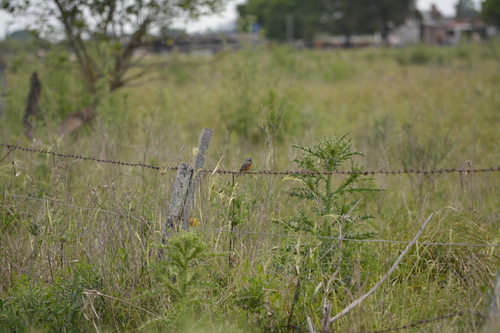 caboclinho-de-papo-escuro
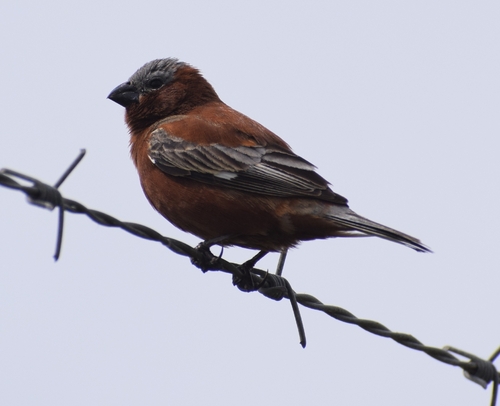 caboclinho-de-chapéu-cinzento
Em resumo
The most reliable field mark between Dark-throated and Chestnut Seedeaters is the male's head and throat pattern: Dark-throated males show a gray 'helmet' and blackish-brown throat, while Chestnut males have a chestnut face and throat with only the crown gray. Both species have a white wing patch at the base of the primaries, visible in all ages, but the head and underpart coloration of adult males is the best separator. Females and juveniles are trickier, as both are warm brown above and buff below, but Chestnut tends to be paler and sandier, with a whiter belly. Structure, size, and behavior are very similar, so focus on plumage details, especially in males. Habitat overlap is extensive, though Dark-throated may occur slightly more in drier or less aquatic grasslands.
Dicas de identificação
- Adult male head pattern is the best field mark: Dark-throated males have a gray crown and nape ('helmet') with a blackish-brown face and throat, while Chestnut males have a gray crown only to just below the eye, with the rest of the head and throat chestnut. This is diagnostic in breeding males.
- Adult male throat and underparts: Only Dark-throated males have a blackish-brown throat and upper breast contrasting with rufous underparts; Chestnut males are chestnut from throat through belly, with no dark bib.
- Back and rump color (males): Dark-throated males have a gray mantle and upper back with rufous or dark cinnamon lower back and rump; Chestnut males are chestnut throughout the back, with only the uppertail coverts gray.
- Tail color (males): Dark-throated males have a blackish tail with gray edges; Chestnut males have a dark brown tail with cinnamon-brown edges. This is subtle and may be hard to see in the field.
- Wing pattern (all ages): Both species have a small white patch at the base of the primaries, visible on the folded wing. This is not diagnostic between them, but useful to confirm species group.
- Female and juvenile color tone: Chestnut Seedeater females and juveniles are paler and sandier above, with a more whitish belly; Dark-throated are warmer brown above and below, with the belly only slightly paler than the breast. This is subtle and requires good light.
- Bill color (females): Both have dark bills, but Chestnut females are more likely to show a dark horn-colored bill, while Dark-throated females can be darker, almost blackish. This is not always reliable.
- Underpart contrast (females/juvs): Chestnut females/juvs have a paler, more whitish belly contrasting with buff breast; Dark-throated are more uniformly warm buff below.
- Crown color (females/juvs): Both have warm brown crowns, but Chestnut may appear slightly paler and sandier.
- Habitat context: If in drier, less aquatic grassland or scrub, Dark-throated is slightly more likely, but both can occur together in most grassland habitats.
- Geographic range: If in Bolivia or as a vagrant in Peru, only Dark-throated is possible; otherwise, both occur together in Argentina, Brazil, Paraguay, and Uruguay.
- Size and structure: Both are nearly identical in size and structure; do not use these for separation.
- Behavior: No known behavioral differences; do not use for identification.
- Voice: Not described as diagnostic in available sources.
- Seasonal variation: Both species are sexually dimorphic year-round; males in non-breeding plumage may be duller, but the head/throat pattern remains the best mark when visible.
Tamanho
Both species are among the smallest Sporophila, with near-identical measurements: Dark-throated Seedeater is 10–11 cm and 7–9.7 g, Chestnut Seedeater about 10 cm and 8.6 g. In the field, size and proportions are not useful for separation.
Plumagem
-
Juveniles and Females: Both species' juveniles and females are warm brown above and buff below, with darker tails and wings edged paler. Chestnut Seedeater females/juveniles are generally paler and sandier, with a more whitish belly, while Dark-throated are warmer brown throughout and the belly is only slightly paler than the breast. Both show a small white patch at the base of the primaries (on the folded wing), but this is not diagnostic between them.
-
Adult Males (breeding plumage):
- Dark-throated Seedeater: Gray crown and nape ('helmet'), blackish-brown face, throat, and upper breast; mantle and upper back gray; lower back and rump rufous/dark cinnamon; underparts rufous; tail blackish with gray edges; wings blackish with gray-brown edges and a white primary patch.
-
Chestnut Seedeater: Gray crown only to just below the eye, rest of head and throat chestnut; body almost entirely chestnut except for gray uppertail coverts; tail dark brown with cinnamon edges; wings dark grayish brown with cinnamon-brown edges and a white primary patch.
-
Key contrast: Only Dark-throated males have a dark throat and upper breast contrasting with rufous underparts; Chestnut males are chestnut from throat through belly, with no dark bib.
Comportamento
No significant behavioral differences are described between these two species. Both are typical Sporophila, foraging in grasslands and perching on exposed stems. Flight and foraging behavior are not useful for separation.
Habitat
Both species occur in similar habitats: tall grasslands, often in Argentina, Brazil, Paraguay, and Uruguay. Dark-throated Seedeater can also be found in Bolivia and as a vagrant in Peru, and may use slightly drier or less aquatic grasslands, including roadsides and scrubby areas, while Chestnut Seedeater is not noted for such dry or scrubby habitats. However, in most of their range, habitat is not a reliable separator.
caboclinho-de-papo-escuro · caboclinho-de-chapéu-cinzento · Minhas aves difíceis