

Motmot

crested francolin vs swamp francolin

Ortygornis sephaena versus Ortygornis gularis

Jogue um quiz com crested francolin e swamp francolin
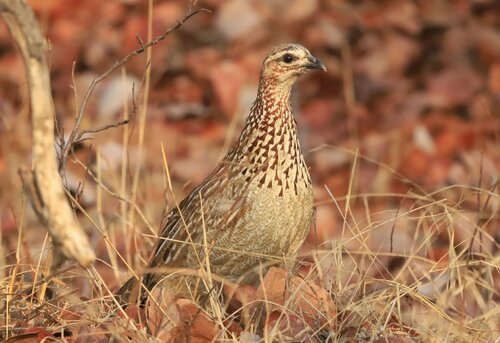
crested francolin (Ortygornis sephaena) crested francolin
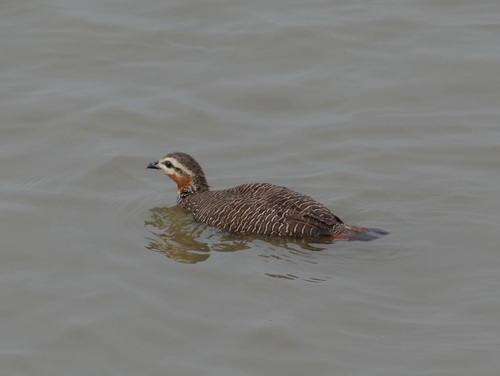
swamp francolin (Ortygornis gularis) swamp francolin

Mídia

Carregando…

Em resumo

The most reliable way to separate Crested Francolin from Swamp Francolin is by the throat and underparts: Swamp Francolin shows a bright rust-red throat and brown underparts boldly streaked with white, while Crested Francolin lacks these features. Swamp Francolin is also noticeably larger and longer-legged, with a heavier, more partridge-like build. Their ranges do not overlap: Crested Francolin is found in southern Africa, while Swamp Francolin is restricted to the Himalayan foothills of northern India and Nepal. If you see a large, long-legged francolin with a chestnut throat and streaked belly in tall grassland or near water in South Asia, it is Swamp Francolin; a smaller, less boldly marked bird in southern Africa is Crested Francolin.

Dicas de identificação

  1. Throat color: Swamp Francolin always shows a bright rust-red throat, a standout feature in all plumages and sexes. Crested Francolin lacks this, showing a plainer throat.
  2. Underparts streaking: Swamp Francolin has brown underparts with bold, longitudinal white streaks. Crested Francolin's underparts are less strongly marked and lack the crisp streaking.
  3. Upperparts and tail: Swamp Francolin's upperparts are brown barred with buff, and the outer tail feathers are chestnut. Crested Francolin is more subtly patterned above and does not show the same tail contrast.
  4. Leg color and length: Swamp Francolin has dull red legs that are noticeably longer, giving it a tall, upright stance. Crested Francolin's legs are shorter and less brightly colored.
  5. Bill color: Swamp Francolin has a blackish bill; bill color is less distinctive in Crested Francolin but not a primary field mark.
  6. Size and structure: Swamp Francolin is larger and bulkier, with a longer shank and tail. Crested Francolin is smaller and more compact overall.
  7. Sexual dimorphism: Both species have similar plumage in males and females, but Swamp Francolin males have spurs, which can be seen at close range or in hand.
  8. Flight and behavior: Swamp Francolin may be flushed from tall grass or cane-brakes and can sometimes be seen standing in shallow water (rarely). Crested Francolin is not associated with such wet habitats.
  9. Habitat: Swamp Francolin is always found in wet, grassy lowlands near rivers in northern India and Nepal. Crested Francolin is confined to southern Africa and drier habitats.
  10. Geographic range: There is no overlap: any francolin in southern Africa is Crested Francolin; in the Himalayan foothills, it is Swamp Francolin.
  11. Contextual clues: If you are birding in cultivated fields or alluvial plains with tall grass near water in South Asia, expect Swamp Francolin. In bushveld or woodland in southern Africa, expect Crested Francolin.
  12. Voice: Not diagnostic between these two species; do not rely on call for separation.
  13. Age and molt: No distinctive juvenile or immature wing patterns are described for either species, so age-related confusion is unlikely in flight.
  14. Pitfalls: Do not confuse Swamp Francolin's bold streaked underparts and red throat with any pattern on Crested Francolin; these are unique to Swamp Francolin.
  15. When in doubt: Use a combination of throat color, underpart streaking, leg length, and habitat to separate these two species in the field.

Tamanho

Swamp Francolin is distinctly larger than Crested Francolin, with males reaching about 15 inches in length and a wing over 7 inches long. It also has a proportionally longer shank (about 2.25 inches) and a heavier, more robust build. Crested Francolin is smaller and more compact, with shorter legs and tail. The size difference is most obvious when both species are seen side by side, but even singly, Swamp Francolin appears bulkier and longer-legged, especially in the field.

Plumagem

Age-specific wing pattern differences are not described for either species, so focus on adult and general plumage. Swamp Francolin is easily recognized by its bright rust-red throat and brown underparts with strong white longitudinal streaks. Its upperparts are brown barred with buff, and the outer tail feathers are chestnut. Both sexes look similar, but males have spurs. Crested Francolin lacks the rust-red throat and bold streaking below; its plumage is more subdued, without the strong contrast of Swamp Francolin. Juvenile or immature-specific wing or flight marks are not described for either species, so these features are not useful for separation.

Comportamento

Swamp Francolin is adapted to life in tall grass and cane-brakes near water, often in alluvial plains. It is sometimes shot from elephants due to the dense habitat. It may occasionally stand in water, though this is not typical behavior. Crested Francolin, in contrast, is not noted for any such swampy or aquatic behavior and is generally found in drier southern African habitats. Swamp Francolin is also described as pugnacious and similar in behavior to the common grey partridge.

Habitat

Habitat is a strong separator: Swamp Francolin is found in tall grasslands, cane-brakes, and edges of rivers and jheels in the Himalayan foothills of northern India and Nepal. It is absent from southern Africa. Crested Francolin is restricted to southern Africa and does not occur in swampy or riverine grassland habitats. If you encounter a francolin in wet, grassy lowlands of South Asia, it is Swamp Francolin; in southern African dry country, it is Crested Francolin.

Voz

Swamp Francolin's call is said to resemble that of the common grey partridge, but no specific vocal differences between these two species are described in the sources. Voice is not a reliable separator based on available information.

Enviar uma descrição melhor

Use as mesmas seções da comparação. Seu texto é publicado na hora.

The most reliable way to separate Crested Francolin from Swamp Francolin is by the throat and underparts: Swamp Francolin shows a bright rust-red throat and brown underparts boldly streaked with white, while Crested Francolin lacks these features. Swamp Francolin is also noticeably larger and longer-legged, with a heavier, more partridge-like build. Their ranges do not overlap: Crested Francolin is found in southern Africa, while Swamp Francolin is restricted to the Himalayan foothills of northern India and Nepal. If you see a large, long-legged francolin with a chestnut throat and streaked belly in tall grassland or near water in South Asia, it is Swamp Francolin; a smaller, less boldly marked bird in southern Africa is Crested Francolin.

  1. Throat color: Swamp Francolin always shows a bright rust-red throat, a standout feature in all plumages and sexes. Crested Francolin lacks this, showing a plainer throat.
  2. Underparts streaking: Swamp Francolin has brown underparts with bold, longitudinal white streaks. Crested Francolin's underparts are less strongly marked and lack the crisp streaking.
  3. Upperparts and tail: Swamp Francolin's upperparts are brown barred with buff, and the outer tail feathers are chestnut. Crested Francolin is more subtly patterned above and does not show the same tail contrast.
  4. Leg color and length: Swamp Francolin has dull red legs that are noticeably longer, giving it a tall, upright stance. Crested Francolin's legs are shorter and less brightly colored.
  5. Bill color: Swamp Francolin has a blackish bill; bill color is less distinctive in Crested Francolin but not a primary field mark.
  6. Size and structure: Swamp Francolin is larger and bulkier, with a longer shank and tail. Crested Francolin is smaller and more compact overall.
  7. Sexual dimorphism: Both species have similar plumage in males and females, but Swamp Francolin males have spurs, which can be seen at close range or in hand.
  8. Flight and behavior: Swamp Francolin may be flushed from tall grass or cane-brakes and can sometimes be seen standing in shallow water (rarely). Crested Francolin is not associated with such wet habitats.
  9. Habitat: Swamp Francolin is always found in wet, grassy lowlands near rivers in northern India and Nepal. Crested Francolin is confined to southern Africa and drier habitats.
  10. Geographic range: There is no overlap: any francolin in southern Africa is Crested Francolin; in the Himalayan foothills, it is Swamp Francolin.
  11. Contextual clues: If you are birding in cultivated fields or alluvial plains with tall grass near water in South Asia, expect Swamp Francolin. In bushveld or woodland in southern Africa, expect Crested Francolin.
  12. Voice: Not diagnostic between these two species; do not rely on call for separation.
  13. Age and molt: No distinctive juvenile or immature wing patterns are described for either species, so age-related confusion is unlikely in flight.
  14. Pitfalls: Do not confuse Swamp Francolin's bold streaked underparts and red throat with any pattern on Crested Francolin; these are unique to Swamp Francolin.
  15. When in doubt: Use a combination of throat color, underpart streaking, leg length, and habitat to separate these two species in the field.

Swamp Francolin is distinctly larger than Crested Francolin, with males reaching about 15 inches in length and a wing over 7 inches long. It also has a proportionally longer shank (about 2.25 inches) and a heavier, more robust build. Crested Francolin is smaller and more compact, with shorter legs and tail. The size difference is most obvious when both species are seen side by side, but even singly, Swamp Francolin appears bulkier and longer-legged, especially in the field.

Age-specific wing pattern differences are not described for either species, so focus on adult and general plumage. Swamp Francolin is easily recognized by its bright rust-red throat and brown underparts with strong white longitudinal streaks. Its upperparts are brown barred with buff, and the outer tail feathers are chestnut. Both sexes look similar, but males have spurs. Crested Francolin lacks the rust-red throat and bold streaking below; its plumage is more subdued, without the strong contrast of Swamp Francolin. Juvenile or immature-specific wing or flight marks are not described for either species, so these features are not useful for separation.

Swamp Francolin is adapted to life in tall grass and cane-brakes near water, often in alluvial plains. It is sometimes shot from elephants due to the dense habitat. It may occasionally stand in water, though this is not typical behavior. Crested Francolin, in contrast, is not noted for any such swampy or aquatic behavior and is generally found in drier southern African habitats. Swamp Francolin is also described as pugnacious and similar in behavior to the common grey partridge.

Habitat is a strong separator: Swamp Francolin is found in tall grasslands, cane-brakes, and edges of rivers and jheels in the Himalayan foothills of northern India and Nepal. It is absent from southern Africa. Crested Francolin is restricted to southern Africa and does not occur in swampy or riverine grassland habitats. If you encounter a francolin in wet, grassy lowlands of South Asia, it is Swamp Francolin; in southern African dry country, it is Crested Francolin.

Swamp Francolin's call is said to resemble that of the common grey partridge, but no specific vocal differences between these two species are described in the sources. Voice is not a reliable separator based on available information.

Descartar as alterações?

Você tem edições não salvas. Se sair agora, elas serão perdidas.

crested francolin · swamp francolin · Minhas aves difíceis