
trinta-réis-boreal vs trinta-réis-real
Sterna hirundo versus Thalasseus maximus
Jogue um quiz com trinta-réis-boreal e trinta-réis-real
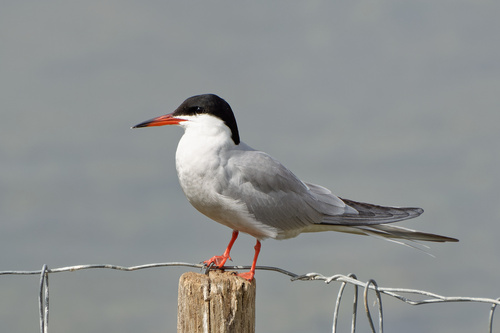 trinta-réis-boreal
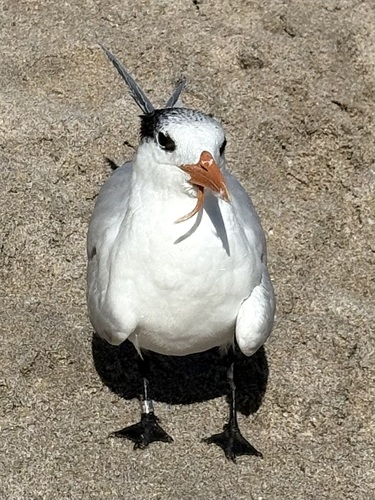 trinta-réis-real
Em resumo
Trinta-réis-real e trinta-réis-boreal podem ser confundidos à distância, mas a marca de campo mais confiável é o tamanho e a estrutura: trinta-réis-real é muito maior e mais robusto, com um bico laranja espesso e pernas pretas, enquanto trinta-réis-boreal é esbelto, com um bico vermelho mais fino (com uma ponta preta na maioria das subespécies) e pernas vermelhas. Em voo, aves juvenis e não reprodutoras são melhor separadas pelo padrão da asa superior e pela cor do bico: juvenis de trinta-réis-real mostram marcas de asa mais escuras e um bico amarelado, enquanto juvenis de trinta-réis-boreal têm uma asa superior mais padronizada e uma barra carpiana escura. O trinta-réis-real adulto tem uma crista preta desgrenhada durante a reprodução, desbotando para uma coroa predominantemente branca fora da reprodução, enquanto o trinta-réis-boreal mantém uma touca preta mais arrumada. Estrutura, cor do bico e tamanho geralmente são suficientes para a separação, mas preste atenção ao padrão das asas e da cabeça em imaturos e aves não reprodutoras.
Dicas de identificação
- Tamanho: Trinta-réis-real é muito maior e mais robusto que trinta-réis-boreal—se você ver um trinta-réis que ofusca outros próximos, é provável que seja o real.
- Cor e forma do bico: Trinta-réis-real tem um bico espesso e laranja brilhante; trinta-réis-boreal tem um bico esbelto laranja-vermelho com uma ponta preta (exceto em algumas subespécies). Isso é confiável em todos os plumagens, exceto para alguns juvenis.
- Cor das pernas: Trinta-réis-real tem pernas pretas; as pernas do trinta-réis-boreal são vermelhas brilhantes em adultos, mais opacas em aves jovens.
- Asa superior juvenil: O juvenil de trinta-réis-boreal mostra uma barra carpiana escura e uma asa superior padronizada; o juvenil de trinta-réis-real é mais simples acima, com marcas mais escuras de cinza a negras, mas sem barra carpiana.
- Bico em juvenis: O juvenil de trinta-réis-real tem um bico amarelado; o bico do juvenil de trinta-réis-boreal é escuro com um pouco de vermelho na base.
- Padrão da cabeça em não reprodutores: O trinta-réis-real perde a maior parte de sua touca preta fora da reprodução, retendo apenas uma nuca preta e uma crista desgrenhada; o trinta-réis-boreal mantém uma touca preta mais arrumada, embora ela regrida.
- Crista: Trinta-réis-real tem uma crista desgrenhada e eretável durante a reprodução; a touca do trinta-réis-boreal é lisa e arrumada.
- Partes inferiores: Ambos são brancos por baixo, mas o trinta-réis-boreal pode mostrar partes inferiores mais acinzentadas, especialmente durante a reprodução, fazendo com que suas bochechas brancas se destaquem mais.
- Cor do rabo: Em não reprodutores, o trinta-réis-boreal pode ter um rabo acinzentado; o rabo do trinta-réis-real permanece branco.
- Estilo de voo: Trinta-réis-real é mais pesado e mais lento em voo, com batidas de asa menos rápidas; trinta-réis-boreal é mais ágil, com asas mais rígidas e triangulares e um voo direto e flutuante.
- Cauda: O trinta-réis-boreal tem caudas mais longas e mais profundamente bifurcadas, especialmente durante a reprodução; a cauda do trinta-réis-real é mais curta em proporção ao tamanho do corpo.
- Habitat: Trinta-réis-real é quase sempre costeiro nas Américas; o trinta-réis-boreal é encontrado em uma gama mais ampla de habitats, incluindo águas interiores.
- Vocalização: Os chamados do trinta-réis-real são agudos e melodiosos; os do trinta-réis-boreal são mais agudos e penetrantes, mas isso é sutil e melhor utilizado com experiência.
- Contexto de grupo: Se você ver um grande trinta-réis se destacando sobre trinta-réis menores em uma praia, é provável que seja o real; bandos mistos podem ajudar na comparação direta.
- Armadilhas: Cuidado com plumagens não reprodutoras e juvenis—focalize no tamanho, bico e padrão das asas para a separação mais confiável.
Tamanho
Trinta-réis-real é dramaticamente maior: a envergadura média é de 130 cm (125–135 cm), comprimento de 45–50 cm e peso de 350–500 g [wikipedia]. Trinta-réis-boreal é muito menor e mais leve, com uma construção mais delicada (medidas exatas não fornecidas aqui, mas é notavelmente menor em comparação direta). O bico do trinta-réis-real é espesso e robusto, enquanto o do trinta-réis-boreal é esbelto e pontudo. Em bandos mistos ou lado a lado, o trinta-réis-real se destaca como um gigante entre os trinta-réis.
Plumagem
Aves juvenis e não reprodutoras são frequentemente a fonte de confusão. O juvenil de trinta-réis-real se assemelha a um adulto não reprodutor, mas mostra marcas mais escuras de cinza a negras nas asas e um bico mais amarelado. O juvenil de trinta-réis-boreal, por outro lado, tem uma barra carpiana escura distinta na asa superior, e seu bico é escuro com um pouco de vermelho na base. Em voo, os juvenis de trinta-réis-boreal mostram uma asa superior mais padronizada e um cunho escuro nas primárias à medida que a temporada avança, enquanto os juvenis de trinta-réis-real são mais simples acima, com menos contraste e sem a barra carpiana. O adulto de trinta-réis-boreal em plumagem reprodutiva tem uma touca preta arrumada, bico laranja-vermelho com uma ponta preta e pernas vermelhas brilhantes; em não reprodutores, a touca regride, mas permanece mais arrumada que a do trinta-réis-real, e o rabo pode ser acinzentado. Os adultos de trinta-réis-real têm uma crista negra desgrenhada completa durante a reprodução, que se torna irregular e depois predominantemente branca na coroa em não reprodutores, com preto restrito à nuca. O bico do trinta-réis-real é sempre laranja e robusto, pernas pretas. As partes inferiores são brancas em ambos, mas o trinta-réis-boreal pode mostrar partes inferiores mais acinzentadas que o trinta-réis-real, especialmente durante a reprodução.
Comportamento
Trinta-réis-real é mais pesado, com um voo mais lento e poderoso e frequentemente se alimenta mais longe do mar. Trinta-réis-boreal é mais ágil, com asas mais rígidas e triangulares e um voo mais direto e flutuante. O trinta-réis-real frequentemente se empoleira em grupos em praias ou bancos de areia, se destacando sobre outros trinta-réis, enquanto o trinta-réis-boreal é mais provável de ser visto em lagos interiores, rios ou áreas costeiras menores, frequentemente empoleirando-se em postes ou boias.
Habitat
Trinta-réis-boreal se reproduz amplamente em regiões temperadas e subárticas da Europa, Ásia e América do Norte, frequentemente em águas interiores ou costeiras. Trinta-réis-real é restrito às Américas, reproduzindo-se ao longo das costas e raramente encontrado em áreas interiores. Nas Américas, o trinta-réis-real é um especialista em água salgada, preferindo praias abertas, bancos de areia e estuários, enquanto o trinta-réis-boreal pode ser encontrado em uma gama mais ampla de habitats de zonas úmidas, incluindo lagos e rios de água doce.
Voz
Trinta-réis-real emite gritos curtos e claros ("kree" ou "tsirr") e um assobio mais longo, rolante e melodioso, às vezes descrito como semelhante ao de um maçarico. O trinta-réis-boreal tem um chamado mais agudo e penetrante, mas as notas não fornecem uma comparação detalhada. A voz raramente é diagnóstica à distância, mas o trinta-réis-real é geralmente de tom mais baixo e menos agudo que o trinta-réis-boreal.
trinta-réis-boreal · trinta-réis-real · Minhas aves difíceis