

peito-carmim vs pine grosbeak
Carpodacus erythrinus versus Pinicola enucleator
Jogue um quiz com peito-carmim e pine grosbeak
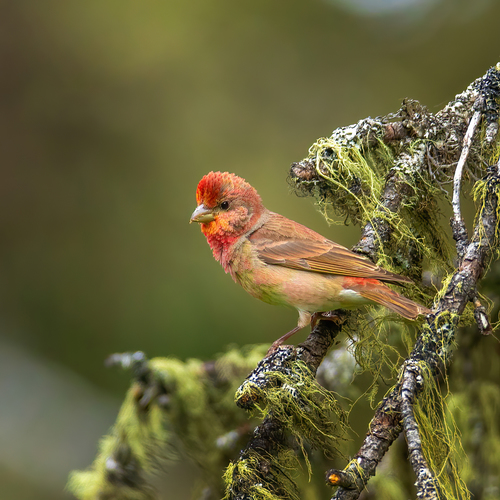 peito-carmim
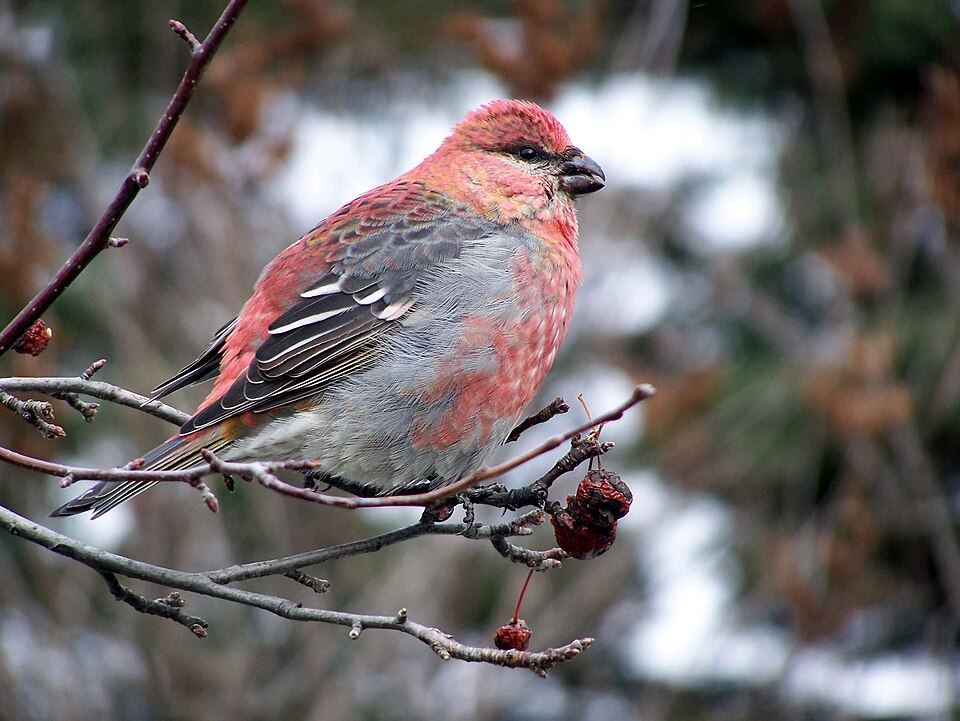 pine grosbeak
Em resumo
A marca de campo mais confiável entre peito-carmim e pine grosbeak é o tamanho: pine grosbeak é muito maior e mais robusto, com uma cauda longa e bifurcada e uma constituição visivelmente mais pesada. Em voo ou empoleirado, pine grosbeak exibe barras brancas ousadas nas asas e uma cauda longa e preta, enquanto peito-carmim é menor, com uma cauda mais curta e menos bifurcada e apenas barras de asas fracas. Machos adultos de ambos podem apresentar plumagem rosa-avermelhada, mas pine grosbeak é um vermelho mais profundo no geral e tem uma asa e cauda pretas contrastantes, enquanto os machos de peito-carmim restringem o vermelho principalmente à cabeça, peito e rabo. Fêmeas e imaturos são facilmente confundidos, mas pine grosbeak é sempre muito maior e tem um bico mais grosso e barras de asas mais óbvias. O habitat e o contexto podem ajudar: pine grosbeak é um pássaro de florestas coníferas do norte, enquanto peito-carmim prefere bordas arbustivas e raramente é encontrado em florestas densas.
Dicas de identificação
- O tamanho é a primeira verificação: pine grosbeak é quase duas vezes mais longo e várias vezes mais pesado que peito-carmim. Se o pássaro parece do tamanho de um tordo ou muito maior que os tentilhões próximos, é um pine grosbeak.
- Forma e comprimento da cauda: pine grosbeak tem uma cauda longa e distintamente bifurcada, visível tanto empoleirado quanto em voo. A cauda do peito-carmim é mais curta e menos bifurcada.
- Barras de asas: pine grosbeak de todas as idades mostra barras brancas ousadas nas asas pretas; peito-carmim tem apenas barras de asas fracas e indistintas, muitas vezes difíceis de ver em campo.
- Estrutura do bico: o bico de pine grosbeak é grande, grosso e pesado, adequado para triturar sementes. O peito-carmim tem um bico robusto, mas menor e mais cônico.
- Coloração do macho adulto: os machos de pine grosbeak são rosa-avermelhados profundos em toda a cabeça, costas e rabo, com asas e cauda pretas. Os machos de peito-carmim são rosa-carmim na cabeça, peito e rabo, mas as asas são marrons escuras (não pretas) e a barriga é branca.
- Confusão entre fêmeas/imaturos: a fêmea de pine grosbeak é amarelo-oliva na cabeça e rabo, cinza embaixo, com barras de asas ousadas; a fêmea de peito-carmim é marrom-amarelada por cima, mais clara embaixo, e não possui barras de asas fortes. O tamanho e a espessura do bico são fundamentais aqui.
- Juvenis/pássaros de primeiro inverno em voo: procure as largas barras brancas de asas de pine grosbeak e a longa cauda bifurcada; os juvenis de peito-carmim são simples, com apenas barras de asas fracas e uma cauda mais curta.
- Contexto do habitat: pine grosbeak está quase sempre em florestas coníferas ou nas proximidades; peito-carmim prefere bordas arbustivas, margens de florestas e jardins, raramente em profundidade nas coníferas.
- Comportamento e postura: pine grosbeak muitas vezes parece lento, manso e pesado, às vezes se alimentando no chão; peito-carmim é mais ativo e ágil, frequentemente empoleirando-se ereto em arbustos.
- Vermelho sazonal em machos: após a muda de outono, os machos de peito-carmim podem parecer um vermelho mais apagado, mas os machos de pine grosbeak permanecem vermelhos profundos.
- Raro macho amarelo de peito-carmim: se você ver um macho de peito-carmim amarelado, não é um pine grosbeak; essa forma é única do peito-carmim e está relacionada à dieta/parasitismo.
- Voz como um backup: se você ouvir um rico e assobiado "pui pui pui" ou "chii-vli," pense em pine grosbeak; a falta de tais chamados não confirma peito-carmim.
- Bandos mistos: se ambas as espécies estiverem presentes, pine grosbeak se destacará pelo tamanho, volume e movimentos lentos.
- Padrão de asas em voo: pine grosbeak sempre mostra barras brancas fortes nas asas e uma cauda longa; peito-carmim é mais simples e tem cauda mais curta em voo.
- Quando em dúvida: use uma combinação de tamanho, forma da cauda e força das barras de asas—esses são confiáveis em todas as idades e na maioria das condições de visualização.
Tamanho
Pine grosbeak é dramaticamente maior: 20–25,5 cm de comprimento e média de 56,4 g, em comparação com peito-carmim que mede 13–15 cm e é muito mais leve. Pine grosbeak também tem uma envergadura notavelmente maior (33 cm), uma cauda mais longa (7,8–9,5 cm) e um bico mais pesado e grosso. No campo, pine grosbeak parece volumoso e quase do tamanho de um tordo, enquanto peito-carmim é do tamanho de um pardal e mais delicado. Essa diferença de tamanho é geralmente óbvia mesmo à distância ou em bandos mistos.
Plumagem
-
Pássaros Juvenis e Imaturos: Os imaturos de pine grosbeak são grandes, com uma plumagem desgrenhada e menos contrastante e sempre mostram barras brancas ousadas nas asas e uma cauda longa, preta e bifurcada. Os imaturos de peito-carmim são muito menores, não possuem barras de asas fortes (apenas fracas e indistintas) e têm uma parte superior simples, marrom-amarelada, com uma barriga bege.
-
Machos Adultos: Os machos de pine grosbeak são rosa-avermelhados profundos na cabeça, costas e rabo, com asas e cauda pretas e barras brancas proeminentes. Os machos de peito-carmim são rosa-carmim na cabeça, peito e rabo, mas suas asas são marrons escuras com apenas barras fracas, e sua barriga é branca.
-
Fêmeas: As fêmeas de pine grosbeak são amarelo-oliva na cabeça e rabo, cinzas nas costas e partes inferiores, com barras brancas ousadas nas asas e cauda preta. As fêmeas de peito-carmim são marrom-amareladas por cima, mais claras no rabo, mais cinzas na cabeça e bege embaixo, com apenas barras de asas fracas e uma cauda mais curta.
-
Variação Sazonal: Após a muda de outono, o vermelho dos machos de peito-carmim é atenuado e se torna mais brilhante durante o inverno; pine grosbeak mantém seu vermelho mais profundo. Formas raras de macho amarelo de peito-carmim existem, mas não são um fator para pine grosbeak.
Comportamento
Pine grosbeak muitas vezes se move lentamente e de forma metódica, às vezes se alimentando no chão ou nas árvores, e pode parecer manso e lento. Seu voo é ondulante e pesado, condizente com seu tamanho. Peito-carmim é mais ativo e ágil, frequentemente visto voando em arbustos ou fazendo voos curtos e saltitantes. Em bandos mistos, pine grosbeak domina pelo tamanho e presença.
Habitat
Pine grosbeak está estritamente associado a florestas coníferas do norte e montanhosas em todo o Holártico, raramente aventurando-se em habitats abertos ou arbustivos. Peito-carmim prefere matas, bordas de florestas e arbustos ripários, especialmente perto da água, e é encontrado em habitats mais abertos e variados, incluindo jardins e pomares no inverno. A sobreposição é rara, exceto em anos de migração ou erupção.
Voz
Pine grosbeak tem um chamado assobiado distintivo e geograficamente variável ("pui pui pui" ou "chii-vli") e um breve e musical trinado para canção. As vocalizações de peito-carmim não estão detalhadas nas notas, então a voz não é um separador primário aqui, mas os chamados de pine grosbeak são geralmente mais ricos e melodiosos.