

avestruz-comum vs sociable weaver
Struthio camelus versus Philetairus socius
Jogue um quiz com avestruz-comum e sociable weaver
 avestruz-comum
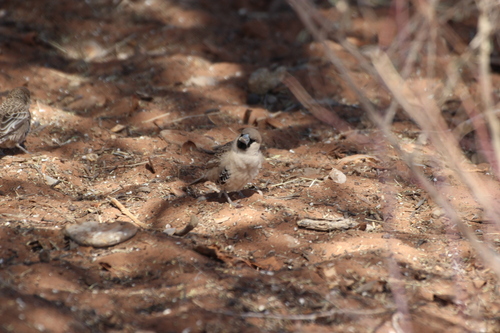 sociable weaver
Em resumo
O avestruz-comum e o sociable weaver são tão diferentes em tamanho, estrutura e plumagem que a confusão só é possível no cenário mais abstrato de um quiz, não em campo. O avestruz é uma ave maciça, incapaz de voar, com pernas e pescoço pelados, enquanto o sociable weaver é um pequeno pássaro cantor do tamanho de um pardal, com costas padronizadas e um queixo preto distinto. Mesmo os avestruzes imaturos, embora mais marrons e menores que os adultos, ainda são enormes e estruturalmente únicos. A marca de campo mais confiável é o tamanho absoluto: um avestruz pesa mais de 100.000 gramas, enquanto um sociable weaver pesa cerca de 27 gramas. Se você vê uma ave com um queixo preto e costas escamosas, empoleirada ou voando em um arbusto, é o sociable weaver; se você vê um corredor alto e de pernas longas, é o avestruz.
Dicas de identificação
- O tamanho é absoluto: Se a ave é maior que qualquer outro animal terrestre à vista, é um avestruz. Se é do tamanho de um pardal, é um sociable weaver. Isso se aplica a todas as idades.
- Voo vs. incapacidade de voar: Avestruzes nunca voam; sociable weavers são voadores ativos e empoleiram-se em árvores ou em ninhos. Qualquer ave vista voando ou empoleirada em um arbusto não é um avestruz.
- Detalhes da plumagem: Avestruzes (adultos) são pretos e brancos (machos) ou cinza-marrons (fêmeas/imaturos), com pescoço e pernas pelados. Sociable weavers são marrons com um queixo preto, flancos listrados e costas escamosas, totalmente plumados.
- Pele pelada: Avestruzes têm cabeças/pescoços pelados e cobertos de penas e pernas escamosas, sem penas. Sociable weavers não têm pele pelada visível.
- Formato e tamanho do bico: O bico do avestruz é largo, plano e pode ter até 14 cm de comprimento; o sociable weaver tem um pequeno bico cônico de comedor de sementes.
- Pernas e dedos: Avestruzes têm dois dedos por pé com uma unha semelhante a um casco no dedo interno; sociable weavers têm pés típicos de passeriformes com três dedos voltados para frente e um para trás.
- Cauda e asas: Avestruzes têm uma cauda curta e fofinha e asas grandes e macias usadas para equilíbrio, não para voo. Sociable weavers têm uma cauda curta e quadrada e asas pontudas para voo.
- Comportamento: Avestruzes andam ou correm, muitas vezes em campo aberto. Sociable weavers são sociais, muitas vezes em bandos, e constroem enormes ninhos comunitários em árvores ou em postes.
- Contexto do habitat: Avestruzes são encontrados em pastagens abertas ou savanas, nunca empoleirados. Sociable weavers geralmente estão perto de árvores ou estruturas, muitas vezes em seus ninhos comunitários.
- Vocalizações: Avestruzes são em sua maioria silenciosos, com estrondos profundos ou sibilos; sociable weavers estão constantemente tagarelando.
- Confusão juvenil: Mesmo os jovens avestruzes são muito maiores e não têm o queixo preto e os flancos listrados dos sociable weavers. Avestruzes juvenis são cor de fawn com manchas marrons, não escamosas.
- Diferenças sexuais: Apenas avestruzes mostram forte dimorfismo sexual (machos preto e branco, fêmeas marrons); sociable weavers são monomórficos.
- Tamanho dos olhos: Avestruzes têm os maiores olhos de qualquer vertebrado terrestre, muito óbvios à queima-roupa; sociable weavers têm olhos pequenos típicos de passeriformes.
- Estrutura do ninho: Se você vê um ninho comunitário massivo, ele pertence aos sociable weavers; avestruzes põem ovos em rasgos rasos no chão.
- Dicas contextuais: Se você está em um zoológico, fazenda ou planície aberta e vê uma ave enorme, é provável que seja um avestruz; se você está perto de uma árvore com um ninho de 'feno' de palha e pequenas aves, elas são sociable weavers.
Tamanho
O tamanho é a diferença mais dramática e diagnóstica. O avestruz-comum é a maior ave viva, atingindo até 2,75 m de altura e pesando cerca de 107.500 g (segundo AVONET/Wikidata). Em contraste, o sociable weaver é um pequeno passeriforme, com cerca de 14 cm de comprimento e pesando apenas 27 g. Não há sobreposição em qualquer idade ou sexo: mesmo um filhote de avestruz recém-nascido é muito maior que um sociable weaver adulto. O bico do avestruz sozinho é quase tão longo quanto todo o sociable weaver. Em campo, essa diferença é absoluta e inconfundível.
Plumagem
A plumagem juvenil e imatura é relevante apenas para o avestruz, pois sociable weavers não mostram forte variação relacionada à idade. Jovens avestruzes são cor de fawn com manchas marrons, tornando-se mais marrons e cinzentos à medida que envelhecem, mas sempre carecem da intricada listragem e do queixo preto do sociable weaver. Avestruzes machos adultos são strikingly pretos com asas e cauda brancas (ou cauda amarelada em algumas subespécies), enquanto fêmeas e jovens machos são cinza-marrons e brancos. O sociable weaver, independentemente da idade ou sexo, tem um queixo preto, flancos listrados em preto e costas escamosas, sem pele pelada ou contrastes de cores dramáticos. A cabeça e o pescoço do avestruz são quase pelados com penas, e as pernas são sem penas e escamosas, enquanto o sociable weaver é totalmente plumado. Nenhuma idade ou estação traz as plumagens dessas duas espécies próximas.
Comportamento
O comportamento também é completamente diferente. Avestruzes são incapazes de voar e correm em altas velocidades, usando suas asas para equilíbrio e manobra, não para voo. Eles geralmente são vistos andando ou correndo em campo aberto, às vezes em grupos. Sociable weavers são pássaros cantores ativos e sociais, muitas vezes vistos voando entre os galhos, forrageando em grupos e empoleirando-se. Eles constroem enormes ninhos comunitários, um comportamento único entre os tecelões e não remotamente semelhante a qualquer coisa que os avestruzes fazem. Avestruzes nunca se empoleiram ou voam; tecelões nunca correm ou exibem a marcha ereta de um avestruz.
Habitat
Ambas as espécies podem ser encontradas no sul da África, mas seus microhabitats diferem. Avestruzes preferem savanas abertas, pastagens e semi-desertos, onde sua altura lhes dá um ponto de vista. Sociable weavers estão mais intimamente ligados a savanas áridas e florestas secas, especialmente onde há árvores ou estruturas para suportar seus enormes ninhos comunitários. Embora as áreas de distribuição possam se sobrepor, o contexto da localização de uma ave (no chão em campo aberto vs. empoleirada em uma árvore ou ninho) é uma forte pista.
Voz
Nenhuma confusão é possível pela voz. Avestruzes produzem chamados profundos e estrondosos e sibilos, principalmente à noite ou quando ameaçados. Sociable weavers emitem chamados agudos e tagarelas típicos de pequenos passeriformes. Se você ouvir um tagarelar semelhante ao de um pássaro cantor, não é um avestruz.