

chucao tapaculo vs ochre-flanked tapaculo
Scelorchilus rubecula versus Eugralla paradoxa
Jogue um quiz com chucao tapaculo e ochre-flanked tapaculo
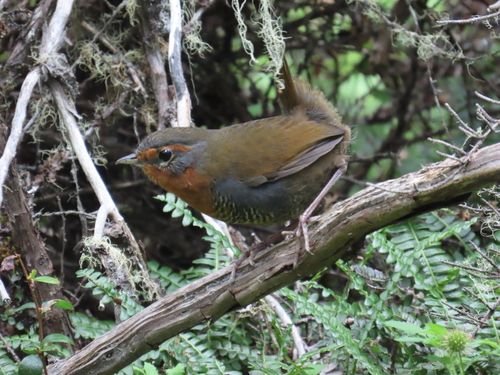 chucao tapaculo
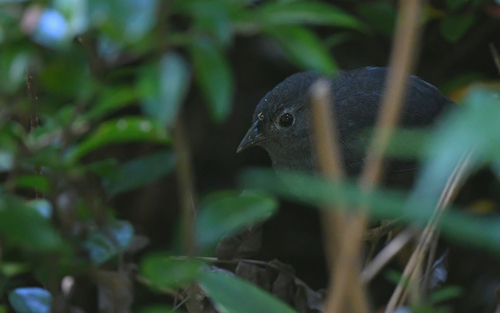 ochre-flanked tapaculo
Em resumo
The most reliable field mark between Chucao Tapaculo and Ochre-flanked Tapaculo is the color and pattern of the underparts and flanks in adults: Chucao Tapaculo has a bold rufous-orange throat and chest, while Ochre-flanked Tapaculo shows paler gray underparts with distinctive tawny-brown flanks and a clay-brown belly. Juveniles are easiest to separate: Ochre-flanked Tapaculo juveniles are heavily barred cinnamon/rufous over dusky gray, while Chucao Tapaculo juveniles lack this extensive barring. Structurally, Ochre-flanked Tapaculo has a unique 'Roman nose' profile, unlike the more typical tapaculo shape of Chucao. Chucao Tapaculo is also heavier and slightly bulkier. Both species overlap in south-central Chile and adjacent Argentina, but Chucao ranges farther north and Ochre-flanked is more southerly.
Dicas de identificação
- Juvenile plumage: Ochre-flanked Tapaculo juveniles are heavily barred cinnamon/rufous over dusky gray—no other tapaculo in the region, including Chucao, shows this pattern. If you see a small, grayish tapaculo with extensive rufous barring, it's Ochre-flanked.
- Adult underparts: Chucao Tapaculo adults have a bold rufous-orange throat and chest, contrasting with a white belly and gray upperparts. Ochre-flanked Tapaculo adults lack this rufous chest patch and instead show paler gray underparts, a clay-brown belly, and tawny-brown flanks.
- Flank color: Ochre-flanked Tapaculo's flanks are always tawny brown in adults, a key field mark. Chucao Tapaculo's flanks are not ochre or tawny and are usually gray or rufous only in the throat/chest area.
- Facial profile: Ochre-flanked Tapaculo has a unique 'Roman nose'—a gently arched, prominent facial profile not seen in Chucao, which has a more typical tapaculo head shape. This can be seen in good side views.
- Size: Chucao Tapaculo is heavier (40 g vs. 34.5 g) and bulkier, though this difference is subtle in the field unless both species are seen together.
- Ventral pattern: Chucao Tapaculo shows a sharp contrast between the rufous chest and white belly, while Ochre-flanked Tapaculo has a more gradual transition from gray chest to brown belly.
- Upperparts: Both species are gray above, but Ochre-flanked Tapaculo is darker and more uniform, while Chucao may appear slightly paler or with more contrast between head and back.
- Territorial behavior: Chucao Tapaculo is notably aggressive and may be seen chasing other tapaculos, especially during the breeding season. This behavior is less typical of Ochre-flanked.
- Range: If you are north of south-central Chile, Chucao is more likely; farther south, especially in Magallanes, only Chucao is present. In overlap zones, rely on plumage and structure.
- Habitat: Both species prefer dense forest undergrowth; habitat is not diagnostic where they overlap.
- Sex differences: No strong sexual dimorphism is noted for either species in the sources—plumage marks apply to both sexes.
- Flight views: No distinctive upperwing or flight pattern marks are described for either species; focus on body and flank color if flushed.
- Seasonal variation: Adult plumage is stable year-round for both species; juveniles are most likely to be confused in late spring and summer.
- Pitfalls: Beware of shadow or leaf-filtered light making Chucao's rufous chest appear duller or Ochre-flanked's flanks less obvious. Always look for the combination of flank color, chest patch, and facial profile.
- Voice: No diagnostic vocal differences are provided in the sources; do not rely on song or call for separation based on these notes.
Tamanho
Chucao Tapaculo is heavier (40.0 g vs. 34.5 g) and generally bulkier than Ochre-flanked Tapaculo. Ochre-flanked Tapaculo is about 14.5 cm in length and typically weighs between 25.5–30.5 g (with some variation by sex and individual), making it noticeably lighter and a bit more slender in hand or when seen side-by-side. In the field, this size difference may be subtle but can be appreciated with experience, especially if both species are present.
Plumagem
Juvenile Ochre-flanked Tapaculo is distinctive, being barred throughout with cinnamon to rufous over a dusky gray base—this heavy barring is not found in Chucao Tapaculo juveniles. Adult Chucao Tapaculo is strikingly marked with a bright rufous-orange throat and chest, gray upperparts, and a white belly, with little to no ochre on the flanks. In contrast, adult Ochre-flanked Tapaculo has dark gray upperparts, paler gray underparts to the abdomen, and a clay-brown belly and vent. Its flanks are a diagnostic tawny brown, which is absent in Chucao. The adult Ochre-flanked also lacks the bold rufous chest patch of Chucao. In all plumages, the 'Roman nose' profile of Ochre-flanked is unique among tapaculos and can be a helpful structural clue.
Comportamento
Chucao Tapaculo is known for its aggressive and territorial behavior, especially towards other tapaculos in its range. Both species are secretive and skulk in dense undergrowth, but Chucao may be more likely to confront or chase away other birds. No specific behavioral differences in foraging or movement are noted between the two, but Chucao's territoriality can sometimes be observed during encounters.
Habitat
Both species inhabit temperate forests of south-central Chile and adjacent Argentina, often in dense undergrowth. Chucao Tapaculo is found from central Chile southwards, including Magallanes Province, and can overlap with Ochre-flanked Tapaculo in south-central areas. Ochre-flanked Tapaculo is restricted to south-central Chile and adjacent western Argentina, generally not ranging as far north as Chucao. Habitat alone is not diagnostic where their ranges overlap, but Chucao may be encountered farther north and Ochre-flanked farther south.
chucao tapaculo · ochre-flanked tapaculo · Minhas aves difíceis