

Motmot

galo-das-neves-do-cáucaso vs himalayan snowcock

Tetraogallus caucasicus versus Tetraogallus himalayensis

Jogue um quiz com galo-das-neves-do-cáucaso e himalayan snowcock
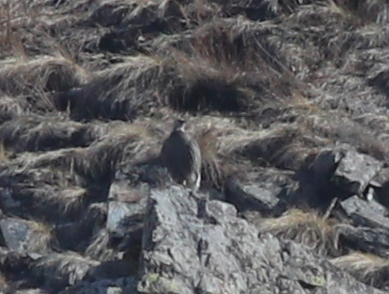
galo-das-neves-do-cáucaso (Tetraogallus caucasicus) galo-das-neves-do-cáucaso
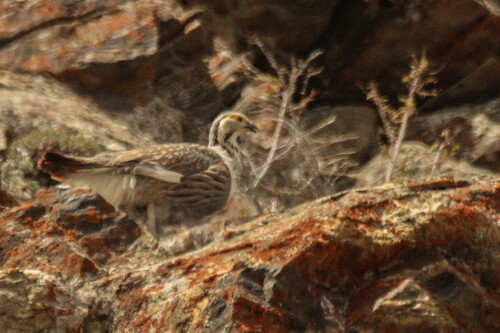
himalayan snowcock (Tetraogallus himalayensis) himalayan snowcock

Mídia

Carregando…

Em resumo

The most reliable field mark between Caucasian and Himalayan Snowcock is the head and neck pattern: Himalayan shows a bold white throat and face bordered by a chestnut moustachial stripe and a broad chestnut band from the eye to the collar, while Caucasian has a white throat and patch on the neck but lacks the strong chestnut facial markings. In flight, Himalayan Snowcock reveals white primaries tipped in black and rufous outer tail feathers, whereas Caucasian shows white flight feathers and undertail with reddish tail sides. Both are large, grey, partridge-like birds, but Himalayan is distinctly larger and heavier. Juvenile and adult plumages are similar within each species, but the overall impression and wing pattern in flight are key for separation.

Dicas de identificação

  1. Head and neck pattern (all ages): Himalayan Snowcock shows a bold white throat and face bordered by a chestnut moustachial stripe and a broad chestnut band from the eye to the collar. Caucasian has a white throat and neck patch but lacks the strong chestnut facial markings; its nape is rust-colored instead.
  2. Flight pattern (all ages): In flight, Himalayan Snowcock displays white primaries tipped in black and rufous outer tail feathers. Caucasian shows white flight feathers and undertail, with reddish sides to the tail but lacks the black-tipped primaries and bold rufous tail edges.
  3. Overall color impression: At a distance, Caucasian Snowcock appears plain grey, while Himalayan looks more patterned and contrasting, especially around the head and flanks.
  4. Breast and flank color: Caucasian has a darker breast and ruddier flanks, while Himalayan's upper breast is grey with dark crescent bars and the sides are streaked with black, chestnut, and white.
  5. Size and bulk: Himalayan is significantly larger and bulkier than Caucasian, especially noticeable if seen together or with experience.
  6. Leg and orbital skin color: Himalayan has yellow legs and orbital skin, a subtle mark but useful at close range; not specified for Caucasian.
  7. Tail behavior: Himalayan often cocks its tail when walking, flashing the white undertail coverts. Caucasian's undertail is also white but less often displayed in this manner.
  8. Group size and behavior: Himalayan is more likely to be seen in flocks outside breeding season, while Caucasian is more solitary or in small groups.
  9. Flight style: Himalayan is capable of more powerful, sustained flight between ridges; Caucasian tends to glide or drift short distances, relying more on running and climbing.
  10. Habitat context: If seen in the Western Caucasus on bare stony slopes, Caucasian is more likely; in the Himalayas or Pamirs on alpine pastures or steep cliffs, Himalayan is expected.
  11. Vocalizations: Listen for the Himalayan's loud, three-part ascending whistle versus the Caucasian's mournful, curlew-like whistle.
  12. Sex differences: Both sexes are similar in plumage, but female Himalayan is smaller and lacks the male's tarsal spur. This is not a primary field mark for separation from Caucasian.
  13. Juvenile plumage: Juveniles of both are duller and slightly smaller but retain the key head and wing pattern differences.
  14. Plumage pitfalls: Do not rely solely on overall grey color or size unless you have a good view of the head pattern or flight feathers; both can appear similar in poor light or at distance.
  15. Seasonal context: Both are more vocal and visible in the breeding season (spring/summer); flocking and group size differences are most apparent outside the breeding season.

Tamanho

Himalayan Snowcock is notably larger, measuring 55–74 cm in length and weighing 2–3.1 kg, compared to the Caucasian Snowcock's 50–60 cm length (weight not specified, but smaller by comparison) [wikipedia]. Both are robust, heavy-bodied birds, but Himalayan appears bulkier and longer, especially in flight or when seen side-by-side. Female Himalayan Snowcocks are smaller than males but still larger than Caucasian. This size difference is most apparent in direct comparison or with experience.

Plumagem

Juvenile and adult Himalayan Snowcocks share a distinctive head pattern: a white throat and face bordered by a chestnut moustachial stripe and a broad chestnut band running from the eye over the ear to the collar. In flight (all ages), Himalayan shows white primaries tipped in black and rufous outer tail feathers, with white undertail coverts often flashed when walking. The upperparts are grey with rufous-bordered wing and rump feathers; the sides are boldly streaked with black, chestnut, and white. Caucasian Snowcock, in all plumages, looks plainer grey at a distance, with a white throat and neck patch but lacking the Himalayan's strong facial chestnut. The nape is rust-colored, and the breast is darker with ruddier flanks. In flight, Caucasian shows white flight feathers and undertail, and reddish sides to the tail, but lacks the Himalayan's black-tipped white primaries and bold rufous tail edges. Juveniles of both are duller and slightly smaller, but the same pattern differences apply.

Comportamento

Both species are wary and prefer to escape danger by running uphill and then gliding or flying down slopes. Himalayan Snowcock is more gregarious outside the breeding season, often seen in small flocks, and is more likely to be found in open country, moving between ridges and valleys. Caucasian Snowcock is more sedentary, with limited flight ability and a tendency to bounce between rocky slopes mainly on foot, rarely venturing far from its home range. Himalayan tends to climb on foot when approached from below and dive down valleys when disturbed from above, often showing more powerful and sustained flight than the Caucasian's short glides.

Habitat

Caucasian Snowcock is restricted to the Western Caucasus Mountains, breeding at 2000–4000 m on bare, stony slopes. Himalayan Snowcock occupies a broader range across the Himalayas and Pamirs, favoring alpine pastures and steep rocky cliffs, often at similar or higher elevations. Himalayan is more likely to be found in open, grassy or rocky alpine terrain, sometimes in larger flocks, while Caucasian is tied to the rugged, stony slopes of its limited range.

Voz

Caucasian Snowcock gives a desolate, curlew-like whistling song (sooo-looo-leeee), along with loud cackles and bubbling calls. Himalayan Snowcock's song is a loud, three-part ascending whistle, and it also gives a rising, shrill piping call. Both are generally silent in winter, but their calls are prominent in the breeding season. The Himalayan's song is more structured and piercing, while the Caucasian's is more mournful and curlew-like.

Enviar uma descrição melhor

Use as mesmas seções da comparação. Seu texto é publicado na hora.

The most reliable field mark between Caucasian and Himalayan Snowcock is the head and neck pattern: Himalayan shows a bold white throat and face bordered by a chestnut moustachial stripe and a broad chestnut band from the eye to the collar, while Caucasian has a white throat and patch on the neck but lacks the strong chestnut facial markings. In flight, Himalayan Snowcock reveals white primaries tipped in black and rufous outer tail feathers, whereas Caucasian shows white flight feathers and undertail with reddish tail sides. Both are large, grey, partridge-like birds, but Himalayan is distinctly larger and heavier. Juvenile and adult plumages are similar within each species, but the overall impression and wing pattern in flight are key for separation.

  1. Head and neck pattern (all ages): Himalayan Snowcock shows a bold white throat and face bordered by a chestnut moustachial stripe and a broad chestnut band from the eye to the collar. Caucasian has a white throat and neck patch but lacks the strong chestnut facial markings; its nape is rust-colored instead.
  2. Flight pattern (all ages): In flight, Himalayan Snowcock displays white primaries tipped in black and rufous outer tail feathers. Caucasian shows white flight feathers and undertail, with reddish sides to the tail but lacks the black-tipped primaries and bold rufous tail edges.
  3. Overall color impression: At a distance, Caucasian Snowcock appears plain grey, while Himalayan looks more patterned and contrasting, especially around the head and flanks.
  4. Breast and flank color: Caucasian has a darker breast and ruddier flanks, while Himalayan's upper breast is grey with dark crescent bars and the sides are streaked with black, chestnut, and white.
  5. Size and bulk: Himalayan is significantly larger and bulkier than Caucasian, especially noticeable if seen together or with experience.
  6. Leg and orbital skin color: Himalayan has yellow legs and orbital skin, a subtle mark but useful at close range; not specified for Caucasian.
  7. Tail behavior: Himalayan often cocks its tail when walking, flashing the white undertail coverts. Caucasian's undertail is also white but less often displayed in this manner.
  8. Group size and behavior: Himalayan is more likely to be seen in flocks outside breeding season, while Caucasian is more solitary or in small groups.
  9. Flight style: Himalayan is capable of more powerful, sustained flight between ridges; Caucasian tends to glide or drift short distances, relying more on running and climbing.
  10. Habitat context: If seen in the Western Caucasus on bare stony slopes, Caucasian is more likely; in the Himalayas or Pamirs on alpine pastures or steep cliffs, Himalayan is expected.
  11. Vocalizations: Listen for the Himalayan's loud, three-part ascending whistle versus the Caucasian's mournful, curlew-like whistle.
  12. Sex differences: Both sexes are similar in plumage, but female Himalayan is smaller and lacks the male's tarsal spur. This is not a primary field mark for separation from Caucasian.
  13. Juvenile plumage: Juveniles of both are duller and slightly smaller but retain the key head and wing pattern differences.
  14. Plumage pitfalls: Do not rely solely on overall grey color or size unless you have a good view of the head pattern or flight feathers; both can appear similar in poor light or at distance.
  15. Seasonal context: Both are more vocal and visible in the breeding season (spring/summer); flocking and group size differences are most apparent outside the breeding season.

Himalayan Snowcock is notably larger, measuring 55–74 cm in length and weighing 2–3.1 kg, compared to the Caucasian Snowcock's 50–60 cm length (weight not specified, but smaller by comparison) [wikipedia]. Both are robust, heavy-bodied birds, but Himalayan appears bulkier and longer, especially in flight or when seen side-by-side. Female Himalayan Snowcocks are smaller than males but still larger than Caucasian. This size difference is most apparent in direct comparison or with experience.

Juvenile and adult Himalayan Snowcocks share a distinctive head pattern: a white throat and face bordered by a chestnut moustachial stripe and a broad chestnut band running from the eye over the ear to the collar. In flight (all ages), Himalayan shows white primaries tipped in black and rufous outer tail feathers, with white undertail coverts often flashed when walking. The upperparts are grey with rufous-bordered wing and rump feathers; the sides are boldly streaked with black, chestnut, and white. Caucasian Snowcock, in all plumages, looks plainer grey at a distance, with a white throat and neck patch but lacking the Himalayan's strong facial chestnut. The nape is rust-colored, and the breast is darker with ruddier flanks. In flight, Caucasian shows white flight feathers and undertail, and reddish sides to the tail, but lacks the Himalayan's black-tipped white primaries and bold rufous tail edges. Juveniles of both are duller and slightly smaller, but the same pattern differences apply.

Both species are wary and prefer to escape danger by running uphill and then gliding or flying down slopes. Himalayan Snowcock is more gregarious outside the breeding season, often seen in small flocks, and is more likely to be found in open country, moving between ridges and valleys. Caucasian Snowcock is more sedentary, with limited flight ability and a tendency to bounce between rocky slopes mainly on foot, rarely venturing far from its home range. Himalayan tends to climb on foot when approached from below and dive down valleys when disturbed from above, often showing more powerful and sustained flight than the Caucasian's short glides.

Caucasian Snowcock is restricted to the Western Caucasus Mountains, breeding at 2000–4000 m on bare, stony slopes. Himalayan Snowcock occupies a broader range across the Himalayas and Pamirs, favoring alpine pastures and steep rocky cliffs, often at similar or higher elevations. Himalayan is more likely to be found in open, grassy or rocky alpine terrain, sometimes in larger flocks, while Caucasian is tied to the rugged, stony slopes of its limited range.

Caucasian Snowcock gives a desolate, curlew-like whistling song (sooo-looo-leeee), along with loud cackles and bubbling calls. Himalayan Snowcock's song is a loud, three-part ascending whistle, and it also gives a rising, shrill piping call. Both are generally silent in winter, but their calls are prominent in the breeding season. The Himalayan's song is more structured and piercing, while the Caucasian's is more mournful and curlew-like.

Descartar as alterações?

Você tem edições não salvas. Se sair agora, elas serão perdidas.

galo-das-neves-do-cáucaso · himalayan snowcock · Minhas aves difíceis