

Motmot

bumblebee hummingbird vs xantus's hummingbird

Selasphorus heloisa versus Basilinna xantusii

Jogue um quiz com bumblebee hummingbird e xantus's hummingbird
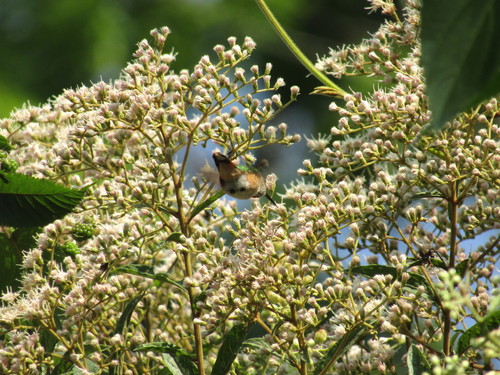
bumblebee hummingbird (Selasphorus heloisa) bumblebee hummingbird
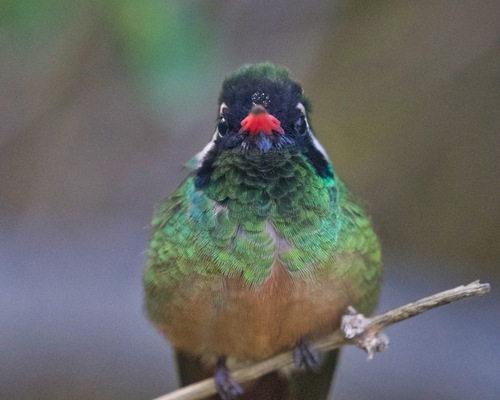
xantus's hummingbird (Basilinna xantusii) xantus's hummingbird

Mídia

Carregando…

Em resumo

The most reliable field mark is size: Bumblebee Hummingbird is one of the smallest hummingbirds, noticeably tinier than Xantus's Hummingbird, with a proportionally shorter bill and more compact body. In the field, look for the combination of bill color (all dark in Bumblebee, mostly red in Xantus's male), face pattern (subtle in Bumblebee, bold white stripe in Xantus's), and tail pattern (Bumblebee shows complex bronzy, cinnamon, and black with white tips; Xantus's is rufous with green edges and thin white tips). Both species show a white spot behind the eye, but Xantus's is much more prominent. Vocalizations are high-pitched in both, but Xantus's does not have the insect-like wing buzz of Bumblebee. Habitat is also a strong clue: Bumblebee is a Mexican montane species, while Xantus's is restricted to Baja California.

Dicas de identificação

  1. Size is the first check: Bumblebee Hummingbird is extremely small, even for a hummingbird; Xantus's is noticeably larger and bulkier. If the bird appears tiny and compact, favor Bumblebee.
  2. Bill color: Bumblebee's bill is always short, straight, and blackish in both sexes. Xantus's male has a mostly red bill with a black tip; the female's is bicolored (blackish maxilla, pinkish red mandible with black tip). Bill color is often visible even in poor light.
  3. Face pattern: Both have a white spot behind the eye, but Xantus's shows a bold white stripe extending well behind the eye, contrasting with a mostly black face (male) or brownish face (female). Bumblebee's spot is small and subtle.
  4. Crown and forehead: Xantus's male has a golden green to emerald crown and a black forehead and chin, creating a strong contrast. Bumblebee's crown is metallic bronze-green to golden-bronze, but without the black forehead.
  5. Gorget/throat: Bumblebee male has a magenta-purple or bluish gorget that flares backwards; Xantus's male has an emerald green throat bordered by black chin and face. Female Bumblebee has a white throat with metallic bronze spots; female Xantus's has cinnamon underparts including the throat, with no metallic spotting.
  6. Underparts color: Bumblebee male shows light reddish cinnamon flanks and dull white to grayish white belly; Xantus's male has cinnamon underparts with green mottling on the flanks. Female Bumblebee has more reddish cinnamon on the flanks and undertail coverts, while Xantus's female is pale to medium cinnamon below.
  7. Tail pattern: Bumblebee's tail is complex: central feathers bronzy green with cinnamon at base, outer feathers with reddish cinnamon bases, black centers, bronzy green bands, and wide white tips (off-white in female). Xantus's tail is rufous chestnut with green edges and thin white tips; central pair is golden green with rufous shaft, outer feathers dark rufous with a black and bronzy green band near the tip. Look for the overall rufous impression in Xantus's, versus the more variegated, white-tipped tail of Bumblebee.
  8. Upperparts: Both are metallic green above, but Xantus's is more emerald/golden green with rufous edging on uppertail coverts; Bumblebee is bronze-green to golden-bronze.
  9. Sex differences: Female Bumblebee has a white throat with bronze spots and more cinnamon on flanks; female Xantus's is cinnamon below with no metallic throat spots.
  10. Perched jizz: Bumblebee often perches with tail cocked up, appearing tiny and compact. Xantus's is more elongated, with a longer tail and bill.
  11. Flight behavior: Bumblebee's flight is accompanied by a loud, insect-like wing buzz, especially in males during display. Xantus's does not have this mechanical sound.
  12. Habitat: If in Baja California, Xantus's is expected; if in Mexican montane forests, Bumblebee is more likely. Out of range, both are vagrants but Bumblebee is exceedingly rare north of Mexico.
  13. Seasonal movement: Xantus's may move to lower elevations after breeding, but Bumblebee is usually in montane habitats year-round.
  14. Vocalizations: Listen for the high, thin, drawn-out song of Bumblebee, and especially the mechanical wing buzz. Xantus's vocalizations are less distinctive in the field.
  15. Pitfalls: Both can show a white spot behind the eye, but only Xantus's has a bold white stripe. Bill color and size are the most reliable quick checks if plumage is ambiguous.

Tamanho

Bumblebee Hummingbird is dramatically smaller: 5.9–7.5 cm long and 2–2.7 g in weight, making it one of the tiniest hummingbirds [wikipedia]. Xantus's Hummingbird is much larger at 8.5–9.5 cm and 3.4–3.5 g [wikipedia]. In direct comparison, Xantus's appears bulkier, with a longer bill and tail. This size difference is often apparent even without a reference, especially if you are familiar with the scale of local hummingbirds.

Plumagem

No distinctive age-specific upperwing or flight marks are described for either species, so focus on perched and tail patterns. Adult male Bumblebee Hummingbird is metallic bronze-green to golden-bronze above, with a magenta-purple or bluish gorget that flares backward, light reddish cinnamon flanks, and a complex tail with bronzy green, reddish cinnamon, black, and white-tipped feathers. Females are similar above, but with a white throat heavily spotted with bronze, more cinnamon on the flanks, and a tail with more black and duller cinnamon, plus off-white (not pure white) tips. Xantus's Hummingbird males have a golden to emerald green crown and upperparts, black forehead and chin, a bold white post-ocular stripe, emerald green throat, cinnamon underparts, and a rufous tail with green edges and thin white tips. Females are duller, with a brownish forehead, golden green upperparts, cinnamon underparts, and a tail with a golden green central pair and rufous outer feathers with black and bronzy green bands and thin white tips. The white stripe behind the eye is much more prominent in Xantus's of both sexes. Bill color is a key difference: Bumblebee's is always blackish, while Xantus's male has a mostly red bill with a black tip; the female's is bicolored with pinkish tones.

Comportamento

Both species hover to feed, but Bumblebee Hummingbird often cocks its tail up while feeding and is more likely to sneak into territories of larger hummingbirds due to its tiny size. Xantus's Hummingbird is more robust and may be more assertive at feeders or flowers. Bumblebee males perform courtship displays by hovering and flaring their gorget, accompanied by a loud wing buzz, especially during display flights.

Habitat

Bumblebee Hummingbird is endemic to Mexican montane forests, often in pine-oak or cloud forest at mid to high elevations, and is rarely found outside this habitat. Xantus's Hummingbird is restricted to the Baja California Peninsula, breeding in montane forests but descending to lower elevations after nesting. If you are not in Mexico's highlands or Baja California, either species would be exceptional; local abundance on eBird strongly favors Xantus's in Baja and Bumblebee in mainland Mexican mountains.

Voz

Bumblebee Hummingbird sings a high, thin, drawn-out whine ("sss ssssssssis" or "seeuuuuu") from a perch, and gives high chip calls similar to other Selasphorus. Its flight produces a distinctive insect-like buzz, especially in males during display. Xantus's Hummingbird's vocalizations are not described in detail here, but it does not have the loud wing buzz of Bumblebee. Both have high-pitched calls, but the mechanical wing noise is a strong clue for Bumblebee.

Enviar uma descrição melhor

Use as mesmas seções da comparação. Seu texto é publicado na hora.

The most reliable field mark is size: Bumblebee Hummingbird is one of the smallest hummingbirds, noticeably tinier than Xantus's Hummingbird, with a proportionally shorter bill and more compact body. In the field, look for the combination of bill color (all dark in Bumblebee, mostly red in Xantus's male), face pattern (subtle in Bumblebee, bold white stripe in Xantus's), and tail pattern (Bumblebee shows complex bronzy, cinnamon, and black with white tips; Xantus's is rufous with green edges and thin white tips). Both species show a white spot behind the eye, but Xantus's is much more prominent. Vocalizations are high-pitched in both, but Xantus's does not have the insect-like wing buzz of Bumblebee. Habitat is also a strong clue: Bumblebee is a Mexican montane species, while Xantus's is restricted to Baja California.

  1. Size is the first check: Bumblebee Hummingbird is extremely small, even for a hummingbird; Xantus's is noticeably larger and bulkier. If the bird appears tiny and compact, favor Bumblebee.
  2. Bill color: Bumblebee's bill is always short, straight, and blackish in both sexes. Xantus's male has a mostly red bill with a black tip; the female's is bicolored (blackish maxilla, pinkish red mandible with black tip). Bill color is often visible even in poor light.
  3. Face pattern: Both have a white spot behind the eye, but Xantus's shows a bold white stripe extending well behind the eye, contrasting with a mostly black face (male) or brownish face (female). Bumblebee's spot is small and subtle.
  4. Crown and forehead: Xantus's male has a golden green to emerald crown and a black forehead and chin, creating a strong contrast. Bumblebee's crown is metallic bronze-green to golden-bronze, but without the black forehead.
  5. Gorget/throat: Bumblebee male has a magenta-purple or bluish gorget that flares backwards; Xantus's male has an emerald green throat bordered by black chin and face. Female Bumblebee has a white throat with metallic bronze spots; female Xantus's has cinnamon underparts including the throat, with no metallic spotting.
  6. Underparts color: Bumblebee male shows light reddish cinnamon flanks and dull white to grayish white belly; Xantus's male has cinnamon underparts with green mottling on the flanks. Female Bumblebee has more reddish cinnamon on the flanks and undertail coverts, while Xantus's female is pale to medium cinnamon below.
  7. Tail pattern: Bumblebee's tail is complex: central feathers bronzy green with cinnamon at base, outer feathers with reddish cinnamon bases, black centers, bronzy green bands, and wide white tips (off-white in female). Xantus's tail is rufous chestnut with green edges and thin white tips; central pair is golden green with rufous shaft, outer feathers dark rufous with a black and bronzy green band near the tip. Look for the overall rufous impression in Xantus's, versus the more variegated, white-tipped tail of Bumblebee.
  8. Upperparts: Both are metallic green above, but Xantus's is more emerald/golden green with rufous edging on uppertail coverts; Bumblebee is bronze-green to golden-bronze.
  9. Sex differences: Female Bumblebee has a white throat with bronze spots and more cinnamon on flanks; female Xantus's is cinnamon below with no metallic throat spots.
  10. Perched jizz: Bumblebee often perches with tail cocked up, appearing tiny and compact. Xantus's is more elongated, with a longer tail and bill.
  11. Flight behavior: Bumblebee's flight is accompanied by a loud, insect-like wing buzz, especially in males during display. Xantus's does not have this mechanical sound.
  12. Habitat: If in Baja California, Xantus's is expected; if in Mexican montane forests, Bumblebee is more likely. Out of range, both are vagrants but Bumblebee is exceedingly rare north of Mexico.
  13. Seasonal movement: Xantus's may move to lower elevations after breeding, but Bumblebee is usually in montane habitats year-round.
  14. Vocalizations: Listen for the high, thin, drawn-out song of Bumblebee, and especially the mechanical wing buzz. Xantus's vocalizations are less distinctive in the field.
  15. Pitfalls: Both can show a white spot behind the eye, but only Xantus's has a bold white stripe. Bill color and size are the most reliable quick checks if plumage is ambiguous.

Bumblebee Hummingbird is dramatically smaller: 5.9–7.5 cm long and 2–2.7 g in weight, making it one of the tiniest hummingbirds [wikipedia]. Xantus's Hummingbird is much larger at 8.5–9.5 cm and 3.4–3.5 g [wikipedia]. In direct comparison, Xantus's appears bulkier, with a longer bill and tail. This size difference is often apparent even without a reference, especially if you are familiar with the scale of local hummingbirds.

No distinctive age-specific upperwing or flight marks are described for either species, so focus on perched and tail patterns. Adult male Bumblebee Hummingbird is metallic bronze-green to golden-bronze above, with a magenta-purple or bluish gorget that flares backward, light reddish cinnamon flanks, and a complex tail with bronzy green, reddish cinnamon, black, and white-tipped feathers. Females are similar above, but with a white throat heavily spotted with bronze, more cinnamon on the flanks, and a tail with more black and duller cinnamon, plus off-white (not pure white) tips. Xantus's Hummingbird males have a golden to emerald green crown and upperparts, black forehead and chin, a bold white post-ocular stripe, emerald green throat, cinnamon underparts, and a rufous tail with green edges and thin white tips. Females are duller, with a brownish forehead, golden green upperparts, cinnamon underparts, and a tail with a golden green central pair and rufous outer feathers with black and bronzy green bands and thin white tips. The white stripe behind the eye is much more prominent in Xantus's of both sexes. Bill color is a key difference: Bumblebee's is always blackish, while Xantus's male has a mostly red bill with a black tip; the female's is bicolored with pinkish tones.

Both species hover to feed, but Bumblebee Hummingbird often cocks its tail up while feeding and is more likely to sneak into territories of larger hummingbirds due to its tiny size. Xantus's Hummingbird is more robust and may be more assertive at feeders or flowers. Bumblebee males perform courtship displays by hovering and flaring their gorget, accompanied by a loud wing buzz, especially during display flights.

Bumblebee Hummingbird is endemic to Mexican montane forests, often in pine-oak or cloud forest at mid to high elevations, and is rarely found outside this habitat. Xantus's Hummingbird is restricted to the Baja California Peninsula, breeding in montane forests but descending to lower elevations after nesting. If you are not in Mexico's highlands or Baja California, either species would be exceptional; local abundance on eBird strongly favors Xantus's in Baja and Bumblebee in mainland Mexican mountains.

Bumblebee Hummingbird sings a high, thin, drawn-out whine ("sss ssssssssis" or "seeuuuuu") from a perch, and gives high chip calls similar to other Selasphorus. Its flight produces a distinctive insect-like buzz, especially in males during display. Xantus's Hummingbird's vocalizations are not described in detail here, but it does not have the loud wing buzz of Bumblebee. Both have high-pitched calls, but the mechanical wing noise is a strong clue for Bumblebee.

Descartar as alterações?

Você tem edições não salvas. Se sair agora, elas serão perdidas.

bumblebee hummingbird · xantus's hummingbird · Minhas aves difíceis