

tentilhão-montês vs lugre
Fringilla montifringilla versus Spinus spinus
Jogue um quiz com tentilhão-montês e lugre
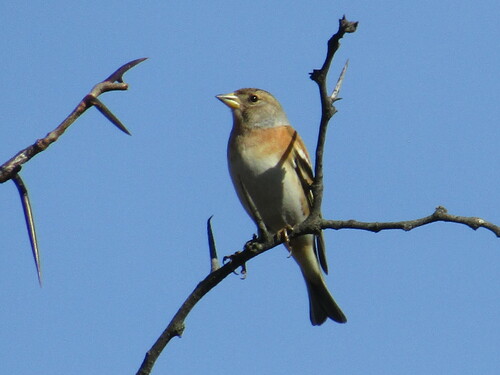 tentilhão-montês
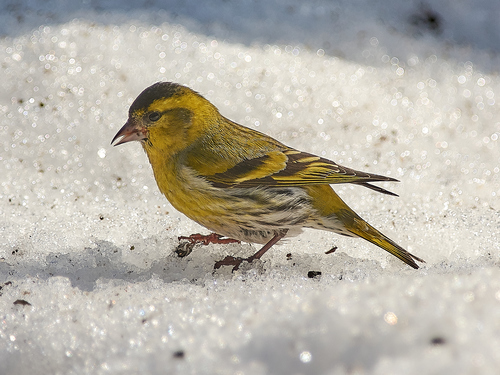 lugre
Em resumo
The most reliable field mark to separate Brambling from Eurasian Siskin in any plumage is the Brambling's white rump (visible in flight and often when perched), compared to the Siskin's yellow rump and black tail. Bramblings also show a bold orange breast and scapulars with a white belly, while Siskins are smaller, slimmer, and much more yellow-green overall, with males showing a black cap and yellow wing stripe. Juvenile and female Bramblings can look dull, but always lack the Siskin's strong yellow tones and black cap. Bill color is also useful: Bramblings (except breeding males) have a yellow bill, while Siskins have a short, pointed, greyish bill. Siskins are noticeably smaller and more acrobatic in feeding behavior.
Dicas de identificação
- White rump (Brambling) vs yellow rump (Siskin): In flight or when preening, Brambling always shows a white rump, while Siskin's rump is yellow; this is a key mark for all ages and sexes.
- Orange breast and scapulars (Brambling): Bramblings of all ages and sexes show an orange breast and orange scapulars, contrasting with a white belly. Siskins never show orange tones anywhere.
- Yellow-green overall (Siskin): Siskins are much more yellow and green overall, especially adult males, which have a yellow face, breast, and rump, plus a black cap. Bramblings are never yellow or greenish.
- Black cap (male Siskin): Adult male Siskins have a neat black cap and bib, while Bramblings never have a black cap (though breeding males have a black head, it's not a cap and is always with orange breast).
- Bill color: Bramblings have a yellow bill (except breeding males, which have a black bill); Siskins have a short, pointed, greyish bill. This is a subtle but reliable mark in close views.
- Size and shape: Bramblings are bulkier, with a heavier body and more robust structure; Siskins are smaller, slimmer, and have a shorter tail and finer bill.
- Tail pattern: Siskins have a black tail with yellow sides; Bramblings have a dark tail without yellow or white outer feathers (unlike Chaffinch).
- Flank pattern: Bramblings have dark-spotted flanks; Siskins have streaked white underparts but not the same dark spotting.
- Wingbar: Siskins have a broad, bright yellow wingbar with white tips; Bramblings have less obvious wing markings and no yellow on the wing.
- Juvenile confusion: Juvenile Bramblings can look dull, but always show orange scapulars and a white rump; juvenile Siskins are streaked, never orange, and have a yellowish rump and wingbar.
- Feeding behavior: Siskins often hang upside down and feed acrobatically in trees; Bramblings feed upright, often on the ground or perched.
- Flight style: Siskins have a rapid, bounding flight; Bramblings are steadier and less erratic in the air.
- Habitat context: Siskins are more likely in conifers, alders, and gardens with feeders; Bramblings prefer open woodland, forest edges, and fields, especially in large winter flocks.
- Bill shape: Siskin's bill is shorter and more pointed, adapted for extracting seeds from cones; Brambling's bill is more typical of a finch, slightly deeper and less pointed.
- Sex differences: Male Siskins are much brighter and more yellow than any Brambling; female and juvenile Siskins are duller but still show yellow tones and lack orange.
Tamanho
Brambling is significantly heavier (22.0g) than Eurasian Siskin (13.8g) [wikidata], and appears bulkier and more robust in the field. Siskins are smaller, slimmer, and shorter-tailed, with a more delicate and pointed bill. When seen together, Siskins look noticeably daintier and lighter, both perched and in flight.
Plumagem
-
Juvenile/immature birds: Juvenile Bramblings have a white rump and orange scapulars, with dark-spotted flanks and a yellow bill. Their underparts are orange on the breast, fading to a white belly, and their upperparts are brownish with some orange tones. Juvenile Siskins resemble dull females: olive-grey above, streaked white below, with a yellowish rump and broad yellow wingbar, but never show orange tones or a white rump. Juvenile Siskins lack any orange and have a more streaked, less contrasted appearance overall.
-
Adult males: Brambling males in breeding plumage are striking, with a black head, orange breast and scapulars, white belly, and white rump. In non-breeding plumage, the head is less dark, but the orange and white pattern remains. Male Siskins are greenish-yellow with a black cap, yellow face and breast, yellow rump, and a bold yellow wing stripe; their underparts are white with some streaking, and they lack any orange or white rump.
-
Adult females: Female Bramblings are duller than males but still show an orange breast, white belly, white rump, and orange scapulars. Female Siskins are more olive, with a greenish head, no black cap, yellowish rump, and a broad yellow wingbar. Both sexes of Siskin have a black tail with yellow sides, while Brambling tails are dark but lack the Siskin's yellow highlights and always lack the white outer tail feathers of Chaffinch.
-
Bill color: Brambling bills are yellow (except breeding males, which have black bills); Siskin bills are short, pointed, and greyish.
Comportamento
Siskins are much more acrobatic, often feeding while hanging upside down on twigs or cones, and are highly active and sociable. Bramblings feed more like typical finches, usually upright on the ground or in trees, and form large flocks in winter but do not show the same acrobatic feeding style. Siskins also have a rapid, bounding flight, while Bramblings appear steadier and less erratic in the air.
Habitat
Both species are found in mixed and coniferous woodland, especially in winter, but Siskins are more closely tied to conifers and alder, and are common in gardens with seed feeders. Bramblings are more often seen in large flocks in open woodland, forest edges, or fields, especially during migration and winter. Siskins may be more likely to be seen feeding acrobatically in trees, while Bramblings are often on the ground or perched upright.