

blue-throated bee-eater vs abelharuco-de-cauda-azul
Merops viridis versus Merops philippinus
Jogue um quiz com blue-throated bee-eater e abelharuco-de-cauda-azul
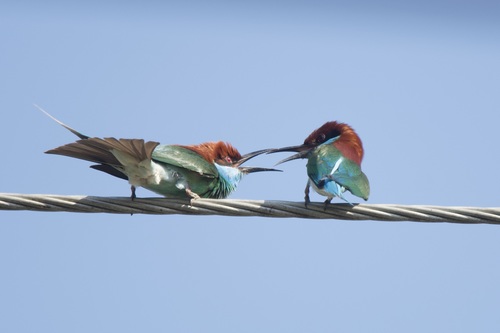 blue-throated bee-eater
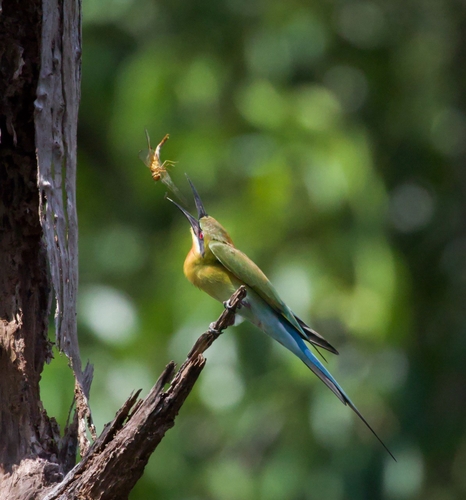 abelharuco-de-cauda-azul
Em resumo
A marca de campo mais confiável para separar o abelharuco-de-cauda-azul do blue-throated bee-eater é a cor da garganta: o blue-throated tem uma garganta azul vívida, enquanto o abelharuco-de-cauda-azul apresenta uma garganta amarela e marrom. Os adultos do blue-throated também têm uma coroa e nuca vermelho-marrom distintas, contrastando com os tons predominantemente verdes e azuis do abelharuco-de-cauda-azul. Os juvenis de ambos são mais apagados, mas os juvenis do blue-throated são verdes por toda parte, com uma cabeça verde escura, sem a garganta e cauda azuis. Ambas as espécies têm penas centrais da cauda alongadas como adultos, mas as do blue-throated são mais longas. O habitat pode ajudar: o blue-throated prefere manguezais e bordas de floresta, enquanto o abelharuco-de-cauda-azul é mais frequentemente encontrado em áreas abertas perto da água. Em voo ou empoleirado, concentre-se na garganta, coroa e equilíbrio geral de cores para a separação mais rápida.
Dicas de identificação
- A cor da garganta é a chave: O blue-throated bee-eater sempre apresenta uma garganta azul brilhante (adultos), enquanto o abelharuco-de-cauda-azul tem uma garganta amarela e marrom (todas as idades).
- Coroa e nuca: O blue-throated tem uma coroa e nuca vermelho-marrom marcantes nos adultos; a coroa do abelharuco-de-cauda-azul é verde, misturando-se com o restante das partes superiores.
- Confusão juvenil: O juvenil do blue-throated é verde por toda parte, com uma cabeça verde escura e sem azul na garganta ou cauda; o juvenil do abelharuco-de-cauda-azul também é apagado, mas apresenta uma garganta amarelada e marrom e um pouco de azul na cauda.
- Penas da cauda: Ambas as espécies têm penas centrais da cauda alongadas como adultos, mas as do blue-throated são mais longas (9 cm vs. 7 cm) e mais proeminentes. Os juvenis de ambos não possuem essas extensões.
- Partes inferiores: O blue-throated tem um peito e ventre verde claro; o abelharuco-de-cauda-azul é mais uniformemente verde embaixo, às vezes com um tom amarelado perto da garganta.
- Padrão facial: Ambos têm uma faixa ocular preta, mas o abelharuco-de-cauda-azul tem uma mancha facial azul estreita, enquanto o rosto do blue-throated é dominado pela garganta azul e coroa ruiva.
- Cauda e rabo: O abelharuco-de-cauda-azul tem uma cauda e rabo azuis, que podem ser proeminentes em voo; o blue-throated também tem uma cauda azul, mas não possui o rabo azul.
- Dicas de habitat: Em manguezais ou bordas de floresta, espere encontrar o blue-throated; em campo aberto, bancos de areia ou vales fluviais, o abelharuco-de-cauda-azul é mais provável.
- Comportamento em grupo: O abelharuco-de-cauda-azul frequentemente se reproduz e dorme em colônias, às vezes com ajudantes no ninho; o blue-throated é menos colonial, sendo mais frequentemente visto em pares ou pequenos grupos.
- Estilo de voo: Ambos usam uma mistura de batidas e planagens, mas o abelharuco-de-cauda-azul é mais provável de ser visto em grandes bandos migratórios em áreas abertas.
- Voz: O chamado 'teerp' do abelharuco-de-cauda-azul é distintivo se ouvido, mas os chamados nem sempre são diagnósticos sem experiência.
- Diferenças sexuais: Ambos são sexualmente semelhantes aos olhos; diferenças menores no comprimento da cauda e na reflectância UV não são úteis em campo.
- Tamanho: O abelharuco-de-cauda-azul é ligeiramente maior, mas a sobreposição é significativa; use cor e estrutura primeiro.
- Contexto sazonal: Ambos migram, mas o abelharuco-de-cauda-azul é mais fortemente migratório e provavelmente aparecerá em novas áreas sazonalmente.
- Empoleirado vs. em voo: Quando empoleirado, concentre-se na cor da garganta e da coroa; em voo, procure o comprimento da cauda e o equilíbrio geral de cores, mas tenha cuidado, pois os juvenis de ambos podem parecer semelhantes à distância.
Tamanho
O abelharuco-de-cauda-azul é ligeiramente maior em geral, medindo cerca de 29 cm de comprimento corporal (excluindo as penas centrais da cauda de 7 cm) e pesando entre 29 e 43 gramas. O blue-throated bee-eater tem cerca de 21 cm de comprimento corporal (excluindo as penas centrais da cauda mais longas de 9 cm) e pesa entre 34 e 41 gramas. A diferença no comprimento do corpo se deve principalmente às extensões das penas da cauda, sendo as do blue-throated proporcionalmente mais longas. Ambos são abelharucos esguios, de tamanho médio-grande, e o tamanho sozinho raramente é diagnóstico em campo.
Plumagem
Os juvenis de ambas as espécies são mais apagados do que os adultos e não possuem as penas centrais da cauda alongadas. Os juvenis do blue-throated são principalmente verdes, com uma cabeça e asas verde-escuras e um peito verde claro, sem azul na garganta ou cauda. Os juvenis do abelharuco-de-cauda-azul também são apagados, mas já mostram uma dica de azul na cauda e têm uma garganta amarelada e marrom, não azul. Nos adultos, o blue-throated se destaca com uma coroa e nuca vermelho-marrom, garganta azul, asas verde-escuras, cauda azul e partes inferiores verde claro. Os adultos do abelharuco-de-cauda-azul são predominantemente verdes, com uma cauda e rabo azuis, garganta amarela e marrom, e uma mancha facial azul estreita. Ambos têm uma faixa ocular preta, mas apenas o blue-throated mostra a forte garganta azul e a coroa ruiva. Os sexos são semelhantes em ambas as espécies, mas o macho do abelharuco-de-cauda-azul pode ter penas da cauda ligeiramente mais longas e sutis diferenças de UV não visíveis em campo.
Comportamento
Ambas as espécies capturam insetos voadores em pleno voo e frequentemente se empoleiram abertamente. O abelharuco-de-cauda-azul é mais provável de ser visto em grupos, reproduzindo-se colonialmente em bancos de areia e forrageando em conjunto. O blue-throated também é social, mas é mais frequentemente associado a bordas de floresta e manguezais, sendo às vezes visto descansando em árvores ou estruturas feitas pelo homem durante a migração. Ambas as espécies migram em bandos, às vezes juntas, mas o abelharuco-de-cauda-azul é mais fortemente migratório e forma bandos visíveis maiores em campo aberto.
Habitat
O blue-throated bee-eater prefere florestas de mangue subtropicais ou tropicais e bordas de floresta no Sudeste Asiático, frequentemente perto da água, mas em ambientes mais arborizados ou semi-arborizados. O abelharuco-de-cauda-azul é tipicamente encontrado em habitats abertos perto da água—vales fluviais, margens de lagos, bancos de areia e até estuários—evitando florestas densas. Se você ver um abelharuco em um mangue ou borda de floresta, é mais provável que seja o blue-throated; em ambientes abertos, arenosos ou ribeirinhos, especialmente com colônias, o abelharuco-de-cauda-azul é o padrão.
Voz
Ambas as espécies têm chamados variados, mas o abelharuco-de-cauda-azul é notado por um chamado 'teerp' rolante, chilreante e assobiador, dado principalmente em voo. O blue-throated tem uma rica variedade de chamados, incluindo chamados de longa distância para comunicação na floresta, mas as diferenças são sutis e não são confiavelmente diagnósticas em campo sem experiência.
blue-throated bee-eater · abelharuco-de-cauda-azul · Minhas aves difíceis