

abelharuco-de-cauda-azul vs abelharuco-arco-íris
Merops philippinus versus Merops ornatus
Jogue um quiz com abelharuco-de-cauda-azul e abelharuco-arco-íris
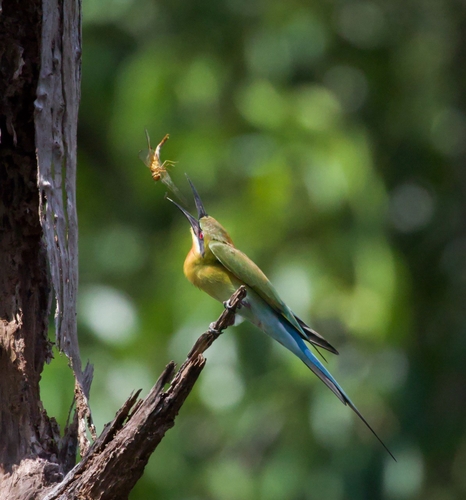 abelharuco-de-cauda-azul
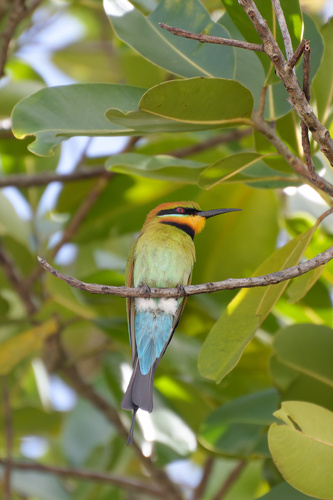 abelharuco-arco-íris
Em resumo
A marca de campo mais confiável para separar o abelharuco-de-cauda-azul do abelharuco-arco-íris é a cor e a extensão do azul na região do dorso e na cauda: o abelharuco-de-cauda-azul apresenta uma cauda e um dorso azul brilhante, enquanto o abelharuco-arco-íris tem uma parte inferior das costas azul, mas uma cauda mais escura, frequentemente acinzentada ou violeta. Os abelharucos-arco-íris adultos também possuem uma faixa distintiva preta na garganta (gorget) e uma coloração amarelo-alaranjada mais extensa nas partes inferiores, que o abelharuco-de-cauda-azul não possui. Os juvenis de ambas as espécies não têm as longas penas da cauda, mas os juvenis do abelharuco-arco-íris são mais apagados, com uma coroa mais verde e sem faixa na garganta. Ambas as espécies são abelharucos esguios e esverdeados, com listras pretas nos olhos e penas centrais da cauda alongadas, mas a atenção cuidadosa à coloração da cauda e da garganta, especialmente em aves empoleiradas, é fundamental.
Dicas de identificação
- Cor da cauda (todas as idades): O abelharuco-de-cauda-azul sempre apresenta uma cauda e um dorso azul brilhante, enquanto o abelharuco-arco-íris tem uma parte inferior das costas azul, mas uma cauda que é acinzentada ou violeta. Isso é mais óbvio em aves empoleiradas e é confiável em ambos, adultos e juvenis.
- Faixa na garganta (adultos): O abelharuco-arco-íris tem um gorget preto em forma de crescente bem definido na garganta amarelo-alaranjada, ausente no abelharuco-de-cauda-azul. Isso é um separador rápido em adultos.
- Cor das partes inferiores (adultos): O abelharuco-arco-íris apresenta uma extensa coloração amarelo-alaranjada pálida da coroa até o peito e a barriga, enquanto o abelharuco-de-cauda-azul tem uma garganta amarela e marrom, mas de outra forma partes inferiores verdes.
- Padrão facial: Ambos têm uma listra preta nos olhos, mas a mancha azul do rosto do abelharuco-de-cauda-azul é mais estreita e menos extensa do que a borda azul da listra ocular do abelharuco-arco-íris.
- Plumagem juvenil: Os juvenis do abelharuco-arco-íris são mais apagados, com uma coroa mais verde e sem faixa na garganta ou penas da cauda; os juvenis do abelharuco-de-cauda-azul também são mais apagados e não têm penas, mas a cauda azul ainda é aparente.
- Penas da cauda (sexo/idade): Ambas as espécies têm penas centrais da cauda alongadas em adultos, mais longas nos machos. Os juvenis de ambas não têm penas, então não confie apenas nisso para separação de idade/sexo.
- Cor do dorso: O dorso do abelharuco-de-cauda-azul é azul brilhante e contrasta com as costas verdes; o dorso inferior do abelharuco-arco-íris é azul, mas a cauda é mais escura, então procure um dorso azul nítido em comparação com as coberturas da cauda azul.
- Tamanho: O abelharuco-de-cauda-azul é marginalmente maior e mais pesado, mas isso não é uma marca de campo confiável, a menos que as aves estejam lado a lado.
- Contexto do habitat: O abelharuco-de-cauda-azul está mais estritamente ligado à água e a vales fluviais abertos, enquanto o abelharuco-arco-íris pode ser encontrado em áreas abertas mais secas, bem como perto de zonas úmidas.
- Comportamento: Ambos atacam insetos e golpeiam a presa em poleiros, mas o abelharuco-de-cauda-azul é mais propenso a ser visto em grandes bandos migratórios, especialmente perto da água.
- Ninho: Ambos fazem ninhos colonialmente em bancos de areia, mas o abelharuco-arco-íris é mais propenso a compartilhar túneis com outros abelharucos e até mesmo com outras espécies de aves.
- Voz: O abelharuco-de-cauda-azul emite um chamado rolante e chilreante 'teerp' em voo; o chamado do abelharuco-arco-íris não é descrito aqui, então use com cautela.
- Diferenças sexuais: Em ambos, os machos têm penas da cauda mais longas; no abelharuco-de-cauda-azul, os machos podem ter gargantas castanhas mais escuras e plumagem verde mais brilhante, mas isso é sutil e geralmente não é visível em campo.
- Visões de voo: Em voo, concentre-se na cor e no comprimento da cauda, e na presença ou ausência da faixa preta na garganta (apenas em adultos do abelharuco-arco-íris).
- Armadilhas comuns: Aves imaturas de ambas as espécies não têm penas da cauda e podem parecer semelhantes; confie na cor da cauda e do dorso e na presença/ausência da faixa na garganta para a melhor separação.
Tamanho
Both species are similar in overall size and structure, being slender and medium-sized bee-eaters. abelharuco-de-cauda-azul averages about 29 cm in length (excluding the 7 cm tail streamers) and weighs 29–43 g [wikipedia], while abelharuco-arco-íris is slightly smaller at 23–28 cm including streamers and weighs 20–33 g [wikidata]. In the field, this size difference is subtle and not usually diagnostic unless seen side by side.
Plumagem
- Juveniles: Both species lack elongated central tail feathers when immature. Juvenile Blue-tailed Bee-eaters are generally drabber green overall, while juvenile Rainbow Bee-eaters are also duller but show a greener crown and lack both the throat band and tail streamers.
- Adults: abelharuco-de-cauda-azul has a predominantly green body, a narrow blue patch on the face, a black eye stripe, a yellow and brown throat, and a bright blue rump and tail. abelharuco-arco-íris adults show a green upper back and wings, bright blue lower back and under-tail coverts, a black to deep violet tail, a pale yellow-orange crown, breast, and throat, and a bold black crescent gorget across the throat. The black gorget and more extensive yellow-orange underparts are unique to Rainbow.
- Tail: Blue-tailed's tail is blue throughout, while Rainbow's is darker (blackish or violet) with blue only on the lower back and undertail coverts. Both have elongated central tail feathers in adults, longer in males.
Comportamento
Ambas as espécies são insetívoras aéreas, atacando de poleiros abertos para capturar insetos voadores, especialmente abelhas. Ambas golpeiam a presa em poleiros para matá-las e desarmá-las. Os abelharucos-de-cauda-azul são frequentemente vistos em bandos, especialmente durante a migração, e podem forragear sobre água, estuários e até mesmo no mar (mas não longe da costa). Os abelharucos-arco-íris também se empoleiram de forma conspícua e cavam buracos para ninho, às vezes de forma comunitária, e são conhecidos por seu comportamento de ventilação de túneis semelhante a um pistão. Ambas as espécies fazem ninhos colonialmente em bancos de areia, mas o abelharuco-arco-íris é notado por compartilhar túneis com outros abelharucos e às vezes com outras espécies.
Habitat
O abelharuco-de-cauda-azul é encontrado principalmente em habitats abertos próximos à água, como vales fluviais, margens de lagos e estuários em toda a Ásia do Sul e Sudeste. O abelharuco-arco-íris ocupa um nicho ecológico semelhante na Austrália e regiões próximas, preferindo áreas abertas, bordas de florestas e bancos de areia para nidificação, às vezes perto de zonas úmidas, mas também em áreas mais secas. Ambas as espécies requerem solos arenosos ou argilosos para buracos de ninho, mas não estão estritamente ligadas à água no caso do abelharuco-arco-íris.
Voz
O abelharuco-de-cauda-azul emite um chamado rolante, chilreante e assobiador 'teerp', principalmente em voo. As vocalizações do abelharuco-arco-íris não são descritas nas notas fornecidas, então a voz não é um separador confiável com base nas informações atuais.
abelharuco-de-cauda-azul · abelharuco-arco-íris · Minhas aves difíceis