

blue-headed vireo vs pisco-de-flanco-ruivo
Vireo solitarius versus Tarsiger cyanurus
Jogue um quiz com blue-headed vireo e pisco-de-flanco-ruivo
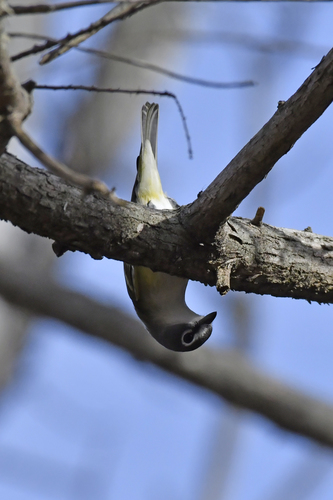 blue-headed vireo
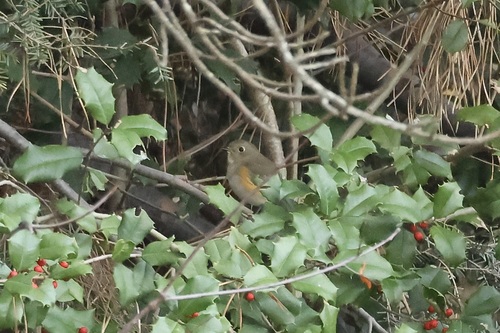 pisco-de-flanco-ruivo
Em resumo
The most reliable field mark between Blue-headed Vireo and Red-flanked Bluetail is the vireo’s bold yellow wing bars and blue-gray head, versus the bluetail’s blue tail, orange-red flanks, and—on adult males—dark blue upperparts. Juvenile and adult Blue-headed Vireos look similar year-round, always showing olive upperparts and strong wing bars, while Red-flanked Bluetail females and immatures are brown above with blue tails and orange flanks, lacking wing bars. Structurally, the vireo has a heavier, thicker bill and a more robust jizz, while the bluetail is slimmer with a fine, black bill. Both species can appear in mixed forests, but their ranges and behaviors differ markedly. Use the combination of head color, wing bars, tail color, and bill shape for confident separation.
Dicas de identificação
- Wing bars: Blue-headed Vireo of all ages has two bold yellow wing bars; Red-flanked Bluetail never shows wing bars. This is the fastest field check.
- Head color: Blue-headed Vireo has a blue-gray crown and white spectacles; Red-flanked Bluetail males have blue heads, but females and immatures are brown above with no blue on the head.
- Tail color: Red-flanked Bluetail always has a blue tail and rump, even in females and immatures; Blue-headed Vireo has a plain olive tail.
- Flank color: Bluetail shows orange-red flanks in all plumages; vireo has plain whitish underparts with no orange.
- Bill shape: Vireo’s bill is thicker and more robust, suited for gleaning; bluetail’s bill is thin, black, and more flycatcher-like.
- Upperparts: Vireo is olive-green above with blue-gray crown; adult male bluetail is dark blue above, females/immatures are brown above with blue tail.
- Underparts: Bluetail has a white throat and greyish-white underparts with a dusky breast (in females/immatures); vireo is clean white below with no dusky wash.
- Eye-ring/spectacles: Vireo has a bold white spectacle; bluetail lacks this, instead showing a pale supercilium (especially in males).
- Behavior: Bluetail often flicks its tail and sallies for insects; vireo moves more slowly and deliberately, rarely flicking tail.
- Perching posture: Bluetail perches upright, often low or near the ground; vireo is more horizontal and stays higher in trees.
- Habitat and range: In North America, Blue-headed Vireo is expected in the east; Red-flanked Bluetail is a rare vagrant and should be suspected only with strong field marks.
- Sex/age confusion: Female and immature bluetails can be mistaken for drab vireos, but always check for blue tail and orange flanks, and absence of wing bars.
- Song/call: If heard, vireo’s song is slow and burry; bluetail’s is a melancholy trill or sharp 'tacc' call.
- Season: Both species are migratory, but only vireo is expected in North America outside of rare vagrant bluetails.
- Pitfalls: Do not rely on general size or vague 'blue' coloration—focus on wing bars, tail color, and flank color for reliable separation.
Tamanho
Both species are similar in length (Blue-headed Vireo: 126–148 mm; Red-flanked Bluetail: 130–140 mm), but the vireo is generally stockier and heavier-bodied, while the bluetail is slimmer and more delicate in build. The bluetail’s mass (about 14.5 g) is within the vireo’s range (13–19 g), but the vireo often appears more robust, especially in the head and bill. The vireo’s wingspan (200–240 mm) is slightly larger, but this is rarely diagnostic in the field.
Plumagem
- Juvenile/immature plumage: Blue-headed Vireo immatures look much like adults, with olive-green upperparts, blue-gray crown, bold yellow wing bars, and white spectacles. There is no distinctive juvenile wing pattern; the look is stable across ages.
- Red-flanked Bluetail immatures and females: Brown above with blue tail and rump, orange flanks, and no wing bars. Underparts are pale with a dusky breast. Only adult males have dark blue upperparts; females and immatures lack this, but always show the blue tail and orange flanks.
- Adults: Blue-headed Vireo always shows blue-gray head, olive back, yellow wing bars, and white spectacles. Red-flanked Bluetail adult males are strikingly blue above with orange flanks and blue tail; females/immatures are much plainer above but still have blue tail and orange flanks. Both sexes of bluetail have a white throat and greyish-white underparts, never with bold wing bars.
Comportamento
Blue-headed Vireo tends to move methodically through foliage, often pausing to look around, and forages deliberately. Red-flanked Bluetail is more active and flycatcher-like, frequently flicking its blue tail and sallying from perches to catch insects, similar to a redstart. The bluetail often perches upright and is more likely to be seen on or near the ground, especially in winter. The vireo is more arboreal and less likely to flick its tail.
Habitat
Blue-headed Vireo breeds in mixed temperate forests across Canada and the eastern US, preferring areas with both evergreen and deciduous trees. Red-flanked Bluetail breeds in mixed coniferous forests of northern Eurasia and winters in southeast Asia; it is a rare vagrant in North America. In North America, finding a bluetail is exceptional and should always prompt careful scrutiny. Both species favor mixed forests, but their expected ranges barely overlap.
Voz
Blue-headed Vireo sings a slow, burry, repeated song and uses a variety of scolding calls, but these are not detailed in the notes. Red-flanked Bluetail male sings a melancholy trill from treetops and gives a sharp 'tacc' call. The vireo’s song is more deliberate and less chat-like than the bluetail’s. Voice is rarely the first clue in North America unless the bluetail is singing.
blue-headed vireo · pisco-de-flanco-ruivo · Minhas aves difíceis