

arnot's chat vs capped wheatear
Myrmecocichla arnotti versus Oenanthe pileata
Jogue um quiz com arnot's chat e capped wheatear
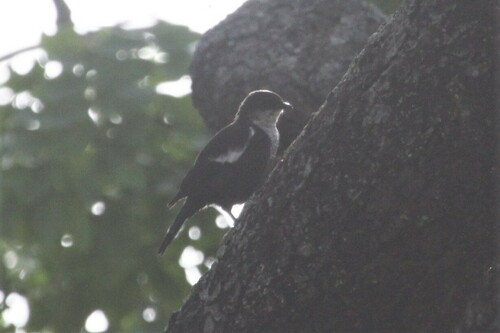 arnot's chat
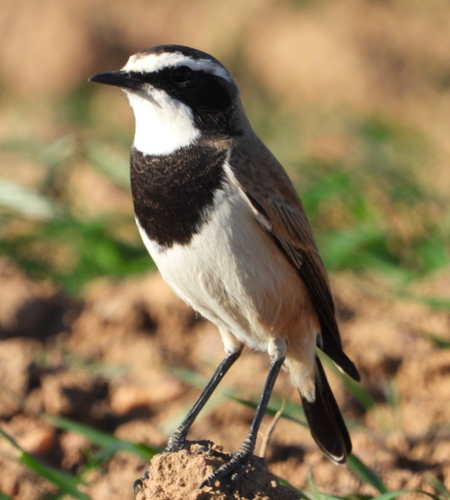 capped wheatear
Em resumo
A marca de campo mais confiável para separar arnot's chat de capped wheatear é a presença de uma coroa branca no macho adulto de arnot's chat, em contraste com a touca preta e a faixa peitoral preta e ousada de capped wheatear. Os juvenis de ambas as espécies podem ser confusos, mas os juvenis de capped wheatear apresentam uma touca marrom e uma faixa peitoral difusa, enquanto os jovens arnot's chat têm penas com pontas brancas na coroa ou na garganta. Em voo, capped wheatear exibe um padrão distinto em forma de T preto na região branca do rabo e cauda, que arnot's chat não possui. Ambas as espécies são semelhantes em tamanho e compartilham pernas e bico pretos, mas seus padrões de cabeça e asas são as pistas de campo mais práticas.
Dicas de identificação
- Coroa branca (macho adulto arnot's chat): Procure por uma coroa branca pura contrastando com um corpo preto—único para o macho arnot's chat entre esses dois. Capped wheatear sempre tem uma touca preta, não branca, em todos os plumagens.
- Touca preta e faixa peitoral (capped wheatear): O adulto capped wheatear apresenta uma touca preta, bochechas e uma faixa peitoral preta ousada, com uma garganta e partes inferiores brancas. Arnot's chat nunca tem uma faixa peitoral preta ou faixa ocular branca.
- Padrão da cauda em voo (todas as idades): Capped wheatear tem um T preto distinto em uma região branca do rabo e cauda, visível quando o pássaro abre a cauda ou voa. Arnot's chat não possui isso, tendo uma cauda e rabo mais uniformemente escuros.
- Padrão da cabeça juvenil: O juvenil capped wheatear tem uma touca marrom (não preta ou branca) e bochechas, e uma faixa peitoral fraca e difusa. O juvenil arnot's chat mostra penas com pontas brancas na coroa ou garganta, que podem parecer manchadas, mas nunca formam uma coroa branca completa.
- Garganta branca (fêmea arnot's chat): A fêmea arnot's chat tem uma garganta e pescoço brancos, nitidamente destacados de uma coroa e corpo pretos. Em capped wheatear, a garganta branca se mistura com as partes inferiores brancas e não é tão nitidamente definida.
- Mancha branca nas coberturas das asas (macho arnot's chat): O macho arnot's chat apresenta uma mancha branca nas coberturas das asas, que está ausente em capped wheatear.
- Flancos cor de canela (capped wheatear): Os adultos capped wheatear têm coloração canela nos flancos e na parte inferior do abdômen, enquanto arnot's chat é mais uniformemente escuro na parte inferior (exceto pela garganta branca nas fêmeas).
- Bico e pernas: Ambas as espécies têm bicos e pernas pretos; isso não é um separador útil.
- Postura empoleirada: Ambas as espécies empoleiram-se eretas, mas capped wheatear frequentemente abana a cauda, chamando a atenção para o padrão branco do rabo e cauda.
- Confusão de subespécies: Algumas subespécies de arnot's chat (por exemplo, harterti) têm menos branco na cabeça e asas, fazendo-as parecer ainda mais escuras e mais fáceis de confundir com capped wheatear. Nesses casos, confie no padrão da cauda e na faixa peitoral.
- Sobreposição de habitat: Embora o habitat possa dar uma pista (capped wheatear em gramados abertos, arnot's chat em florestas/savana), não confie apenas nisso onde ambas ocorrem.
- Dimorfismo sexual: Apenas arnot's chat é fortemente dimórfico sexualmente no padrão da cabeça (coroa branca em machos, preta em fêmeas); os sexos de capped wheatear são semelhantes.
- Faixa ocular branca (capped wheatear): O supercílio branco (faixa ocular) é proeminente em capped wheatear, ausente em arnot's chat.
- Impressão geral: Se o pássaro parecer principalmente preto com uma coroa ou garganta branca, pense em arnot's chat. Se mostrar uma touca preta, partes inferiores brancas e uma faixa peitoral preta, pense em capped wheatear.
- Quando em dúvida: Observe o padrão da cauda em voo—o T preto de capped wheatear em branco é a marca de campo mais confiável em todas as idades e sexos.
Tamanho
Ambas as espécies são muito próximas em tamanho: arnot's chat mede 16–18 cm e cerca de 35 g, enquanto capped wheatear é 17–18 cm e cerca de 32 g [wikipedia]. No campo, o tamanho sozinho não é um separador útil. Ambas têm pernas pretas e um bico preto pontudo, então as diferenças estruturais são sutis ou ausentes.
Plumagem
-
Juvenis: O juvenil capped wheatear tem uma touca marrom e bochechas, com uma faixa peitoral fraca e difusa. O juvenil arnot's chat se assemelha aos adultos, mas com pontas de penas brancas na coroa ou garganta (não uma coroa ou garganta branca completa). O padrão da cauda do juvenil capped wheatear já está desenvolvendo o T preto na região branca do rabo, que está ausente em arnot's chat de qualquer idade.
-
Machos adultos: Arnot's chat (nominate) é preto com uma impressionante coroa branca e uma mancha branca nas coberturas das asas. O adulto capped wheatear tem uma touca preta, bochechas e faixa peitoral, com uma faixa ocular e garganta brancas, e uma barriga branca com flancos canela. O padrão da cauda de capped wheatear é diagnóstico: um T preto em uma região branca do rabo e cauda, ao contrário da cauda mais uniformemente escura de arnot's chat.
-
Fêmeas adultas: A fêmea arnot's chat tem uma coroa preta e uma garganta e pescoço brancos (com pontas pretas), enquanto a fêmea capped wheatear é semelhante ao macho, mas pode ser ligeiramente mais apagada. A garganta branca da fêmea arnot's chat é mais isolada e nitidamente definida em comparação com as partes inferiores brancas contínuas de capped wheatear.
-
Subespécies: Algumas raças de arnot's chat (por exemplo, harterti) têm menos branco nas asas e uma cabeça predominantemente preta, o que pode reduzir o contraste com capped wheatear, mas o padrão da cauda continua sendo um separador confiável.
Comportamento
Ambas as espécies são insetívoras que habitam o solo e podem ser vistas empoleiradas eretas em arbustos baixos ou pedras. Capped wheatear frequentemente abana a cauda e mostra seu rabo branco em voo, um comportamento que chama a atenção para seu padrão de cauda. Arnot's chat é menos propenso a exibir um rabo branco e pode parecer mais uniformemente escuro quando empoleirado ou em voo.
Habitat
Ambas são encontradas no sul da África e podem sobrepor-se em alcance. Arnot's chat é geralmente associado a florestas abertas e savanas, enquanto capped wheatear prefere gramados abertos, arbustos baixos e solo nu. No entanto, o habitat sozinho não é diagnóstico onde os alcances se sobrepõem.