

Motmot

bacurau-das-antilhas vs águia-real

Chordeiles gundlachii versus Aquila chrysaetos

Jogue um quiz com bacurau-das-antilhas e águia-real
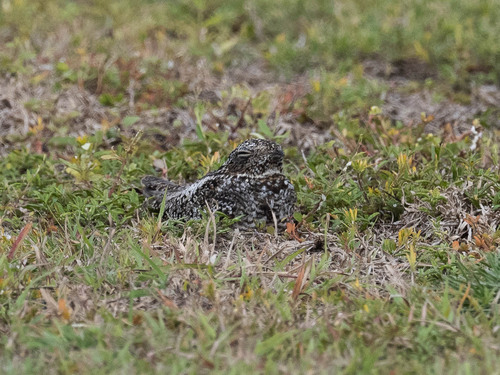
bacurau-das-antilhas (Chordeiles gundlachii) bacurau-das-antilhas
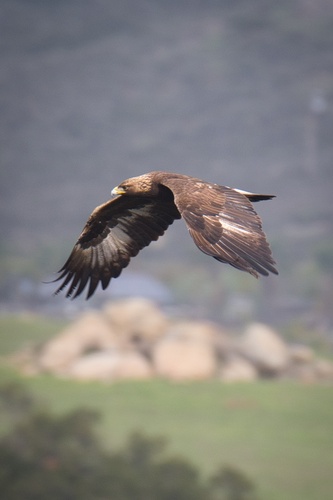
águia-real (Aquila chrysaetos) águia-real

Mídia

Carregando…

Em resumo

The most reliable field mark to separate Antillean Nighthawk from Golden Eagle is overall size and structure: Golden Eagle is a massive raptor, many times larger than the slender, long-winged nighthawk. In flight, Antillean Nighthawk shows a distinctive white wing bar and, when perched, pale tertials near the back of the wing—features never shown by Golden Eagle. Juvenile Golden Eagles may have white patches in the wings and tail, but these are differently placed and on a much bulkier, broader-winged bird. If you see a bird with a light, fluttery flight and a white wing bar, it's a nighthawk; if it's soaring powerfully with a golden nape and huge size, it's a Golden Eagle.

Dicas de identificação

  1. Size is decisive: Golden Eagle is gigantic—if the bird appears raptor-sized or larger than a crow, it's not a nighthawk. Nighthawks are slim and much smaller than any eagle.
  2. White wing bar (nighthawk only): In all ages, Antillean Nighthawk shows a sharp, white bar across the primaries in flight. Golden Eagle never shows a neat white bar; juveniles may have white patches, but these are irregular and not in bar form.
  3. Pale tertials on perched nighthawk: When perched, look for pale tertials near the back of the wing on Antillean Nighthawk—a key separation from Golden Eagle, which never shows this.
  4. Wing shape and flight style: Nighthawk has long, pointed wings and a fluttery, buoyant flight, often erratic and moth-like. Golden Eagle has broad, fingered wings, soars powerfully, and never flutters.
  5. Tail pattern: Nighthawk's tail is dark with white barring; Golden Eagle's is long, solidly dark (adults), or with large white patches (juveniles), never barred.
  6. Underparts: Nighthawk shows white with black barring below; Golden Eagle is solidly dark brown below in adults, never barred.
  7. Throat color: Male nighthawks have a white throat, females a light brown throat; Golden Eagle's throat is always dark.
  8. Nape color: Golden Eagle adults have a golden to rufous nape, visible at close range; nighthawks lack this feature.
  9. Bill and head: Nighthawk has a tiny bill and small head; Golden Eagle has a massive, hooked bill and large head, especially obvious when perched.
  10. Perching posture: Nighthawk sits lengthwise along branches or on the ground, blending in; eagle perches upright and exposed.
  11. Vocalization: Nighthawk gives a sharp 'pikadik' call at dusk or night; Golden Eagle is nearly silent, especially in flight.
  12. Habitat and timing: Nighthawk is crepuscular/nocturnal and found in the Caribbean and Florida Keys; Golden Eagle is diurnal and found in open mountains and uplands of the Northern Hemisphere.
  13. Color morphs: Nighthawk comes in gray and rufous morphs, but both show the white wing bar; Golden Eagle does not have color morphs affecting these marks.
  14. Juvenile confusion: Juvenile Golden Eagles have white patches in wings/tail, but these are large and irregular, not a bar; always check wing shape and size.
  15. Common pitfalls: Distant, backlit views may make a nighthawk look larger or an eagle slimmer—always use multiple features, especially wing bar and flight style, before deciding.

Tamanho

Golden Eagle is enormous, with an average adult mass of over 4 kg [wikidata], dwarfing the Antillean Nighthawk, which is a typical nightjar-sized bird (much smaller than any eagle). Even the largest Buteo hawks are dwarfed by Golden Eagle, which has double the wingspan and about five times the weight of a large Buteo. In the field, the nighthawk is slim, long-winged, and light, while the eagle is broad-winged, heavy-bodied, and imposing. There is no overlap in size: any confusion is due to distant or poor views, not actual similarity.

Plumagem

Antillean Nighthawk adults (both sexes) are dark with brown, grey, and white patterning above and on the breast, with a striking white bar across the long, black wings in flight. The tail is dark with white barring, and underparts are white with black bars. Males have a white throat, females a light brown throat. The most diagnostic perched feature is the contrasting pale tertials near the back of the wing. There are gray and rufous morphs.

Golden Eagle adults are solidly dark brown with a golden to rufous nape. Juveniles may show large white patches at the base of the primaries (wing) and tail, but these are not in a neat bar and the bird is always much bulkier. The eagle's tail is long and lacks the barring of the nighthawk. In all plumages, Golden Eagle lacks the white wing bar and pale tertials of the nighthawk. The eagle's underparts are never barred white and black.

Juvenile confusion: Both species can show white in the wings/tail, but the nighthawk's is a sharp, narrow bar; the eagle's is a large, irregular patch. The nighthawk's white is always on a slender, pointed wing; the eagle's is on a broad, fingered wing.

Comportamento

Antillean Nighthawk is crepuscular or nocturnal, foraging on the wing for insects near dawn, dusk, or at night, with buoyant, erratic, fluttery flight and frequent aerial displays (including steep dives and sudden pull-ups). Golden Eagle is diurnal, soaring on thermals with powerful, steady wingbeats or gliding with wings held in a shallow dihedral. Eagles rarely flap rapidly and never show the light, moth-like flight of a nighthawk. Perched, nighthawks sit lengthwise along branches or on the ground, blending in; eagles perch upright on exposed rocks, cliffs, or large trees.

Habitat

Antillean Nighthawk is native to the Caribbean, Bahamas, and Florida Keys, typically found in open habitats, sandy areas, or near coasts, often over towns or open ground at dusk. Golden Eagle is a bird of open mountains, cliffs, and uplands across the Northern Hemisphere, rarely found in the Caribbean or lowland tropics. If you are in the Caribbean at dusk, a nighthawk is vastly more likely; if in northern mountains during the day, a Golden Eagle is possible.

Voz

Antillean Nighthawk gives a short, sharp 'pikadik' call, often heard overhead at dusk or night. Golden Eagle is generally silent in flight; its calls are rare, weak, and not likely to be confused with a nighthawk's. If you hear a distinctive, repeated call from a flying bird at dusk, it's likely a nighthawk.

Enviar uma descrição melhor

Use as mesmas seções da comparação. Seu texto é publicado na hora.

The most reliable field mark to separate Antillean Nighthawk from Golden Eagle is overall size and structure: Golden Eagle is a massive raptor, many times larger than the slender, long-winged nighthawk. In flight, Antillean Nighthawk shows a distinctive white wing bar and, when perched, pale tertials near the back of the wing—features never shown by Golden Eagle. Juvenile Golden Eagles may have white patches in the wings and tail, but these are differently placed and on a much bulkier, broader-winged bird. If you see a bird with a light, fluttery flight and a white wing bar, it's a nighthawk; if it's soaring powerfully with a golden nape and huge size, it's a Golden Eagle.

  1. Size is decisive: Golden Eagle is gigantic—if the bird appears raptor-sized or larger than a crow, it's not a nighthawk. Nighthawks are slim and much smaller than any eagle.
  2. White wing bar (nighthawk only): In all ages, Antillean Nighthawk shows a sharp, white bar across the primaries in flight. Golden Eagle never shows a neat white bar; juveniles may have white patches, but these are irregular and not in bar form.
  3. Pale tertials on perched nighthawk: When perched, look for pale tertials near the back of the wing on Antillean Nighthawk—a key separation from Golden Eagle, which never shows this.
  4. Wing shape and flight style: Nighthawk has long, pointed wings and a fluttery, buoyant flight, often erratic and moth-like. Golden Eagle has broad, fingered wings, soars powerfully, and never flutters.
  5. Tail pattern: Nighthawk's tail is dark with white barring; Golden Eagle's is long, solidly dark (adults), or with large white patches (juveniles), never barred.
  6. Underparts: Nighthawk shows white with black barring below; Golden Eagle is solidly dark brown below in adults, never barred.
  7. Throat color: Male nighthawks have a white throat, females a light brown throat; Golden Eagle's throat is always dark.
  8. Nape color: Golden Eagle adults have a golden to rufous nape, visible at close range; nighthawks lack this feature.
  9. Bill and head: Nighthawk has a tiny bill and small head; Golden Eagle has a massive, hooked bill and large head, especially obvious when perched.
  10. Perching posture: Nighthawk sits lengthwise along branches or on the ground, blending in; eagle perches upright and exposed.
  11. Vocalization: Nighthawk gives a sharp 'pikadik' call at dusk or night; Golden Eagle is nearly silent, especially in flight.
  12. Habitat and timing: Nighthawk is crepuscular/nocturnal and found in the Caribbean and Florida Keys; Golden Eagle is diurnal and found in open mountains and uplands of the Northern Hemisphere.
  13. Color morphs: Nighthawk comes in gray and rufous morphs, but both show the white wing bar; Golden Eagle does not have color morphs affecting these marks.
  14. Juvenile confusion: Juvenile Golden Eagles have white patches in wings/tail, but these are large and irregular, not a bar; always check wing shape and size.
  15. Common pitfalls: Distant, backlit views may make a nighthawk look larger or an eagle slimmer—always use multiple features, especially wing bar and flight style, before deciding.

Golden Eagle is enormous, with an average adult mass of over 4 kg [wikidata], dwarfing the Antillean Nighthawk, which is a typical nightjar-sized bird (much smaller than any eagle). Even the largest Buteo hawks are dwarfed by Golden Eagle, which has double the wingspan and about five times the weight of a large Buteo. In the field, the nighthawk is slim, long-winged, and light, while the eagle is broad-winged, heavy-bodied, and imposing. There is no overlap in size: any confusion is due to distant or poor views, not actual similarity.

Antillean Nighthawk adults (both sexes) are dark with brown, grey, and white patterning above and on the breast, with a striking white bar across the long, black wings in flight. The tail is dark with white barring, and underparts are white with black bars. Males have a white throat, females a light brown throat. The most diagnostic perched feature is the contrasting pale tertials near the back of the wing. There are gray and rufous morphs.

Golden Eagle adults are solidly dark brown with a golden to rufous nape. Juveniles may show large white patches at the base of the primaries (wing) and tail, but these are not in a neat bar and the bird is always much bulkier. The eagle's tail is long and lacks the barring of the nighthawk. In all plumages, Golden Eagle lacks the white wing bar and pale tertials of the nighthawk. The eagle's underparts are never barred white and black.

Juvenile confusion: Both species can show white in the wings/tail, but the nighthawk's is a sharp, narrow bar; the eagle's is a large, irregular patch. The nighthawk's white is always on a slender, pointed wing; the eagle's is on a broad, fingered wing.

Antillean Nighthawk is crepuscular or nocturnal, foraging on the wing for insects near dawn, dusk, or at night, with buoyant, erratic, fluttery flight and frequent aerial displays (including steep dives and sudden pull-ups). Golden Eagle is diurnal, soaring on thermals with powerful, steady wingbeats or gliding with wings held in a shallow dihedral. Eagles rarely flap rapidly and never show the light, moth-like flight of a nighthawk. Perched, nighthawks sit lengthwise along branches or on the ground, blending in; eagles perch upright on exposed rocks, cliffs, or large trees.

Antillean Nighthawk is native to the Caribbean, Bahamas, and Florida Keys, typically found in open habitats, sandy areas, or near coasts, often over towns or open ground at dusk. Golden Eagle is a bird of open mountains, cliffs, and uplands across the Northern Hemisphere, rarely found in the Caribbean or lowland tropics. If you are in the Caribbean at dusk, a nighthawk is vastly more likely; if in northern mountains during the day, a Golden Eagle is possible.

Antillean Nighthawk gives a short, sharp 'pikadik' call, often heard overhead at dusk or night. Golden Eagle is generally silent in flight; its calls are rare, weak, and not likely to be confused with a nighthawk's. If you hear a distinctive, repeated call from a flying bird at dusk, it's likely a nighthawk.

Descartar as alterações?

Você tem edições não salvas. Se sair agora, elas serão perdidas.

bacurau-das-antilhas · águia-real · Minhas aves difíceis