

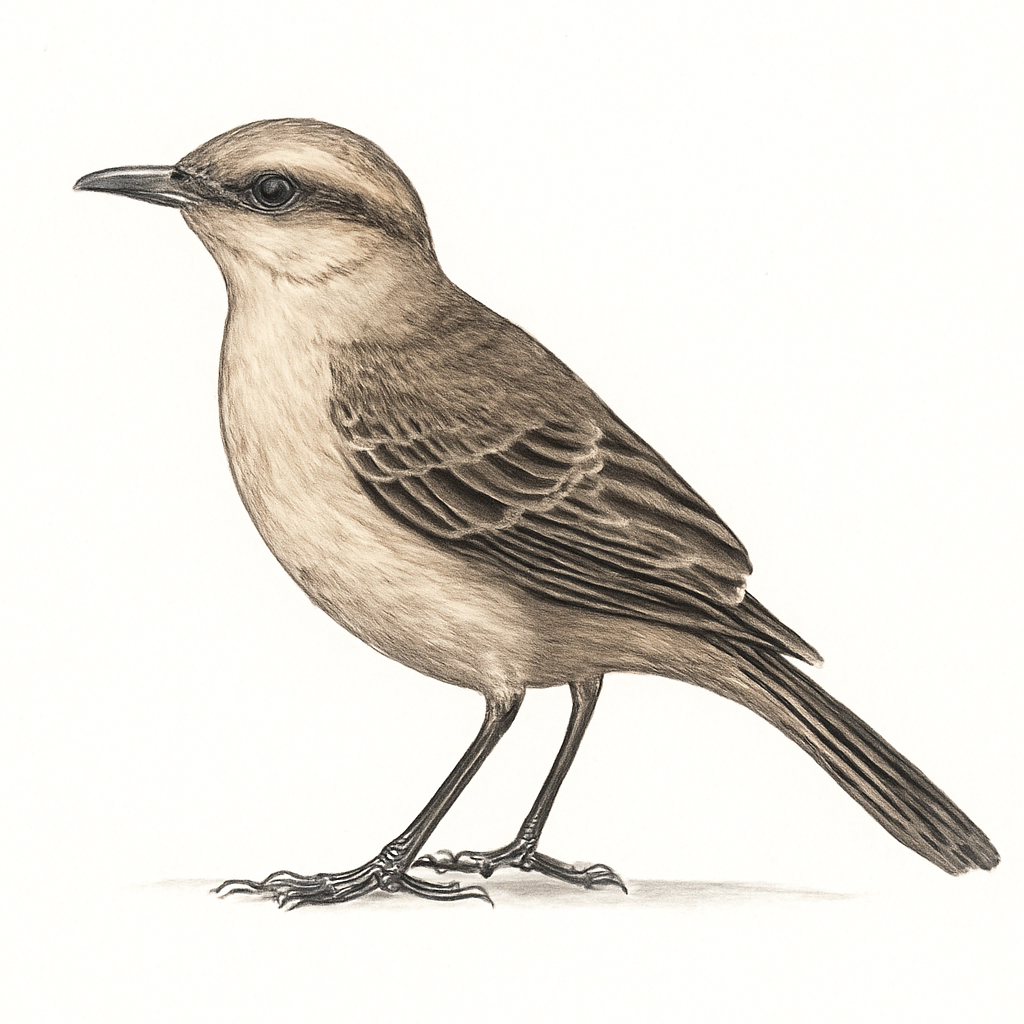
sabiá-do-campo
Mimus saturninus
Mockingbirds and Thrashers (Mimidae) · Passeriformes · Sabiá-do-campo e afins
Jogue um quiz com sabiá-do-campo e espécies parecidas
Ver todas as fotos, vídeos e sons
Revisado
O-o, os créditos de IA acabaram. Eu desenvolvo o Motmot no tempo livre, e agora não há financiamento. Se quiser ajudar a crescer, escreva para info@motmot.club.
Como identificar sabiá-do-campo
Escrevendo as notas de identificação…
Isso busca notas de identificação em fontes abertas e pede ao modelo que as escreva. Pode levar um minuto.
Entre para gerar notas de identificação desta ave.
Muitas vezes confundido com
Nos quizzes, os jogadores mais confundem sabiá-do-campo com estas aves—ou esta espécie foi escolhida por engano, ou o contrário.
| Espécies | Confusões |
|---|---|
| patagonian mockingbird Mimus patagonicus | 2 |
| catatau Campylorhynchus turdinus | 1 |
| calhandra-de-três-rabos Mimus triurus | 1 |
| tico-tico Zonotrichia capensis | 1 |
| sabiá-do-banhado Embernagra platensis | 1 |
Família
The mimids are the New World family of passerine birds, Mimidae, that includes thrashers, mockingbirds, tremblers, and the New World catbirds. As their name (Latin for "mimic") suggests, these birds are notable for their vocalization, especially some species' remarkable ability to mimic a wide variety of birds and other sounds heard outdoors. They are commonly referred to as mimic thrushes but are not, in fact, thrushes (which are members of family Turdidae).
Ordem
A passerine () is any bird of the order Passeriformes (; from Latin passer 'sparrow' and formis '-shaped'), which includes more than half of all bird species. Sometimes known as perching birds, passerines generally have an anisodactyl arrangement of their toes (three pointing forward and one back), which facilitates perching. With more than 140 families and some 6,500 identified species, Passeriformes is the largest order of birds and one of the most diverse clades of terrestrial vertebrates, representing 60% of …