

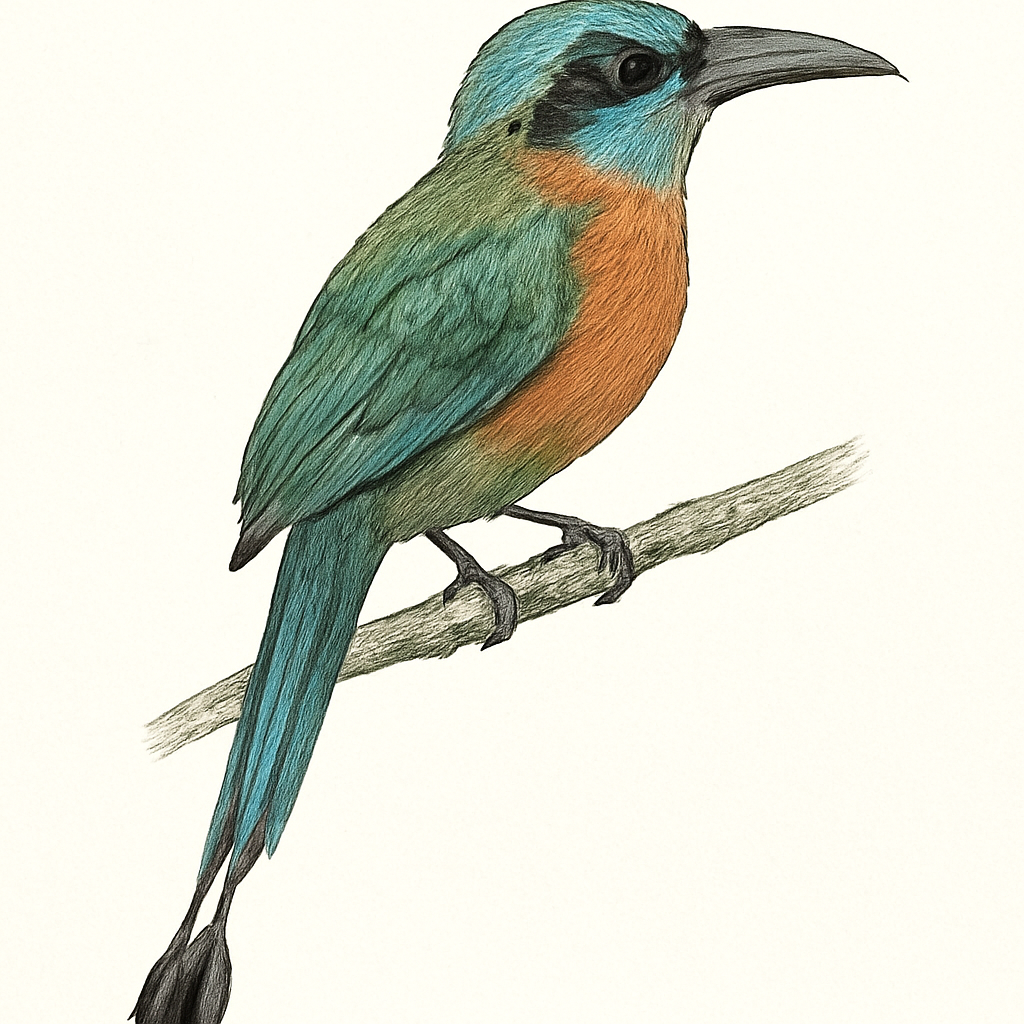
Jogue um quiz com udu-de-bico-largo e espécies parecidas
Ver todas as fotos, vídeos e sons
Revisão necessária
O Motmot é um projeto da comunidade, e muitas fotos ainda precisam de um olhar humano. Se você conhece esta ave, pode ajudar revisando as imagens.
O-o, os créditos de IA acabaram. Eu desenvolvo o Motmot no tempo livre, e agora não há financiamento. Se quiser ajudar a crescer, escreva para info@motmot.club.
Como identificar udu-de-bico-largo
Escrevendo as notas de identificação…
Isso busca notas de identificação em fontes abertas e pede ao modelo que as escreva. Pode levar um minuto.
Entre para gerar notas de identificação desta ave.
Muitas vezes confundido com
Nos quizzes, os jogadores mais confundem udu-de-bico-largo com estas aves—ou esta espécie foi escolhida por engano, ou o contrário.
| Espécies | Confusões |
|---|---|
| juruva-ruiva Baryphthengus martii | 13 |
| lesson's motmot Momotus lessonii | 3 |
| keel-billed motmot Electron carinatum | 3 |
| blue-throated motmot Aspatha gularis | 2 |
| udu-de-coroa-azul Momotus momota | 2 |
Família
The motmots or Momotidae are a family of birds in the order Coraciiformes, which also includes the kingfishers, bee-eaters and rollers. All extant motmots are restricted to woodland or forests in the Neotropics, and the largest are in Central America. They have a colourful plumage and a relatively heavy bill.
Ordem
The Coraciiformes are a group of usually colourful birds including the kingfishers, the bee-eaters, the rollers, the motmots, and the todies. They generally have syndactyly, with three forward-pointing toes (and toes 3 & 4 fused at their base), though in many kingfishers one of these is missing. In the past, Coraciiformes encompassed all anisodactyl (including syndactyl) members of the Cavitaves.