

Motmot

Westelijke orpheusgrasmus vs Afrikaanse woestijngrasmus

Curruca hortensis versus Curruca deserti

Speel een quiz met Westelijke orpheusgrasmus en Afrikaanse woestijngrasmus
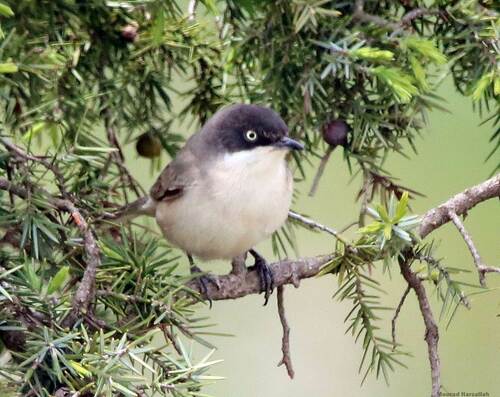
Westelijke orpheusgrasmus (Curruca hortensis) Westelijke orpheusgrasmus
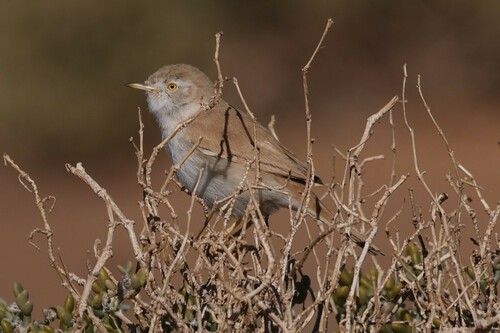
Afrikaanse woestijngrasmus (Curruca deserti) Afrikaanse woestijngrasmus

Media

Laden…

Kort gezegd

The most reliable way to separate Western Orphean Warbler from African Desert Warbler is by size and structure: Orphean is much larger and heavier, with a long, pointed bill and dark legs, while African Desert Warbler is tiny, with a delicate, short bill and yellowish legs. Adult male Orphean Warblers show a dark grey head with a black eye mask and a white throat, whereas African Desert Warbler is uniformly pale sandy-yellow above and whitish below, lacking any mask or strong head pattern. Eye color is also key: Orphean males have a striking white iris (dark in immatures), while African Desert Warbler always shows a yellow iris. Juvenile and female Orphean Warblers are duller but still larger and structurally different from the desert warbler. Habitat and context help: Orphean prefers open woodland, while African Desert Warbler is restricted to arid, open desert.

Herkenningstips

  1. Size is the first check: Orphean is much larger and bulkier than African Desert Warbler. If the bird looks small and delicate, suspect desert warbler.
  2. Bill and leg color: Orphean has a long, pointed bill and black legs; African Desert Warbler has a shorter, finer bill and yellowish legs. This is visible even in poor light.
  3. Head pattern (adult males): Orphean males have a dark grey head with a black eye mask and a white throat, giving a strong contrast. African Desert Warbler lacks any mask or strong head pattern—its face is plain sandy-buff.
  4. Iris color: Adult male Orphean Warbler has a white iris, while African Desert Warbler always has a yellow iris. Immature Orphean has a dark iris, so this works best for adult males.
  5. Overall coloration: Orphean is grey above and white below (males), or brownish-grey and buff below (females/immatures). African Desert Warbler is pale sandy-yellow above and whitish below, with a uniform, washed-out look.
  6. Underparts: Orphean's underparts are cleaner white in adults, while African Desert Warbler's are off-white to buff, blending smoothly with the upperparts.
  7. Sex and age: Female and immature Orphean Warblers are paler and less contrasting than males, but still larger and structurally different from African Desert Warbler. Their iris is dark, so do not rely on iris color for these ages.
  8. No rufous wing patches in either: Both lack rufous wing panels, so do not use this mark.
  9. Habitat context: Orphean is found in open woodland, gardens, or orchards—never in true desert. African Desert Warbler is only in arid, open desert. If you are in a desert, Orphean is very unlikely.
  10. Behavior: Orphean is more robust, often foraging higher and moving methodically. African Desert Warbler is quick, low, and agile in sparse vegetation.
  11. Voice: Orphean's song is a rich, warbling series with scolding notes. If you hear a complex warble, it is likely Orphean.
  12. Flight silhouette: Orphean appears longer and heavier in flight, with a longer tail and bill. African Desert Warbler is compact and short-tailed.
  13. When marks fail: In poor light or brief views, rely on size, bill/leg color, and habitat. If you cannot judge size, look for the head pattern and iris color (if adult male).

Grootte

Western Orphean Warbler is one of the largest Curruca warblers, measuring 15–16 cm in length and noticeably heavier and bulkier than African Desert Warbler. African Desert Warbler is the smallest in the genus, at just 11–12 cm and 7–10 g. In the field, Orphean looks long-bodied and robust, with a proportionally longer tail and bill, while African Desert Warbler appears small, slim, and delicate. Even at a distance or in flight, the size gap is obvious if you have a sense of scale.

Verenkleed

No distinctive juvenile or immature upperwing pattern is described for either species, so focus on overall coloration and head pattern. Adult male Western Orphean Warbler has a plain grey back, dark grey head with a black eye mask, white throat, and white iris. Females and immatures are paler, with a brownish tinge to the grey back, buff underparts, and a dark iris. African Desert Warbler of all ages and sexes is pale sandy yellow-brown above and whitish below, with no strong head pattern, and always has a yellow iris. The bill and legs are yellowish in African Desert Warbler, contrasting with the Orphean's black legs and longer, more pointed bill. Orphean's underparts are cleaner white in adults, while African Desert Warbler's are off-white to buff. In summary, Orphean is darker and more contrasting, especially on the head, while African Desert Warbler is uniform and pale.

Gedrag

Orphean Warbler typically forages in open deciduous woodland, often higher in bushes or trees, moving methodically and sometimes pausing to sing. African Desert Warbler is adapted to open, arid desert, often seen low to the ground or in sparse shrubs, moving quickly and unobtrusively. Orphean's larger size and more robust movements contrast with the smaller, more agile desert warbler.

Habitat

Habitat is a strong clue. Western Orphean Warbler breeds in open deciduous woodland, gardens, and sometimes orchards around the Mediterranean and into northwest Africa, never in true desert. African Desert Warbler is restricted to arid, open desert environments in North Africa, often where vegetation is sparse. If you find a pale Curruca in true desert, Orphean is highly unlikely.

Geluid

Western Orphean Warbler's song is a series of warbling 'liroo-liroo' and scolding notes, typical of large Sylvia/Curruca warblers. No vocal description is provided for African Desert Warbler here, but Orphean's song is richer and more varied than the simple, dry trills typical of desert-adapted warblers. Voice may help if you know the Orphean's distinctive warble.

Stuur een betere beschrijving

Gebruik dezelfde onderdelen als de vergelijking. Je tekst staat meteen live.

The most reliable way to separate Western Orphean Warbler from African Desert Warbler is by size and structure: Orphean is much larger and heavier, with a long, pointed bill and dark legs, while African Desert Warbler is tiny, with a delicate, short bill and yellowish legs. Adult male Orphean Warblers show a dark grey head with a black eye mask and a white throat, whereas African Desert Warbler is uniformly pale sandy-yellow above and whitish below, lacking any mask or strong head pattern. Eye color is also key: Orphean males have a striking white iris (dark in immatures), while African Desert Warbler always shows a yellow iris. Juvenile and female Orphean Warblers are duller but still larger and structurally different from the desert warbler. Habitat and context help: Orphean prefers open woodland, while African Desert Warbler is restricted to arid, open desert.

  1. Size is the first check: Orphean is much larger and bulkier than African Desert Warbler. If the bird looks small and delicate, suspect desert warbler.
  2. Bill and leg color: Orphean has a long, pointed bill and black legs; African Desert Warbler has a shorter, finer bill and yellowish legs. This is visible even in poor light.
  3. Head pattern (adult males): Orphean males have a dark grey head with a black eye mask and a white throat, giving a strong contrast. African Desert Warbler lacks any mask or strong head pattern—its face is plain sandy-buff.
  4. Iris color: Adult male Orphean Warbler has a white iris, while African Desert Warbler always has a yellow iris. Immature Orphean has a dark iris, so this works best for adult males.
  5. Overall coloration: Orphean is grey above and white below (males), or brownish-grey and buff below (females/immatures). African Desert Warbler is pale sandy-yellow above and whitish below, with a uniform, washed-out look.
  6. Underparts: Orphean's underparts are cleaner white in adults, while African Desert Warbler's are off-white to buff, blending smoothly with the upperparts.
  7. Sex and age: Female and immature Orphean Warblers are paler and less contrasting than males, but still larger and structurally different from African Desert Warbler. Their iris is dark, so do not rely on iris color for these ages.
  8. No rufous wing patches in either: Both lack rufous wing panels, so do not use this mark.
  9. Habitat context: Orphean is found in open woodland, gardens, or orchards—never in true desert. African Desert Warbler is only in arid, open desert. If you are in a desert, Orphean is very unlikely.
  10. Behavior: Orphean is more robust, often foraging higher and moving methodically. African Desert Warbler is quick, low, and agile in sparse vegetation.
  11. Voice: Orphean's song is a rich, warbling series with scolding notes. If you hear a complex warble, it is likely Orphean.
  12. Flight silhouette: Orphean appears longer and heavier in flight, with a longer tail and bill. African Desert Warbler is compact and short-tailed.
  13. When marks fail: In poor light or brief views, rely on size, bill/leg color, and habitat. If you cannot judge size, look for the head pattern and iris color (if adult male).

Western Orphean Warbler is one of the largest Curruca warblers, measuring 15–16 cm in length and noticeably heavier and bulkier than African Desert Warbler. African Desert Warbler is the smallest in the genus, at just 11–12 cm and 7–10 g. In the field, Orphean looks long-bodied and robust, with a proportionally longer tail and bill, while African Desert Warbler appears small, slim, and delicate. Even at a distance or in flight, the size gap is obvious if you have a sense of scale.

No distinctive juvenile or immature upperwing pattern is described for either species, so focus on overall coloration and head pattern. Adult male Western Orphean Warbler has a plain grey back, dark grey head with a black eye mask, white throat, and white iris. Females and immatures are paler, with a brownish tinge to the grey back, buff underparts, and a dark iris. African Desert Warbler of all ages and sexes is pale sandy yellow-brown above and whitish below, with no strong head pattern, and always has a yellow iris. The bill and legs are yellowish in African Desert Warbler, contrasting with the Orphean's black legs and longer, more pointed bill. Orphean's underparts are cleaner white in adults, while African Desert Warbler's are off-white to buff. In summary, Orphean is darker and more contrasting, especially on the head, while African Desert Warbler is uniform and pale.

Orphean Warbler typically forages in open deciduous woodland, often higher in bushes or trees, moving methodically and sometimes pausing to sing. African Desert Warbler is adapted to open, arid desert, often seen low to the ground or in sparse shrubs, moving quickly and unobtrusively. Orphean's larger size and more robust movements contrast with the smaller, more agile desert warbler.

Habitat is a strong clue. Western Orphean Warbler breeds in open deciduous woodland, gardens, and sometimes orchards around the Mediterranean and into northwest Africa, never in true desert. African Desert Warbler is restricted to arid, open desert environments in North Africa, often where vegetation is sparse. If you find a pale Curruca in true desert, Orphean is highly unlikely.

Western Orphean Warbler's song is a series of warbling 'liroo-liroo' and scolding notes, typical of large Sylvia/Curruca warblers. No vocal description is provided for African Desert Warbler here, but Orphean's song is richer and more varied than the simple, dry trills typical of desert-adapted warblers. Voice may help if you know the Orphean's distinctive warble.

Wijzigingen weggooien?

Je hebt niet-opgeslagen wijzigingen. Als je nu weggaat, gaan die verloren.

Westelijke orpheusgrasmus · Afrikaanse woestijngrasmus · Mijn lastige vogels