

Motmot

Dottergele wever vs Katangawever

Ploceus vitellinus versus Ploceus katangae

Speel een quiz met Dottergele wever en Katangawever
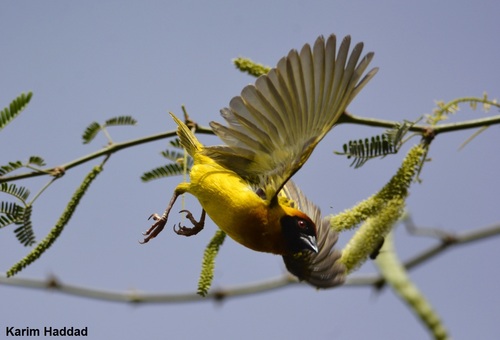
Dottergele wever (Ploceus vitellinus) Dottergele wever
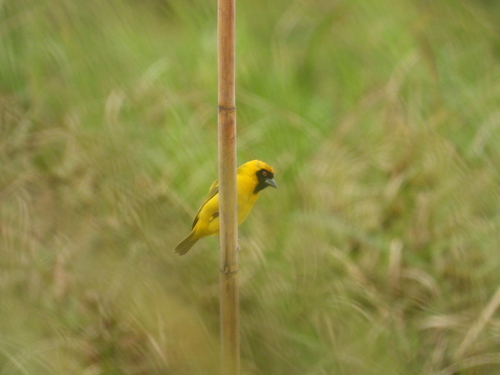
Katangawever (Ploceus katangae) Katangawever

Media

Laden…

Kort gezegd

The most reliable field separation between Vitelline Masked-Weaver and Katanga Masked-Weaver is geographic: Vitelline occurs in western, central, and eastern Africa, while Katanga is restricted to southeastern DRC and northern Zambia. In the field, structural differences are subtle, but adult male Katanga Masked-Weavers (especially the Upemba subspecies) have noticeably larger bills. Plumage differences are not detailed in available sources, so distinguishing immatures or non-breeding birds visually may be extremely challenging. Always consider location first, then look for bill size in adult males.

Herkenningstips

  1. Check your location first: If you are in western, central, or eastern Africa (outside southeastern DRC and northern Zambia), you are almost certainly seeing Vitelline Masked-Weaver. Katanga Masked-Weaver is restricted to southeastern DRC and northern Zambia.
  2. Bill size in adult males: Adult male Katanga Masked-Weavers, especially the Upemba subspecies, have a noticeably larger bill than Vitelline Masked-Weaver. This is the only structural difference noted in the sources.
  3. Subspecies caution: Within Katanga Masked-Weaver, the Upemba subspecies has a larger bill than the nominate Katanga, so bill size is most useful for separating Upemba from Vitelline.
  4. Plumage similarity: No reliable plumage differences are documented for any age or season. Immature, juvenile, and non-breeding birds are not safely separated by plumage in the field.
  5. No wing pattern clues: There are no described differences in upperwing or flight feather pattern for any age class.
  6. Sex and season: Since bill size is most useful in adult males, females and immatures of both species are likely indistinguishable in the field.
  7. Habitat overlap is minimal: The two species do not overlap in range, so confusion is most likely to occur in field guides or quizzes, not in the field.
  8. Behavior and jizz: Both species behave like typical weavers and show similar structure and movement; do not rely on behavior for separation.
  9. Voice: No vocal distinctions are provided in the available sources; do not use voice for separation.
  10. Quiz pitfalls: Most quiz mix-ups will be due to range confusion or subtle differences in bill size in adult males. Always check the distribution map first.
  11. If in doubt: If you cannot confidently judge bill size and are within the Katanga Masked-Weaver range, consider the possibility of either species only if you are near a range boundary, but default to the locally expected species.
  12. Photograph for expert review: If you encounter a masked-weaver in the Katanga region and are unsure, try to photograph the bill and head profile for later comparison.

Grootte

Both species are medium-sized weavers and appear similar in overall proportions. However, adult male Katanga Masked-Weavers, particularly the Upemba subspecies, have a distinctly larger bill than Vitelline Masked-Weaver. No other size differences are documented in the available sources.

Verenkleed

No specific details are provided in the sources regarding differences in juvenile, immature, or adult plumage between Vitelline and Katanga Masked-Weavers. There are no documented differences in upperwing pattern, flight feathers, or age-specific marks. This means that in non-adult or non-breeding plumages, reliable separation in the field may not be possible based on plumage alone.

Gedrag

Both species are typical weavers in their behavior, likely showing similar foraging, flocking, and nesting habits. No behavioral differences are documented that would help distinguish them in the field.

Habitat

Habitat preferences are not described in detail, but the key distinction is geographic: Vitelline Masked-Weaver is found across a broad swath of western, central, and eastern Africa, while Katanga Masked-Weaver is limited to the Luapula and Lualaba river regions in southeastern DRC and northern Zambia. If you are outside the Katanga range, you are almost certainly seeing Vitelline.

Stuur een betere beschrijving

Gebruik dezelfde onderdelen als de vergelijking. Je tekst staat meteen live.

The most reliable field separation between Vitelline Masked-Weaver and Katanga Masked-Weaver is geographic: Vitelline occurs in western, central, and eastern Africa, while Katanga is restricted to southeastern DRC and northern Zambia. In the field, structural differences are subtle, but adult male Katanga Masked-Weavers (especially the Upemba subspecies) have noticeably larger bills. Plumage differences are not detailed in available sources, so distinguishing immatures or non-breeding birds visually may be extremely challenging. Always consider location first, then look for bill size in adult males.

  1. Check your location first: If you are in western, central, or eastern Africa (outside southeastern DRC and northern Zambia), you are almost certainly seeing Vitelline Masked-Weaver. Katanga Masked-Weaver is restricted to southeastern DRC and northern Zambia.
  2. Bill size in adult males: Adult male Katanga Masked-Weavers, especially the Upemba subspecies, have a noticeably larger bill than Vitelline Masked-Weaver. This is the only structural difference noted in the sources.
  3. Subspecies caution: Within Katanga Masked-Weaver, the Upemba subspecies has a larger bill than the nominate Katanga, so bill size is most useful for separating Upemba from Vitelline.
  4. Plumage similarity: No reliable plumage differences are documented for any age or season. Immature, juvenile, and non-breeding birds are not safely separated by plumage in the field.
  5. No wing pattern clues: There are no described differences in upperwing or flight feather pattern for any age class.
  6. Sex and season: Since bill size is most useful in adult males, females and immatures of both species are likely indistinguishable in the field.
  7. Habitat overlap is minimal: The two species do not overlap in range, so confusion is most likely to occur in field guides or quizzes, not in the field.
  8. Behavior and jizz: Both species behave like typical weavers and show similar structure and movement; do not rely on behavior for separation.
  9. Voice: No vocal distinctions are provided in the available sources; do not use voice for separation.
  10. Quiz pitfalls: Most quiz mix-ups will be due to range confusion or subtle differences in bill size in adult males. Always check the distribution map first.
  11. If in doubt: If you cannot confidently judge bill size and are within the Katanga Masked-Weaver range, consider the possibility of either species only if you are near a range boundary, but default to the locally expected species.
  12. Photograph for expert review: If you encounter a masked-weaver in the Katanga region and are unsure, try to photograph the bill and head profile for later comparison.

Both species are medium-sized weavers and appear similar in overall proportions. However, adult male Katanga Masked-Weavers, particularly the Upemba subspecies, have a distinctly larger bill than Vitelline Masked-Weaver. No other size differences are documented in the available sources.

No specific details are provided in the sources regarding differences in juvenile, immature, or adult plumage between Vitelline and Katanga Masked-Weavers. There are no documented differences in upperwing pattern, flight feathers, or age-specific marks. This means that in non-adult or non-breeding plumages, reliable separation in the field may not be possible based on plumage alone.

Both species are typical weavers in their behavior, likely showing similar foraging, flocking, and nesting habits. No behavioral differences are documented that would help distinguish them in the field.

Habitat preferences are not described in detail, but the key distinction is geographic: Vitelline Masked-Weaver is found across a broad swath of western, central, and eastern Africa, while Katanga Masked-Weaver is limited to the Luapula and Lualaba river regions in southeastern DRC and northern Zambia. If you are outside the Katanga range, you are almost certainly seeing Vitelline.

Wijzigingen weggooien?

Je hebt niet-opgeslagen wijzigingen. Als je nu weggaat, gaan die verloren.

Dottergele wever · Katangawever · Mijn lastige vogels