

Motmot

Geelkopmees vs Veelkleurengors

Auriparus flaviceps versus Passerina versicolor

Speel een quiz met Geelkopmees en Veelkleurengors
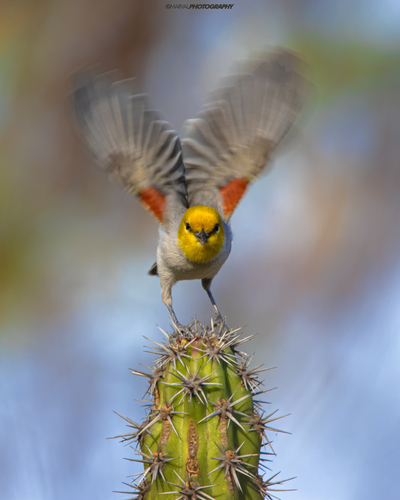
Geelkopmees (Auriparus flaviceps) Geelkopmees
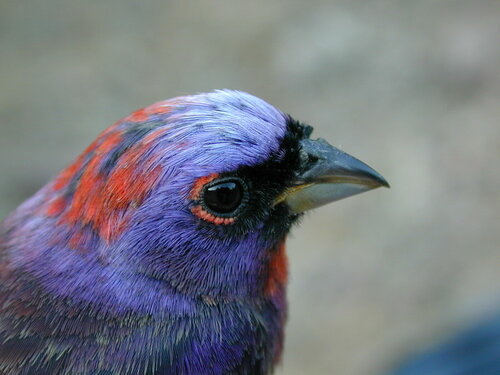
Veelkleurengors (Passerina versicolor) Veelkleurengors

Media

Laden…

Kort gezegd

The most reliable field mark to separate Verdin and Varied Bunting is the Verdin’s bright yellow head and rufous shoulder patch on adults, versus the Varied Bunting’s purple-red (male) or plain brown (female) plumage with no yellow. Juvenile Verdins are plain gray without yellow or rufous, but still lack the bunting’s stocky build and rounded bill. Verdins are tiny, slim, and grayish, while Varied Buntings are chunkier, with a short tail and rounded bill. If you see a small, sharp-billed gray bird with a yellow head, it’s a Verdin; a stocky, brown or purple-red bird with a rounded bill is a Varied Bunting. Juvenile confusion is possible, but structure and bill shape remain distinctive.

Herkenningstips

  1. Adult Verdin’s yellow head and rufous shoulder patch are unique; no Varied Bunting of any age or sex shows yellow or rufous on the head or wing.
  2. Juvenile Verdins are plain gray, lacking yellow and rufous, but still have a small, sharply pointed bill and slim build. Juvenile/female Varied Buntings are plain brown, with a rounded bill and stockier body.
  3. Bill shape is key: Verdins have a thin, sharply pointed bill (almost warbler-like), while Varied Buntings have a short, thick, rounded bill typical of seed-eating finches.
  4. Body structure: Verdins are tiny, slim, and active; Varied Buntings are chunkier, with a short tail and more compact appearance.
  5. Adult male Varied Buntings are purple-red with a bright red nape patch in breeding season—never gray or yellow. In fall, they become browner but retain a richer tone than any Verdin.
  6. Female Varied Buntings are plain light brown, lacking streaks or any yellow/rufous; they can be confused with juvenile Verdins, but bill and structure separate them.
  7. No distinctive upperwing pattern is described for either species in flight, but the Verdin’s rufous shoulder patch may be visible from the side in adults.
  8. Voice: Verdins give sharp, repetitive 'tschep' or 'chip' calls, often while foraging. Varied Buntings (not detailed here) typically have more musical, finch-like songs.
  9. Habitat context: Verdins favor open desert scrub and scattered brush; Varied Buntings prefer dense, thorny thickets, often near water.
  10. Behavior: Verdins are acrobatic, often hanging upside down; Varied Buntings move more deliberately and prefer to stay hidden.
  11. Size: Verdins are smaller and lighter than Varied Buntings, though there is some overlap in length; structure and mass are more telling than length alone.
  12. Seasonal confusion: In fall, male Varied Buntings become browner, but still lack yellow or rufous and remain more richly colored than any Verdin.
  13. Fledgling/female confusion: If you see a plain, small, grayish or brownish bird in desert scrub, check bill shape and structure—Verdin is slim and sharp-billed, bunting is chunky and rounded-billed.
  14. No streaking: Female Varied Buntings lack breast streaking, which helps separate them from other buntings but not from Verdins.
  15. If in doubt: Focus on bill shape (sharp vs. rounded), presence/absence of yellow and rufous, and overall jizz (slim and active vs. chunky and deliberate).

Grootte

Verdins are among the smallest North American passerines, measuring about 11 cm (4.5 in) in length. Varied Buntings are slightly larger, ranging from 11–14 cm (4.3–5.5 in) long, with a wingspan of 21 cm (8.3 in) and a body mass of about 13 g. The Verdin is noticeably slimmer and lighter, while the Varied Bunting is stockier and heavier for its length. In the field, Verdins appear more delicate and active, while Varied Buntings look more robust and compact.

Verenkleed

Juvenile Verdins are plain light gray, lacking both the yellow head and rufous shoulder patch seen in adults. This can make them superficially resemble female or immature Varied Buntings, which are also plain brownish, but the bunting never shows yellow or rufous at any age. Adult Verdins have a bright yellow head and a distinct rufous patch on the shoulder (lesser coverts), while adult male Varied Buntings are purple-red with a bright red nape patch in breeding season, turning browner in fall. Female Varied Buntings are plain light brown, lacking streaking and any yellow or rufous. The Verdin’s gray body and yellow head are unique; the bunting’s coloration is always more saturated or brownish, never gray and yellow. No distinctive upperwing pattern is described for either species in flight, but the Verdin’s rufous shoulder patch (in adults) may be visible from above or the side.

Gedrag

Verdins are active, acrobatic foragers, often seen moving quickly through brush and hanging upside down to glean insects. Their movements are reminiscent of titmice or kinglets. Varied Buntings are more likely to forage on the ground or in low brush, moving more deliberately and often staying hidden in dense thickets. Verdins are more likely to be seen in open, exposed situations, while Varied Buntings prefer to remain within cover. Flight of the Verdin is quick and direct; Varied Buntings have a more fluttery, undulating flight typical of small finches and buntings.

Habitat

Both species can be found in arid or semi-arid habitats, but Verdins are more strictly associated with desert scrub, open thorny brush, and mesquite, often away from water. Varied Buntings prefer denser, thorny thickets, scrubby woodlands, and areas near water, especially in overgrown clearings or thorn forests. If you’re in very open desert with scattered brush, Verdins are more likely; in dense, tangled thickets or near riparian areas, Varied Buntings are more probable.

Geluid

Verdins give sharp, repetitive 'tschep' or 'chip-chip-chip' calls, often in rapid staccato, and a 'gee-gee-gee-gee' alarm. Their calls are loud for their size and are frequently heard as they forage. Varied Bunting vocalizations are not detailed in the provided notes, but as a cardinalid, their song is typically more musical and complex than the Verdin’s simple calls. In general, if you hear a repeated, sharp, tit-like call, think Verdin; more elaborate, finch-like songs point to Varied Bunting.

Stuur een betere beschrijving

Gebruik dezelfde onderdelen als de vergelijking. Je tekst staat meteen live.

The most reliable field mark to separate Verdin and Varied Bunting is the Verdin’s bright yellow head and rufous shoulder patch on adults, versus the Varied Bunting’s purple-red (male) or plain brown (female) plumage with no yellow. Juvenile Verdins are plain gray without yellow or rufous, but still lack the bunting’s stocky build and rounded bill. Verdins are tiny, slim, and grayish, while Varied Buntings are chunkier, with a short tail and rounded bill. If you see a small, sharp-billed gray bird with a yellow head, it’s a Verdin; a stocky, brown or purple-red bird with a rounded bill is a Varied Bunting. Juvenile confusion is possible, but structure and bill shape remain distinctive.

  1. Adult Verdin’s yellow head and rufous shoulder patch are unique; no Varied Bunting of any age or sex shows yellow or rufous on the head or wing.
  2. Juvenile Verdins are plain gray, lacking yellow and rufous, but still have a small, sharply pointed bill and slim build. Juvenile/female Varied Buntings are plain brown, with a rounded bill and stockier body.
  3. Bill shape is key: Verdins have a thin, sharply pointed bill (almost warbler-like), while Varied Buntings have a short, thick, rounded bill typical of seed-eating finches.
  4. Body structure: Verdins are tiny, slim, and active; Varied Buntings are chunkier, with a short tail and more compact appearance.
  5. Adult male Varied Buntings are purple-red with a bright red nape patch in breeding season—never gray or yellow. In fall, they become browner but retain a richer tone than any Verdin.
  6. Female Varied Buntings are plain light brown, lacking streaks or any yellow/rufous; they can be confused with juvenile Verdins, but bill and structure separate them.
  7. No distinctive upperwing pattern is described for either species in flight, but the Verdin’s rufous shoulder patch may be visible from the side in adults.
  8. Voice: Verdins give sharp, repetitive 'tschep' or 'chip' calls, often while foraging. Varied Buntings (not detailed here) typically have more musical, finch-like songs.
  9. Habitat context: Verdins favor open desert scrub and scattered brush; Varied Buntings prefer dense, thorny thickets, often near water.
  10. Behavior: Verdins are acrobatic, often hanging upside down; Varied Buntings move more deliberately and prefer to stay hidden.
  11. Size: Verdins are smaller and lighter than Varied Buntings, though there is some overlap in length; structure and mass are more telling than length alone.
  12. Seasonal confusion: In fall, male Varied Buntings become browner, but still lack yellow or rufous and remain more richly colored than any Verdin.
  13. Fledgling/female confusion: If you see a plain, small, grayish or brownish bird in desert scrub, check bill shape and structure—Verdin is slim and sharp-billed, bunting is chunky and rounded-billed.
  14. No streaking: Female Varied Buntings lack breast streaking, which helps separate them from other buntings but not from Verdins.
  15. If in doubt: Focus on bill shape (sharp vs. rounded), presence/absence of yellow and rufous, and overall jizz (slim and active vs. chunky and deliberate).

Verdins are among the smallest North American passerines, measuring about 11 cm (4.5 in) in length. Varied Buntings are slightly larger, ranging from 11–14 cm (4.3–5.5 in) long, with a wingspan of 21 cm (8.3 in) and a body mass of about 13 g. The Verdin is noticeably slimmer and lighter, while the Varied Bunting is stockier and heavier for its length. In the field, Verdins appear more delicate and active, while Varied Buntings look more robust and compact.

Juvenile Verdins are plain light gray, lacking both the yellow head and rufous shoulder patch seen in adults. This can make them superficially resemble female or immature Varied Buntings, which are also plain brownish, but the bunting never shows yellow or rufous at any age. Adult Verdins have a bright yellow head and a distinct rufous patch on the shoulder (lesser coverts), while adult male Varied Buntings are purple-red with a bright red nape patch in breeding season, turning browner in fall. Female Varied Buntings are plain light brown, lacking streaking and any yellow or rufous. The Verdin’s gray body and yellow head are unique; the bunting’s coloration is always more saturated or brownish, never gray and yellow. No distinctive upperwing pattern is described for either species in flight, but the Verdin’s rufous shoulder patch (in adults) may be visible from above or the side.

Verdins are active, acrobatic foragers, often seen moving quickly through brush and hanging upside down to glean insects. Their movements are reminiscent of titmice or kinglets. Varied Buntings are more likely to forage on the ground or in low brush, moving more deliberately and often staying hidden in dense thickets. Verdins are more likely to be seen in open, exposed situations, while Varied Buntings prefer to remain within cover. Flight of the Verdin is quick and direct; Varied Buntings have a more fluttery, undulating flight typical of small finches and buntings.

Both species can be found in arid or semi-arid habitats, but Verdins are more strictly associated with desert scrub, open thorny brush, and mesquite, often away from water. Varied Buntings prefer denser, thorny thickets, scrubby woodlands, and areas near water, especially in overgrown clearings or thorn forests. If you’re in very open desert with scattered brush, Verdins are more likely; in dense, tangled thickets or near riparian areas, Varied Buntings are more probable.

Verdins give sharp, repetitive 'tschep' or 'chip-chip-chip' calls, often in rapid staccato, and a 'gee-gee-gee-gee' alarm. Their calls are loud for their size and are frequently heard as they forage. Varied Bunting vocalizations are not detailed in the provided notes, but as a cardinalid, their song is typically more musical and complex than the Verdin’s simple calls. In general, if you hear a repeated, sharp, tit-like call, think Verdin; more elaborate, finch-like songs point to Varied Bunting.

Wijzigingen weggooien?

Je hebt niet-opgeslagen wijzigingen. Als je nu weggaat, gaan die verloren.

Geelkopmees · Veelkleurengors · Mijn lastige vogels