

Zanggors vs Bruinkopkoevogel
Melospiza melodia versus Molothrus ater
Speel een quiz met Zanggors en Bruinkopkoevogel
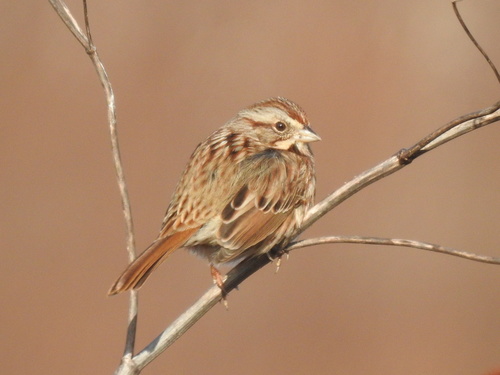 Zanggors
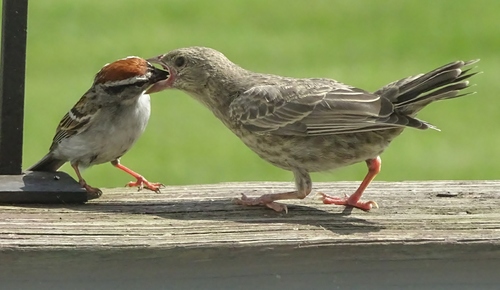 Bruinkopkoevogel
Kort gezegd
The most reliable field mark between Song Sparrow and Brown-headed Cowbird is overall structure and plumage: Song Sparrow is a slimmer, streaky brown bird with a rounded tail and a fine bill, while Brown-headed Cowbird is chunkier with a thick, finch-like bill and, in males, a glossy black body with a brown head. Female cowbirds can cause confusion, as they are drab and streaked, but they lack the Song Sparrow's crisp facial pattern and heavy breast streaking. In flight or perched, bill shape and body proportions are key. Juvenile and female cowbirds are most likely to be mistaken for Song Sparrows, especially at feeders or in open habitats.
Herkenningstips
- Bill shape is diagnostic: Song Sparrow has a slim, pointed bill typical of sparrows; Brown-headed Cowbird has a thick, conical bill reminiscent of a finch or blackbird. This is visible even at a distance and works for all ages and sexes.
- Male cowbirds are unmistakable: Glossy black body with a chocolate-brown head; no sparrow is this dark or glossy. If you see this, it's a male cowbird, not a Song Sparrow.
- Female and juvenile cowbirds are the main confusion risk: They are plain gray-brown with a pale throat and very fine, blurry streaking below. They lack the Song Sparrow's bold face pattern and heavy, crisp breast streaking.
- Song Sparrow always shows strong streaking: Look for heavy brown streaks on the underparts, often forming a central breast spot. Even in pale or dark subspecies, this streaking is present and much bolder than any cowbird.
- Facial pattern is key: Song Sparrow has a gray eyebrow, rufous crown stripe, and a contrasting face. Cowbirds have plain faces with little to no pattern.
- Tail shape differs: Song Sparrow has a long, rounded tail, often pumped or flicked. Cowbird's tail is shorter and more squared off.
- Overall shape and posture: Song Sparrow is slender, with a more horizontal posture. Cowbird is chunkier, with a thick neck and upright stance.
- Behavior at feeders: Cowbirds often arrive in groups and may dominate; Song Sparrows are solitary or in pairs and more cautious.
- Habitat clues: Song Sparrows prefer dense, brushy areas; cowbirds are more likely in open fields, lawns, or near livestock.
- Flight style: Song Sparrows fly with a series of short, bounding flights, often diving into cover. Cowbirds have a steadier, more direct flight.
- Juvenile confusion: Juvenile Song Sparrows look like adults but may be slightly duller; juvenile cowbirds are even plainer than females, with little pattern and a thick bill.
- Size impression: Cowbirds are noticeably bulkier and heavier than Song Sparrows, especially when seen together.
- No strong seasonal plumage change: Both species look similar year-round, but molt timing may make cowbirds look even duller in late summer.
- Mixed flocks: If you see a streaky bird in a flock of blackbirds or cowbirds, check the bill and face pattern—cowbirds may be present, but Song Sparrows rarely join these flocks.
- Voice (not detailed in sources): If heard, Song Sparrow's song is complex and musical, while cowbird calls are simpler and more metallic, but use this only as a supporting clue.
Grootte
Song Sparrow is noticeably lighter (24 g) than Brown-headed Cowbird (females averaging 38.8 g, males 49 g) [wikidata]. Cowbirds are also longer (16–22 cm) and have a broader wingspan (36 cm), giving them a stockier, more robust appearance compared to the slimmer, more delicate Song Sparrow. In mixed flocks, cowbirds often look bulkier and heavier-bodied, especially next to the more slender sparrow.
Verenkleed
No age-specific upperwing or flight pattern marks are described for either species, so focus is on overall plumage. Adult male cowbirds are unmistakable: glossy black with a rich brown head, never streaked. Female cowbirds are dull gray-brown with a pale throat and very fine, blurry streaking below, lacking any bold facial markings. Song Sparrows of all ages and sexes are brown above with heavy, crisp streaking on the underparts, usually converging into a central breast spot, and have a distinctive face pattern with a gray eyebrow and rufous crown stripe. Even the palest or darkest Song Sparrow subspecies retain these strong streaks and facial contrast. Juvenile cowbirds are similar to females but even plainer, while juvenile Song Sparrows are streaky and patterned much like adults.
Gedrag
Song Sparrows are often seen alone or in pairs, foraging low in dense vegetation or singing from exposed perches. Brown-headed Cowbirds, by contrast, are usually in small flocks, often with other blackbirds, and spend more time in open areas or following livestock. Cowbirds walk with a more upright, purposeful gait, while Song Sparrows tend to hop or make short flights between cover. At feeders, cowbirds may dominate or arrive in groups, while Song Sparrows are more solitary and skittish.
Habitat
Song Sparrows are adaptable but favor brushy edges, marshes, and thickets, often near water. Brown-headed Cowbirds prefer open or semiopen country, such as fields, pastures, and suburban lawns, and are less likely to be found in dense cover. Cowbirds are also more likely to be seen in association with livestock or in large, mixed blackbird flocks, while Song Sparrows are more secretive and tied to shrubby habitats.