

Robijnkeelkolibrie vs Rosse kolibrie
Archilochus colubris versus Selasphorus rufus
Speel een quiz met Robijnkeelkolibrie en Rosse kolibrie
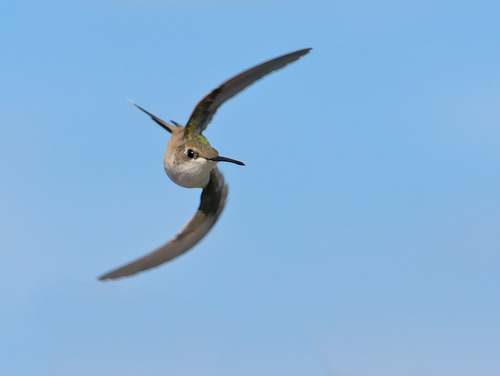 Robijnkeelkolibrie
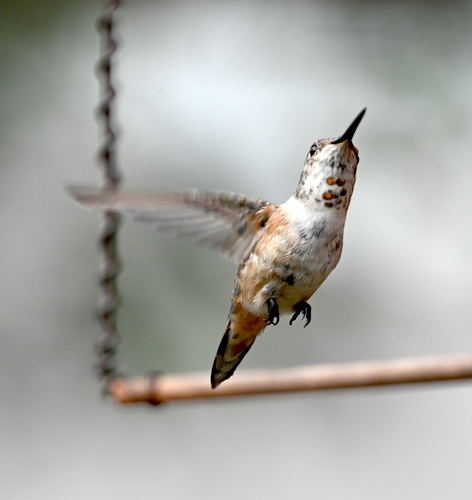 Rosse kolibrie
Kort gezegd
The most reliable field mark between Ruby-throated and Rufous Hummingbirds is the adult male throat color: Ruby-throated has a sharply defined, iridescent ruby-red gorget, while Rufous shows an orange-red gorget and extensive rufous on the body and tail. Females and immatures are trickier, but tail pattern and overall coloration help—Ruby-throated females have green backs and white-tipped, notched tails, while Rufous females show more rufous in the tail and flanks. In flight, look for the rufous wash on Rufous Hummingbird's tail and sides, absent in Ruby-throated. Structural differences are subtle, but Rufous tends to look stockier and slightly shorter-billed. Both species are small and fast, so careful attention to plumage and tail pattern is key, especially outside adult male plumage.
Herkenningstips
- Adult male gorget color: Ruby-throated shows a sharply defined, iridescent ruby-red throat patch; Rufous has an orange-red gorget. This is the most reliable mark for adult males.
- Body and tail color (adult males): Rufous males have extensive rufous on the face, flanks, and tail; Ruby-throated males lack rufous entirely and have a blackish, forked tail.
- Back color (adult males): Ruby-throated males are green above; Rufous males can be mostly rufous or have some green on the back/crown.
- Tail shape (males): Ruby-throated has a deeply forked tail; Rufous has a more squared or slightly notched tail with rufous bases and white tips.
- Female/immature tail pattern: Ruby-throated females have a notched tail with green, black, and white bands; Rufous females have a darker tail with rufous at the base and white tips.
- Flank color (females/immatures): Rufous females/immatures show a rufous wash on the flanks; Ruby-throated females/immatures are clean white below.
- Throat markings (females/immatures): Ruby-throated females have a plain or faintly streaked white throat; Rufous females may show some iridescent orange in the throat center.
- Juvenile confusion: Juvenile Ruby-throateds look like females but with heavier throat markings; juvenile Rufous are similar to females but always show some rufous in the tail/flanks.
- Bill structure: Both have long, straight, slender bills; Rufous may appear slightly shorter-billed, but this is subtle and unreliable in the field.
- Size/jizz: Both are tiny, but Rufous can appear stockier and more compact; Ruby-throated is slightly slimmer, especially in males.
- Aggression at feeders: Rufous is notably more aggressive and likely to chase other birds, especially in western North America.
- Geographic context: Ruby-throated is expected in the east; Rufous is a western breeder and migrant, but both can show up as vagrants.
- Courtship display: Ruby-throated males perform rapid horizontal arcs and dives; Rufous males are also active but more aggressive in defending territories.
- Flight appearance: No distinctive upperwing pattern is described for either species, so rely on tail and body color in flight.
- Allen's Hummingbird confusion: Female and immature Rufous are very similar to Allen's and can be misidentified, but Ruby-throated is not easily confused with Allen's due to lack of rufous in the plumage.
Grootte
Both species are tiny hummingbirds with overlapping size ranges. Rufous Hummingbird averages 7–9 cm in length and weighs 2–5 g [wikipedia], while Ruby-throated is similar, with males slightly smaller than females. Rufous may appear a bit stockier and shorter-billed, but these differences are subtle and not always reliable in the field. Wing length is slightly shorter in male Rufous than in females, but this is not easily seen without close comparison.
Verenkleed
-
Adult males: Ruby-throated males have a brilliant, sharply bordered ruby-red gorget and a forked black tail with a faint violet sheen, but no rufous on the body or tail. Rufous males have an orange-red gorget, extensive rufous on the face, flanks, and tail, and may have some green on the back or crown. Their tail is rufous with white tips and lacks the forked shape of Ruby-throated.
-
Females: Ruby-throated females are green above, white below, with a notched tail showing green, black, and white bands. Their throat is white, sometimes with faint dusky streaks. Rufous females are green above, white below, but have rufous at the base of the tail and flanks, and the tail is dark with white tips and a rufous base. They may show some iridescent orange in the throat center.
-
Juveniles/immatures: Ruby-throated juveniles resemble females but with heavier throat markings. Rufous juveniles and females are very similar and can be confused with Allen's Hummingbird, but always show some rufous in the tail and flanks. No distinctive upperwing pattern is described for either species in flight, so focus on tail and body coloration for immatures.
Gedrag
Both species are highly territorial, but Rufous Hummingbirds are especially aggressive, often dominating feeders and chasing off other birds. Males of both species defend flower-rich territories, but Rufous males are noted for their relentless pursuit of intruders. Ruby-throated males perform aerial courtship displays with rapid arcs and dives. Rufous males also display, but their aggression and willingness to take over feeding sites is more pronounced. Both species feed on nectar and catch insects on the wing, hovering with rapid wingbeats.
Habitat
Ruby-throated Hummingbirds are the default hummingbird in eastern North America, breeding in deciduous and mixed woodlands, gardens, and parks. Rufous Hummingbirds breed in the west, especially in the Pacific Northwest and Rockies, and migrate through western and central North America. Rufous is rare in the east except as a migrant or vagrant, so location can help but is not foolproof, especially in migration or at feeders.