

Groene zanger vs Nashvillezanger
Leiothlypis celata versus Leiothlypis ruficapilla
Speel een quiz met Groene zanger en Nashvillezanger
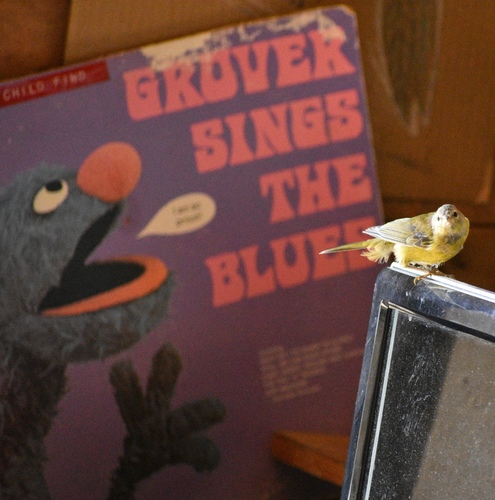 Groene zanger
 Nashvillezanger
Kort gezegd
The most reliable field mark to separate Orange-crowned Warbler from Nashville Warbler is the eye ring: Nashville shows a bold, complete white eye ring, while Orange-crowned has only a faint, broken eye ring. In all ages and seasons, Nashville also has a distinct gray head that contrasts with its olive-green back (especially in the eastern subspecies), while Orange-crowned is more uniformly olive-gray above. Both species lack wing bars and have thin, pointed bills, so focus on the face pattern and head color. Immature and female birds can be especially confusing, but the eye ring and head contrast remain the best clues.
Herkenningstips
- Eye ring: Nashville Warbler always shows a bold, complete white eye ring in all ages and sexes; Orange-crowned Warbler has only a faint, broken eye ring. This is the single most reliable field mark.
- Head color and contrast: Nashville Warbler (especially eastern subspecies) has a gray head that contrasts sharply with its olive-green back. Orange-crowned Warbler is more uniformly olive-gray above, with little contrast between head and back.
- Face pattern: Nashville's face is clean with a strong eye ring, while Orange-crowned's face is plainer, with only a faint supercilium and broken eye ring.
- Underparts: Nashville Warbler shows bright yellow throat and breast with a white belly; Orange-crowned is yellowish below, often with faint streaking, and lacks the sharply defined white belly.
- Crown patch: Both species have a colored crown patch (orange in Orange-crowned, rusty in Nashville males), but it is rarely visible and should not be used for field ID.
- Wing bars: Both species lack wing bars at all ages, so this is not useful for separation.
- Bill: Both have thin, pointed bills of similar shape and color; not a separator.
- Tail behavior: Nashville Warbler frequently bobs or flicks its tail while foraging; Orange-crowned does this less often. Use this as a supporting mark.
- Sex and age: Females and immatures of both species are duller, but the eye ring and head contrast remain reliable.
- Western vs. Eastern birds: Western Orange-crowned Warblers are yellower overall, but still lack the strong head contrast and eye ring of Nashville. Western Nashville Warblers (Calaveras) have less contrast between head and back, but the eye ring remains strong.
- Habitat and range: Both species overlap widely in migration and winter, so do not rely on location alone.
- Voice: Orange-crowned's song is a descending trill; Nashville's voice is not described here, so do not use song for separation.
- Plumage pitfalls: In poor light or at a distance, Orange-crowned can look very plain and may be mistaken for a dull Nashville. Always check for the eye ring and head contrast first.
- Flight views: No distinctive upperwing or flight marks are described for either species; rely on face and head pattern even in brief views.
- Overall impression: Nashville Warbler appears brighter and more sharply marked, especially around the face, while Orange-crowned is plainer and more subdued.
Grootte
Both species are small warblers with similar proportions and structure. Nashville Warbler averages about 8.8 g in mass [wikidata], which is typical for small warblers; Orange-crowned's mass is not specified here but is very similar. Length and wingspan overlap considerably (Nashville: 11–13 cm length, 17–20 cm wingspan [wikipedia]). In the field, size is not a reliable separator between these two.
Verenkleed
No age-specific upperwing pattern or flight marks are described for either species, and both lack wing bars at all ages. For all ages and sexes, focus on the face and head: Nashville Warbler always shows a strong, complete white eye ring and a gray head that contrasts with a greenish back (especially in eastern birds), while Orange-crowned Warbler has only a faint, broken eye ring and a more uniform olive-gray upperpart. Both species have yellowish underparts, but Orange-crowned's are more muted and often faintly streaked, while Nashville's are brighter yellow on the throat and breast with a white belly. The orange or rusty crown patch in both species is rarely visible and should not be relied on. Females and immatures of both are duller, but the eye ring and head contrast remain good field marks.
Gedrag
Nashville Warbler frequently flicks or bobs its tail while foraging, a behavior less typical of Orange-crowned Warbler. Nashville often joins mixed-species flocks in winter and forages by gleaning in lower shrubs and trees. Orange-crowned's foraging behavior is not described here, but both are active, insectivorous warblers. Behavioral differences are subtle and best used in combination with plumage marks.
Habitat
Both species overlap broadly in migration and wintering grounds, and both breed in northern and western North America. Nashville Warbler breeds in northern and western US and southern Canada, winters further south into Mexico and Central America. Orange-crowned Warbler's habitat is not detailed here, but both can be found in similar shrubby or woodland habitats during migration. Habitat is not a reliable separator where ranges overlap.
Geluid
Orange-crowned Warbler gives a descending trill for its song and a high chip call. Nashville Warbler's voice is not described in these notes. Song and call are not reliable for separation based on this information.