
Motmot

Madagaskarbuizerd vs Arendbuizerd

Buteo brachypterus versus Buteo rufinus

Speel een quiz met Madagaskarbuizerd en Arendbuizerd
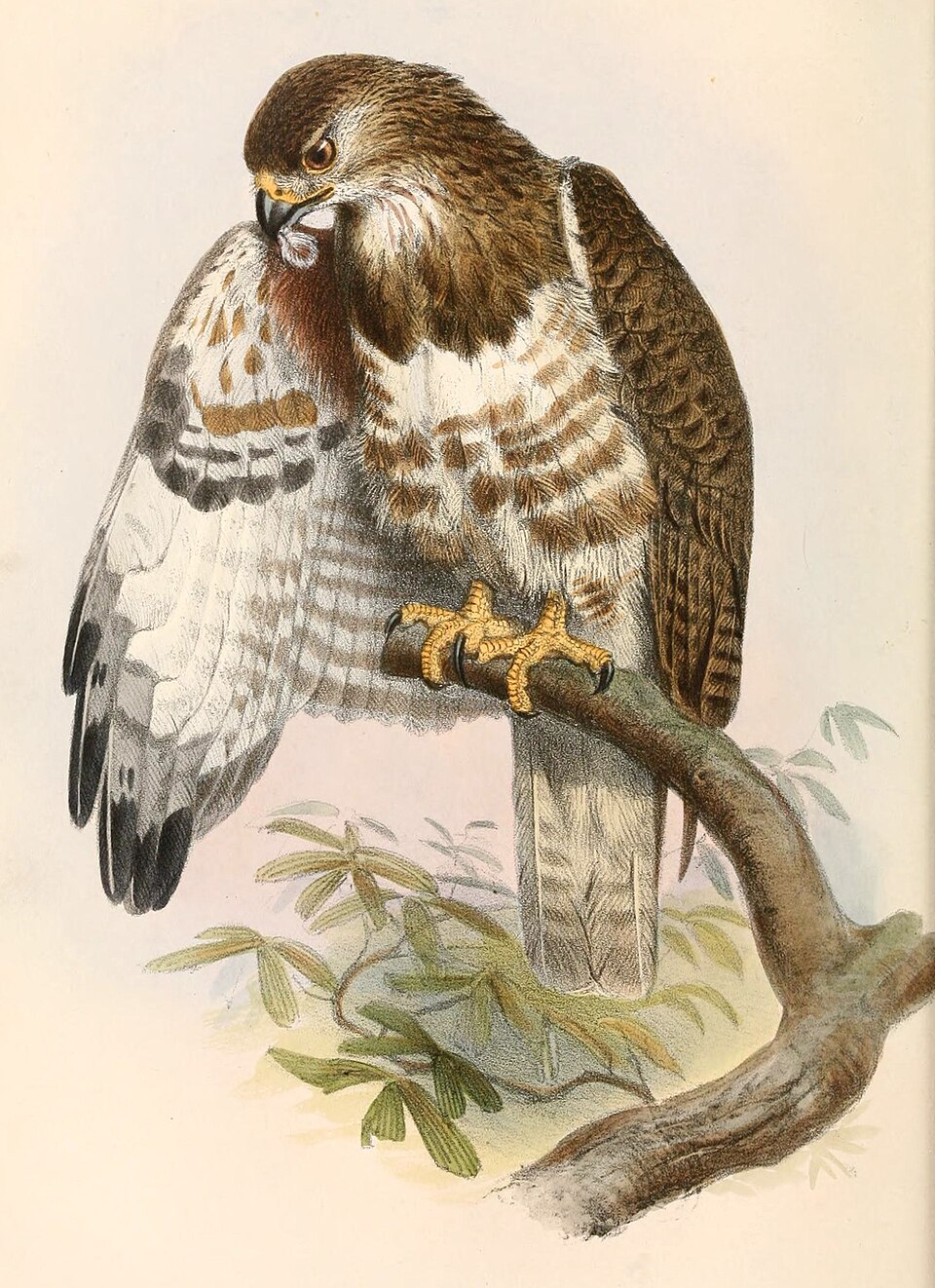
Madagaskarbuizerd (Buteo brachypterus) Madagaskarbuizerd
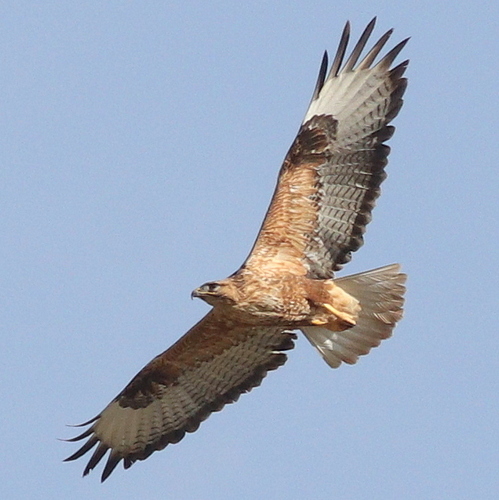
Arendbuizerd (Buteo rufinus) Arendbuizerd

Media

Laden…

Kort gezegd

The most reliable field mark to separate Madagascar Buzzard from Long-legged Buzzard is the head and underpart pattern: Madagascar Buzzard shows a dark grey head with a contrasting white breast patch, while Long-legged Buzzard (especially pale morphs) has a pale, sandy or rufous head and a more uniformly pale breast with fine streaks. Juvenile Long-legged Buzzards have distinctive neat pale edging on the upperwing coverts and a pale tail with faint bars, while Madagascar Buzzard juveniles are less well described but lack these features. Structurally, Long-legged Buzzard is larger, longer-winged, and longer-legged, often appearing bulkier and more eagle-like both perched and in flight. Madagascar Buzzard is endemic to Madagascar and never overlaps in range with Long-legged Buzzard, which is widespread across Eurasia and North Africa.

Herkenningstips

  1. Juvenile upperwing pattern: Juvenile Long-legged Buzzards show neat pale edging on the greater and median upperwing coverts, creating a distinctive panel in flight; Madagascar Buzzard juveniles lack this feature (works for birds in first two years).
  2. Juvenile tail pattern: Juvenile Long-legged Buzzards have a pale tail base with faint brown bars, often darkening toward the tip; Madagascar Buzzard juveniles are not described as having this pattern.
  3. Adult head color: Madagascar Buzzard adults have a dark grey head, while Long-legged Buzzard adults (especially pale morphs) have a pale sandy or rufous head, sometimes with a dark nape or eye-stripe.
  4. Breast and underparts: Madagascar Buzzard shows a white breast patch contrasting with a darker head and brown-spotted vent/thighs; Long-legged Buzzard (pale morph) has a pale, often streaked breast with less contrast to the head, and rufous or ochraceous belly/flanks.
  5. Tail pattern: Madagascar Buzzard has a tail with broad brownish-black bars; Long-legged Buzzard (pale/rufous morphs) often shows a rufous-orange or greyish tail, sometimes with faint or broad subterminal bands, but not as regularly barred as Madagascar Buzzard.
  6. Dark morphs: Long-legged Buzzard dark morphs are all blackish-brown to black with a grey to brown-grey tail and a broad subterminal band; Madagascar Buzzard does not have a comparable all-dark morph.
  7. Eye color: Adult Madagascar Buzzard has yellow eyes; adult Long-legged Buzzard has very dark brown eyes. Juvenile Long-legged Buzzards have pale grey to yellowish eyes that darken with age.
  8. Bill and cere: Madagascar Buzzard has a black bill with a greyish-blue cere; Long-legged Buzzard has a relatively large bill and dull yellow cere.
  9. Leg color: Both species have yellowish legs, but Long-legged Buzzard's are especially long and robust.
  10. Structure and posture: Long-legged Buzzard is bulkier, with longer wings and tail, and longer legs, often perching very upright and exposed; Madagascar Buzzard is more compact and perches less openly.
  11. Flight silhouette: Long-legged Buzzard appears more eagle-like, with a protruding head, long broad wings, and a long, rounded tail; Madagascar Buzzard is more typical Buteo in shape, with shorter wings and tail.
  12. Ground behavior: Long-legged Buzzard often stands or walks on the ground, sometimes with a waddling gait; Madagascar Buzzard is not noted for this behavior.
  13. Range: Madagascar Buzzard is only found in Madagascar; any Buteo seen outside Madagascar in Eurasia, North Africa, or the Indian subcontinent is Long-legged Buzzard.
  14. Plumage variability: Both species are variable, but Long-legged Buzzard shows a wider range of morphs (pale, intermediate, rufous, dark), while Madagascar Buzzard is variable mainly in the extent of dark and pale areas, not in overall morph.
  15. Perching sites: Long-legged Buzzard favors prominent, open perches (rocks, crags, pylons); Madagascar Buzzard is less likely to perch so openly.

Grootte

Long-legged Buzzard is one of the largest Buteos, noticeably bigger and bulkier than Madagascar Buzzard. It has a relatively large bill, long wings, a long tail, and especially long legs with powerful feet. Madagascar Buzzard is a typical medium-sized Buteo, smaller and less robust overall. In direct comparison, Long-legged Buzzard will appear longer-winged and longer-tailed, with a more prominent bill and legs, while Madagascar Buzzard is more compact and shorter-legged. [wikipedia]

Verenkleed

Juvenile Long-legged Buzzards, regardless of morph, show neat pale edging on the upperwing coverts and a pale tail with faint brown bars, which is a key separation from Madagascar Buzzard juveniles, which are not described as having these features. Adult Madagascar Buzzard is variable but typically has a dark grey head, a white breast patch, and brownish-white vent and thighs with brown spotting; the tail is marked with broad brownish-black bars. Adult Long-legged Buzzard is highly variable: pale morphs have a plain pale sandy or rufous head, a pale breast with fine streaks, and a rufous-orange tail; intermediate and rufous morphs are richer and more ochraceous, with more patterned breasts and sometimes a greyish, banded tail; dark morphs are all blackish-brown with a grey to brown-grey tail with a broad subterminal band. Juvenile Long-legged Buzzards are more streaky on the head and breast, with a tail that is pale at the base and darkens outward, showing irregular faint bars. Eye color also differs: adult Madagascar Buzzard has yellow eyes, while adult Long-legged Buzzard has very dark brown eyes; juveniles of Long-legged Buzzard have pale grey to greyish-yellow eyes that darken with age.

Gedrag

Long-legged Buzzard often perches very openly and upright on rocks, crags, pylons, or utility poles, and is frequently seen standing or walking on the ground, sometimes with a waddling gait. It can appear sluggish and tends to choose prominent vantage points. Madagascar Buzzard's behavior is less specifically described, but as a typical Buteo, it is likely to perch in trees or on less exposed perches and is not noted for the same ground-walking or open-perching habits as Long-legged Buzzard.

Habitat

Madagascar Buzzard is endemic to Madagascar and does not occur elsewhere. Long-legged Buzzard is found across Eurasia, North Africa, and parts of East Africa and the Indian subcontinent, never in Madagascar. Thus, any wild bird seen in Madagascar is a Madagascar Buzzard, while Long-legged Buzzard is found in open country, steppe, and semi-desert regions of its wide range.

Stuur een betere beschrijving

Gebruik dezelfde onderdelen als de vergelijking. Je tekst staat meteen live.

The most reliable field mark to separate Madagascar Buzzard from Long-legged Buzzard is the head and underpart pattern: Madagascar Buzzard shows a dark grey head with a contrasting white breast patch, while Long-legged Buzzard (especially pale morphs) has a pale, sandy or rufous head and a more uniformly pale breast with fine streaks. Juvenile Long-legged Buzzards have distinctive neat pale edging on the upperwing coverts and a pale tail with faint bars, while Madagascar Buzzard juveniles are less well described but lack these features. Structurally, Long-legged Buzzard is larger, longer-winged, and longer-legged, often appearing bulkier and more eagle-like both perched and in flight. Madagascar Buzzard is endemic to Madagascar and never overlaps in range with Long-legged Buzzard, which is widespread across Eurasia and North Africa.

  1. Juvenile upperwing pattern: Juvenile Long-legged Buzzards show neat pale edging on the greater and median upperwing coverts, creating a distinctive panel in flight; Madagascar Buzzard juveniles lack this feature (works for birds in first two years).
  2. Juvenile tail pattern: Juvenile Long-legged Buzzards have a pale tail base with faint brown bars, often darkening toward the tip; Madagascar Buzzard juveniles are not described as having this pattern.
  3. Adult head color: Madagascar Buzzard adults have a dark grey head, while Long-legged Buzzard adults (especially pale morphs) have a pale sandy or rufous head, sometimes with a dark nape or eye-stripe.
  4. Breast and underparts: Madagascar Buzzard shows a white breast patch contrasting with a darker head and brown-spotted vent/thighs; Long-legged Buzzard (pale morph) has a pale, often streaked breast with less contrast to the head, and rufous or ochraceous belly/flanks.
  5. Tail pattern: Madagascar Buzzard has a tail with broad brownish-black bars; Long-legged Buzzard (pale/rufous morphs) often shows a rufous-orange or greyish tail, sometimes with faint or broad subterminal bands, but not as regularly barred as Madagascar Buzzard.
  6. Dark morphs: Long-legged Buzzard dark morphs are all blackish-brown to black with a grey to brown-grey tail and a broad subterminal band; Madagascar Buzzard does not have a comparable all-dark morph.
  7. Eye color: Adult Madagascar Buzzard has yellow eyes; adult Long-legged Buzzard has very dark brown eyes. Juvenile Long-legged Buzzards have pale grey to yellowish eyes that darken with age.
  8. Bill and cere: Madagascar Buzzard has a black bill with a greyish-blue cere; Long-legged Buzzard has a relatively large bill and dull yellow cere.
  9. Leg color: Both species have yellowish legs, but Long-legged Buzzard's are especially long and robust.
  10. Structure and posture: Long-legged Buzzard is bulkier, with longer wings and tail, and longer legs, often perching very upright and exposed; Madagascar Buzzard is more compact and perches less openly.
  11. Flight silhouette: Long-legged Buzzard appears more eagle-like, with a protruding head, long broad wings, and a long, rounded tail; Madagascar Buzzard is more typical Buteo in shape, with shorter wings and tail.
  12. Ground behavior: Long-legged Buzzard often stands or walks on the ground, sometimes with a waddling gait; Madagascar Buzzard is not noted for this behavior.
  13. Range: Madagascar Buzzard is only found in Madagascar; any Buteo seen outside Madagascar in Eurasia, North Africa, or the Indian subcontinent is Long-legged Buzzard.
  14. Plumage variability: Both species are variable, but Long-legged Buzzard shows a wider range of morphs (pale, intermediate, rufous, dark), while Madagascar Buzzard is variable mainly in the extent of dark and pale areas, not in overall morph.
  15. Perching sites: Long-legged Buzzard favors prominent, open perches (rocks, crags, pylons); Madagascar Buzzard is less likely to perch so openly.

Long-legged Buzzard is one of the largest Buteos, noticeably bigger and bulkier than Madagascar Buzzard. It has a relatively large bill, long wings, a long tail, and especially long legs with powerful feet. Madagascar Buzzard is a typical medium-sized Buteo, smaller and less robust overall. In direct comparison, Long-legged Buzzard will appear longer-winged and longer-tailed, with a more prominent bill and legs, while Madagascar Buzzard is more compact and shorter-legged. [wikipedia]

Juvenile Long-legged Buzzards, regardless of morph, show neat pale edging on the upperwing coverts and a pale tail with faint brown bars, which is a key separation from Madagascar Buzzard juveniles, which are not described as having these features. Adult Madagascar Buzzard is variable but typically has a dark grey head, a white breast patch, and brownish-white vent and thighs with brown spotting; the tail is marked with broad brownish-black bars. Adult Long-legged Buzzard is highly variable: pale morphs have a plain pale sandy or rufous head, a pale breast with fine streaks, and a rufous-orange tail; intermediate and rufous morphs are richer and more ochraceous, with more patterned breasts and sometimes a greyish, banded tail; dark morphs are all blackish-brown with a grey to brown-grey tail with a broad subterminal band. Juvenile Long-legged Buzzards are more streaky on the head and breast, with a tail that is pale at the base and darkens outward, showing irregular faint bars. Eye color also differs: adult Madagascar Buzzard has yellow eyes, while adult Long-legged Buzzard has very dark brown eyes; juveniles of Long-legged Buzzard have pale grey to greyish-yellow eyes that darken with age.

Long-legged Buzzard often perches very openly and upright on rocks, crags, pylons, or utility poles, and is frequently seen standing or walking on the ground, sometimes with a waddling gait. It can appear sluggish and tends to choose prominent vantage points. Madagascar Buzzard's behavior is less specifically described, but as a typical Buteo, it is likely to perch in trees or on less exposed perches and is not noted for the same ground-walking or open-perching habits as Long-legged Buzzard.

Madagascar Buzzard is endemic to Madagascar and does not occur elsewhere. Long-legged Buzzard is found across Eurasia, North Africa, and parts of East Africa and the Indian subcontinent, never in Madagascar. Thus, any wild bird seen in Madagascar is a Madagascar Buzzard, while Long-legged Buzzard is found in open country, steppe, and semi-desert regions of its wide range.

Wijzigingen weggooien?

Je hebt niet-opgeslagen wijzigingen. Als je nu weggaat, gaan die verloren.

Madagaskarbuizerd · Arendbuizerd · Mijn lastige vogels