

Motmot

Kleine honingspeurder vs Reuzenekstertje

Indicator minor versus Spermestes fringilloides

Speel een quiz met Kleine honingspeurder en Reuzenekstertje
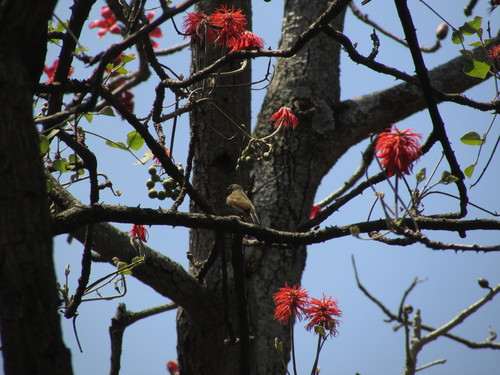
Kleine honingspeurder (Indicator minor) Kleine honingspeurder
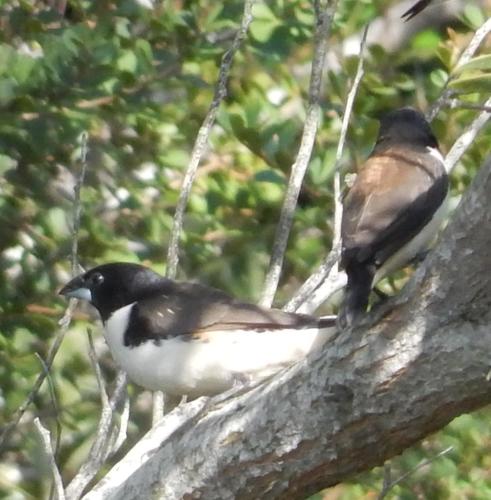
Reuzenekstertje (Spermestes fringilloides) Reuzenekstertje

Media

Laden…

Kort gezegd

The most reliable field mark to separate Lesser Honeyguide from Magpie Mannikin is overall structure and bill shape: honeyguides have a slender, slightly decurved bill and a more elongated body, while mannikins are compact finches with a short, conical bill. Immature and adult plumages are not described in detail for either species in the sources, so focus on silhouette and bill. Mannikins are often seen in small flocks in grassy or shrubby habitats, while honeyguides are usually solitary or in pairs and may be seen near woodlands or following other birds. If you see a small, chunky bird with a thick finch bill, it's a Magpie Mannikin; a slimmer bird with a pointed bill is a Lesser Honeyguide.

Herkenningstips

  1. Bill shape is key: Lesser Honeyguide has a slender, slightly decurved bill; Magpie Mannikin has a short, thick, conical finch bill. This is the most reliable field mark at any age.
  2. Body structure: Honeyguides are longer-bodied and more slender, with a proportionally longer tail. Mannikins are compact, round-bodied, and short-tailed.
  3. Plumage contrast: If seen well, Magpie Mannikin shows bold black-and-white (magpie-like) plumage, especially on the head and underparts. Lesser Honeyguide is generally duller and lacks sharp contrast, but this is not always visible in field conditions.
  4. Flocking behavior: Mannikins are usually in small, tight flocks, especially when feeding. Honeyguides are almost always solitary or in pairs.
  5. Habitat context: Mannikins prefer open grassland, shrubby areas, and forest edges; honeyguides are more likely in woodlands or near large trees.
  6. Feeding behavior: Mannikins feed on the ground or low in vegetation, often hopping or clinging to grass stems. Honeyguides forage higher in trees and may be seen following other birds.
  7. Flight style: Mannikins have a rapid, bounding flight typical of finches. Honeyguides have a more direct, undulating flight.
  8. Voice: Not described in the sources, so not reliable for this pair.
  9. Season and sex: No strong seasonal or sexual dimorphism described for either species in the sources; do not rely on this.
  10. Juvenile/immature marks: No age-specific flight or wing pattern differences described for either species in the sources; focus on structure and bill for all ages.
  11. Pitfall—distance views: At a distance, both species may appear as small, nondescript birds. Use bill shape and flocking behavior for best separation.
  12. Pitfall—poor light: In shadow or backlight, plumage contrast may be lost. Again, rely on structure and bill.
  13. Context—host species: If seen near barbet or woodpecker nests, consider honeyguide; if feeding with other estrildid finches, consider mannikin.
  14. Geographic overlap: Both species can occur in the same general region, so do not use range alone for separation.
  15. Summary tip: If you see a small, chunky, thick-billed bird in a flock, it's almost certainly a Magpie Mannikin; a slender, solitary, pointed-billed bird is a Lesser Honeyguide.

Grootte

Lesser Honeyguide is slightly heavier (26 g) than most estrildid finches, but both species are small birds and may appear similar in size at a distance. The honeyguide's elongated body and longer tail can make it look a bit larger and more slender than the compact, round-bodied Magpie Mannikin. Without direct comparison, size alone is not a reliable separator.

Verenkleed

No detailed age-specific or flight plumage patterns are provided for either species in the sources. Therefore, plumage differences are not the primary field marks for separation. Focus instead on structure and bill shape. If seen well, Magpie Mannikin typically shows a bold black-and-white pattern (hence 'magpie'), while Lesser Honeyguide is generally duller and less contrasting, but this is not always visible in poor light or at a distance.

Gedrag

Lesser Honeyguides are often solitary or in pairs and may be seen moving quietly through woodlands, sometimes following other birds to parasitize their nests. Magpie Mannikins are more likely to be seen in small, active flocks, often feeding on grass seeds or low vegetation. The mannikin's behavior is more social and terrestrial, while honeyguides are more arboreal and secretive.

Habitat

Both species occur in sub-Saharan Africa, but Magpie Mannikin prefers subtropical or tropical moist shrubland, forest edges, and dry grassland. Lesser Honeyguide is more often found in woodlands and areas with suitable host nests (barbets, woodpeckers, starlings). If you are in open grassland or shrubby areas, Magpie Mannikin is more likely; in wooded areas, especially near barbet activity, Lesser Honeyguide is more probable.

Stuur een betere beschrijving

Gebruik dezelfde onderdelen als de vergelijking. Je tekst staat meteen live.

The most reliable field mark to separate Lesser Honeyguide from Magpie Mannikin is overall structure and bill shape: honeyguides have a slender, slightly decurved bill and a more elongated body, while mannikins are compact finches with a short, conical bill. Immature and adult plumages are not described in detail for either species in the sources, so focus on silhouette and bill. Mannikins are often seen in small flocks in grassy or shrubby habitats, while honeyguides are usually solitary or in pairs and may be seen near woodlands or following other birds. If you see a small, chunky bird with a thick finch bill, it's a Magpie Mannikin; a slimmer bird with a pointed bill is a Lesser Honeyguide.

  1. Bill shape is key: Lesser Honeyguide has a slender, slightly decurved bill; Magpie Mannikin has a short, thick, conical finch bill. This is the most reliable field mark at any age.
  2. Body structure: Honeyguides are longer-bodied and more slender, with a proportionally longer tail. Mannikins are compact, round-bodied, and short-tailed.
  3. Plumage contrast: If seen well, Magpie Mannikin shows bold black-and-white (magpie-like) plumage, especially on the head and underparts. Lesser Honeyguide is generally duller and lacks sharp contrast, but this is not always visible in field conditions.
  4. Flocking behavior: Mannikins are usually in small, tight flocks, especially when feeding. Honeyguides are almost always solitary or in pairs.
  5. Habitat context: Mannikins prefer open grassland, shrubby areas, and forest edges; honeyguides are more likely in woodlands or near large trees.
  6. Feeding behavior: Mannikins feed on the ground or low in vegetation, often hopping or clinging to grass stems. Honeyguides forage higher in trees and may be seen following other birds.
  7. Flight style: Mannikins have a rapid, bounding flight typical of finches. Honeyguides have a more direct, undulating flight.
  8. Voice: Not described in the sources, so not reliable for this pair.
  9. Season and sex: No strong seasonal or sexual dimorphism described for either species in the sources; do not rely on this.
  10. Juvenile/immature marks: No age-specific flight or wing pattern differences described for either species in the sources; focus on structure and bill for all ages.
  11. Pitfall—distance views: At a distance, both species may appear as small, nondescript birds. Use bill shape and flocking behavior for best separation.
  12. Pitfall—poor light: In shadow or backlight, plumage contrast may be lost. Again, rely on structure and bill.
  13. Context—host species: If seen near barbet or woodpecker nests, consider honeyguide; if feeding with other estrildid finches, consider mannikin.
  14. Geographic overlap: Both species can occur in the same general region, so do not use range alone for separation.
  15. Summary tip: If you see a small, chunky, thick-billed bird in a flock, it's almost certainly a Magpie Mannikin; a slender, solitary, pointed-billed bird is a Lesser Honeyguide.

Lesser Honeyguide is slightly heavier (26 g) than most estrildid finches, but both species are small birds and may appear similar in size at a distance. The honeyguide's elongated body and longer tail can make it look a bit larger and more slender than the compact, round-bodied Magpie Mannikin. Without direct comparison, size alone is not a reliable separator.

No detailed age-specific or flight plumage patterns are provided for either species in the sources. Therefore, plumage differences are not the primary field marks for separation. Focus instead on structure and bill shape. If seen well, Magpie Mannikin typically shows a bold black-and-white pattern (hence 'magpie'), while Lesser Honeyguide is generally duller and less contrasting, but this is not always visible in poor light or at a distance.

Lesser Honeyguides are often solitary or in pairs and may be seen moving quietly through woodlands, sometimes following other birds to parasitize their nests. Magpie Mannikins are more likely to be seen in small, active flocks, often feeding on grass seeds or low vegetation. The mannikin's behavior is more social and terrestrial, while honeyguides are more arboreal and secretive.

Both species occur in sub-Saharan Africa, but Magpie Mannikin prefers subtropical or tropical moist shrubland, forest edges, and dry grassland. Lesser Honeyguide is more often found in woodlands and areas with suitable host nests (barbets, woodpeckers, starlings). If you are in open grassland or shrubby areas, Magpie Mannikin is more likely; in wooded areas, especially near barbet activity, Lesser Honeyguide is more probable.

Wijzigingen weggooien?

Je hebt niet-opgeslagen wijzigingen. Als je nu weggaat, gaan die verloren.

Kleine honingspeurder · Reuzenekstertje · Mijn lastige vogels